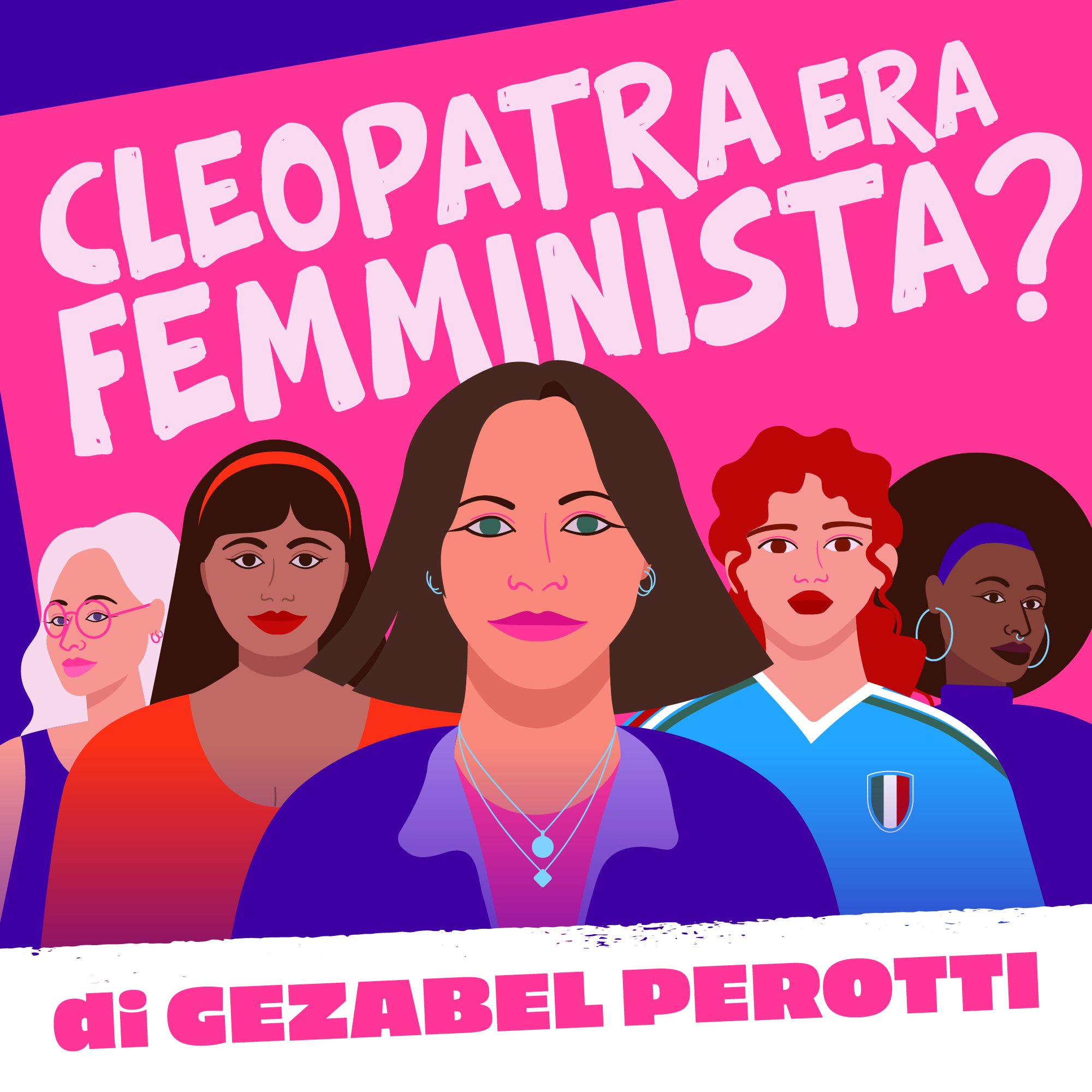
Cleopatra era femminista?
Gezabel Perotti
15 episodes listed below
Feminist questions, lived out loud.
The gist
Cleopatra era femminista? brings guests into careful conversation about bodies, work, health, violence, motherhood, science, and representation. Its strength is the way it moves from personal experience to the systems that shape it.
PRESS PLAY
Find your next episode
About Cleopatra era femminista?
Cleopatra era femminista? is an Italian feminist interview show built around testimony, clarification, and moral attention. It listens closely. Each episode gives a guest the space to describe a subject from the inside, whether that subject is gender-based violence, chronic illness, motherhood, miscarriage, cinema, STEM, eating disorders, or the politics of the body. The conversations often begin with a concrete personal detail. From there, they widen. A discussion of endometriosis becomes a question about paid rest, fertility choices, medical cost, and the pressure placed on mothers. A story of spontaneous abortion becomes a reflection on silence, grief, and the strange loneliness of a loss that many people experience but few name aloud. An episode on cinema looks at stereotypes, seduction, danger, narrative power, and the violence of beauty standards when a female body is treated as a project to correct. The show is comfortable with specificity. It names femicide as distinct from generic murder, treats training around anti-violence work as more important than vague sensitivity, and pushes past casual opinion when a subject requires real knowledge. It also makes room for culture. Conversations about women in science ask who gets imagined as a scientist, who sits in decision-making roles, and which problems are overlooked when only a narrow group defines innovation. Discussions of body judgment, fatphobia, and eating disorders keep the emphasis on stigma, care, and the right not to educate every person who comments on someone else’s body. The pacing is measured rather than polished. Questions are direct, but the answers are allowed to breathe. The interviewer often reflects a point back before narrowing the next question, which gives the episodes a feeling of trust. It is serious without sounding distant. It is intimate without becoming sentimental. The result is a show for listeners who want feminist language tied to ordinary decisions, institutions, pain, recovery, and the possibility of being believed.
Made for: For Italian-speaking listeners interested in feminism, gender, health, culture, and social rights through lived experience rather than abstract debate. It especially suits people who want serious subjects handled with patience and emotional care.
What sets it apart: The show’s distinction is its careful movement from testimony to structure: a guest’s story becomes a way to examine law, medicine, media, work, or public language. It favors explanation and presence over manifesto-style certainty.
In their own words
Benvenut* in uno spazio dove la voce delle donne non solo si sente: rimbomba. Qui non c’è silenzio, ma storie vere di donne comuni, forti, coraggiose, autentiche e diverse. Racconti di crescita, di diritti, scelte difficili, uguaglianza e libertà conquistata, tra sfide quotidiane, relazioni complesse e momenti di rinascita. In ogni puntata, il podcast dà spazio a testimonianze reali, esperienze personali e riflessioni che mostrano forza, determinazione e coraggio. Ci porremo domande tipo: Cleopatra era femminista? E scopriremo insieme come ogni donna, nella sua vita e nelle sue scelte, costruisce il proprio percorso, affronta ostacoli, celebra vittorie e lascia una tracc...
Why you'd press play
Cinderella turns body horror here, in case you prefer your feminist questions impossible to shrug off.
Press play if you want
- to hear women speak plainly about violence, pregnancy loss, chronic illness, and the systems around them
- Gesabel Perotti asking practical follow-ups that turn empathy into something more useful than a slogan
Episodes
- 1
Donna nel cinema: stereotipi, corpo, potere narrativo e cambiamento | Ep. 13
Marco Piva argues that cinema's first 100 years often cast women as rescue objects or dangerous femmes fatales.
Apr 13, 2026·58m·4 clips - 2
Violenza familiare e silenzio collettivo: studiare nonostante tutto | Ep. 12
Apr 6, 2026·1h 2m - 3
Violenza di genere: denuncia, centro antiviolenza e femminicidio spiegati | Ep. 11
Hidden gemIn 'Cleopatra era femminista?', l'episodio su denuncia, centro antiviolenza e femminicidio parte da una tesi netta: la paura principale per molte donne è non essere credute.
Mar 30, 2026·51m·3 clips - 4
Endometriosi e maternità: sintomi, sfide e la realtà anche dura dell’essere mamma oggi | Ep. 10
Hidden gemLara Tomasetta dice che l'endometriosi colpisce 3 milioni di donne in Italia, viene spesso diagnosticata con 5-7 anni di ritardo e, nel suo caso, è arrivata vicino ai 30 anni dopo un passaggio al pronto soccorso.
Mar 23, 2026·48m·3 clips - 5
Vitiligine, gravidanza e aborti spontanei, donne in ruoli manageriali: la storia di un'ingegnera| Ep.9
Hidden gemIn Cleopatra era femminista?, Agnese Lancella racconta a Gesabel Perotti come una donna con una laurea in ingegneria meccanica, un ruolo di responsabilità in un'azienda navale e una carriera da autrice di romance queer affronti gravidanza, lutto e lavoro.
Mar 16, 2026·40m·2 clips - 6
Donne nelle STEM: stereotipi nel mondo scientifico, scienziate dimenticate e rivoluzione femtech | Ep. 8
Hidden gemCleopatra era femminista?
Mar 9, 2026·41m·3 clips - 7
Intersezionalità, privilegio, DCA e grassofobia: chi decide sui nostri corpi? | Ep. 7
Hidden gemValentina Botta, known as Valu, tells host Gesa Belperotti that her project Sorelle di Corpo began with photographing girls from age 12-13 and grew into an annual festival in Albisola, Liguria.
Mar 2, 2026·50m·2 clips - 8
Disturbi alimentari, body shaming e diffusione non consensuale di immagini intime | Ep.6
Feb 23, 2026·53m - 9
Vulvodinia, consenso ed educazione sessuoaffettiva: corpo, femminilità e sessualità. | Ep. 5
Feb 16, 2026·40m - 10
Diventare donna: corpo, bellezza e sessualità, tra speranza e coraggio | Ep. 4
Feb 9, 2026·43m - 11
Stereotipi di genere a scuola e in famiglia: educazione, fiabe per bambini e come nascono i ruoli di genere | Ep. 3
Feb 2, 2026·31m - 12
Dislessia, maternità e violenza ostetrica: una storia di forza femminile | Ep. 2
Jan 26, 2026·33m - 13
Giovane mamma in politica: sessismo sul lavoro, rispetto, consenso ed educazione sessuo-affettiva | Ep. 1
Jan 19, 2026·50m - 14
Giovane mamma in politica: sessismo sul lavoro, rispetto, consenso, educazione sessuo-affettiva | Ep.1
Jan 11, 2026·50m - 15
Trailer
Jan 11, 2026·3m