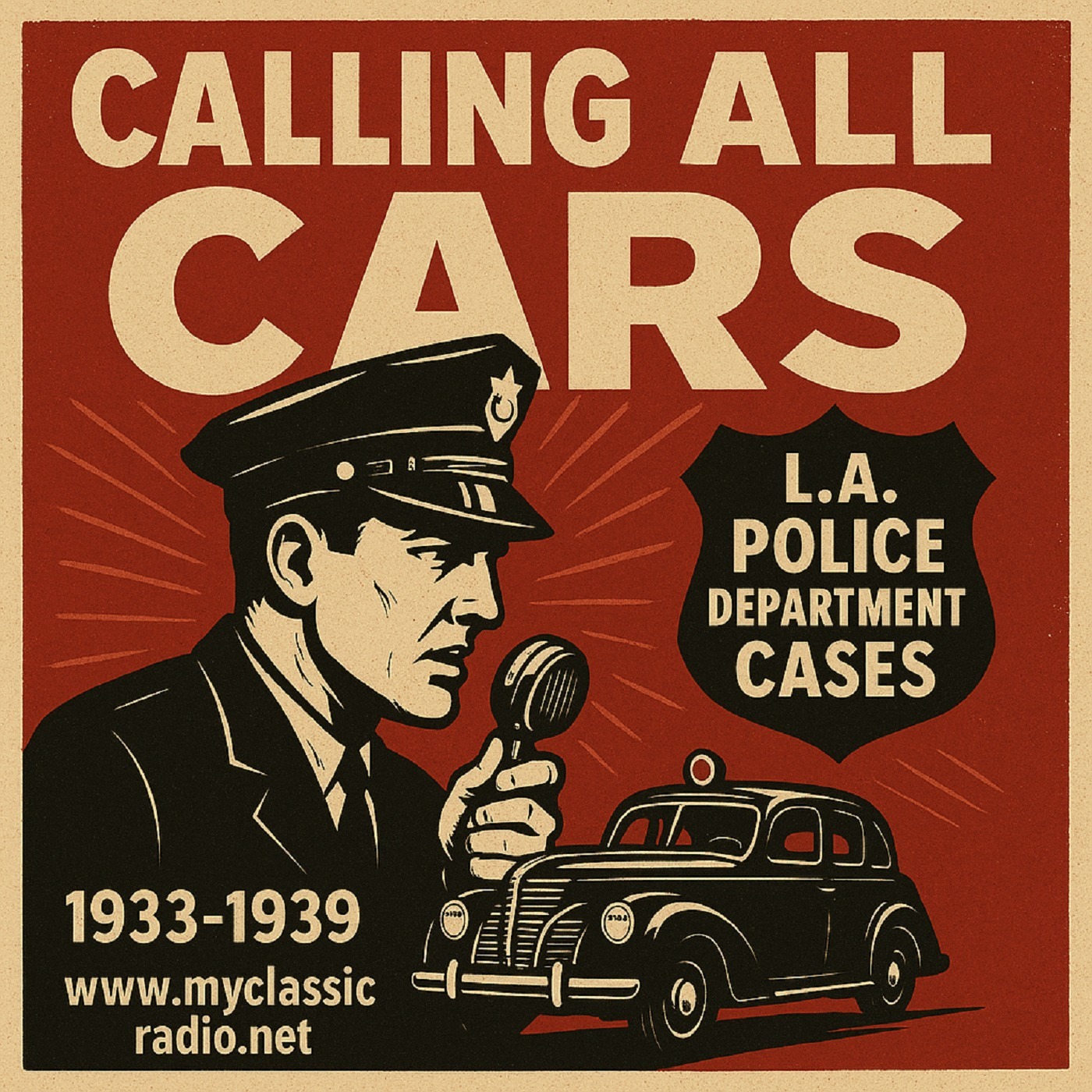
Calling All Cars is an early police procedural shaped around movement, evidence, and command. A case rarely begins quietly. A radio bulletin calls for officers to watch for a suspect, a vehicle, a weapon, or a missing person, and the story immediately narrows into pursuit. The show’s best moments come from method rather than surprise. Investigators compare bullets, trace firearms, test bloodstains, study fingerprints, inspect damaged cars, and push witnesses through careful rounds of questioning. It is fast. It is formal. It often sounds like paperwork becoming drama. The crimes in the sampled episodes include murder, robbery, hit-and-run driving, stolen goods, missing weapons, and bodies hidden or misidentified through confusion and fear. Suspects are not romanticized. They quarrel, panic, contradict themselves, and try to shift blame before the case closes around them. The program also carries the full atmosphere of late-1930s sponsored radio, where police bulletins and case narration sit beside extended Rio Grande gasoline and oil copy. That commercial texture is part of the experience, not background noise. It places the drama in a world of patrol cars, highways, filling stations, sheriffs, laboratory reports, and local offices answering calls. Modern ears will also hear dated racial and ethnic language, including stories built around prejudice, suspicion, and period stereotypes. The show is most compelling when it shows police work as incremental: one print is too faint, one suspect is wrong, one weapon is missing, one witness is afraid, and the investigation keeps moving anyway. Calling All Cars is for listeners who like old-time crime drama with a procedural spine. It favors case construction over character continuity, using each episode as a compact investigation with a stern final accounting.