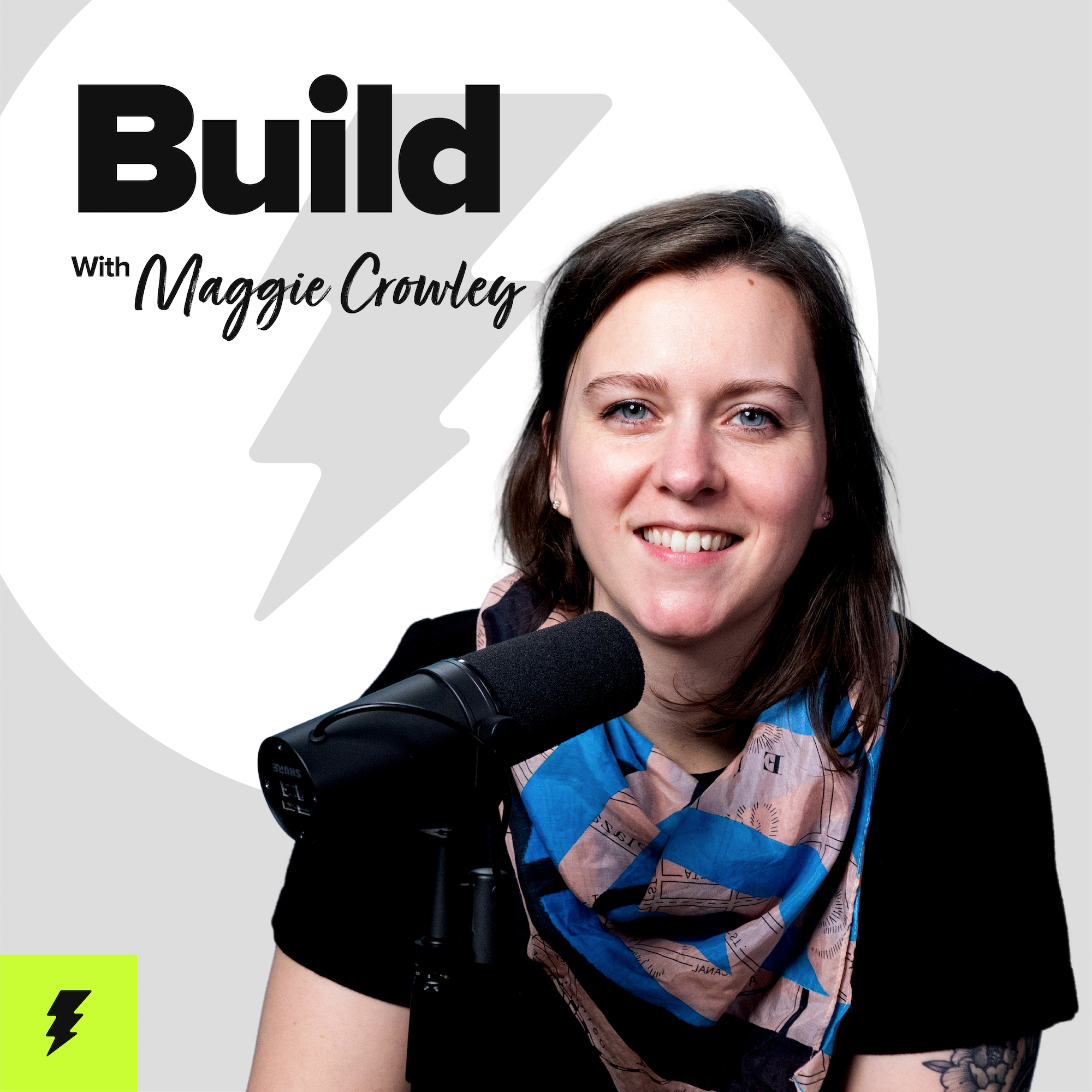
Build with Maggie Crowley is a product-management show built around practical operating habits. Its center of gravity is the everyday work that happens before and after a team decides to build. One-pagers, story time, customer evidence, product marketing, copywriting, launch pressure, and AI all sit inside that frame. The show repeatedly asks how a product team turns a problem into shared context, then into a solution people can actually ship. It is specific about artifacts. The one-pager is described through sections such as story, background, goals, requirements, time box, and concepts or references. Story time is treated as the next team step after that, where product, design, and engineering clarify the problem and turn assumptions into open questions. Shipping is treated with similar discipline: commit to a date, name the work, tell a simple story, and bring evidence from customers. The conversations also make room for language itself. Copywriting is presented as part of product work because customer words can shape landing pages, in-product copy, and the way engineers understand what they are building. Product marketing gets similar treatment, with attention to roadmap input, messaging, positioning, market research, competitive context, and sales alignment. The AI episode keeps the subject practical by focusing on applications such as chatbots, image recognition, anomaly detection, information extraction from complex documents, and prediction. The show’s sound is casual but not loose. Guests interrupt, tease, challenge assumptions, and come back to concrete examples. Drift is not just background branding here; it supplies the working setting, the internal customers, and many of the product rituals under discussion. There is a recurring mix of earnest process talk and office-culture humor, including the show’s running appetite for six-star reviews. It suits a listener who wants product management explained as a set of behaviors rather than a set of slogans. The strongest fit is someone working near product, design, engineering, sales, marketing, or AI who wants cleaner ways to frame problems, align teams, and ship.