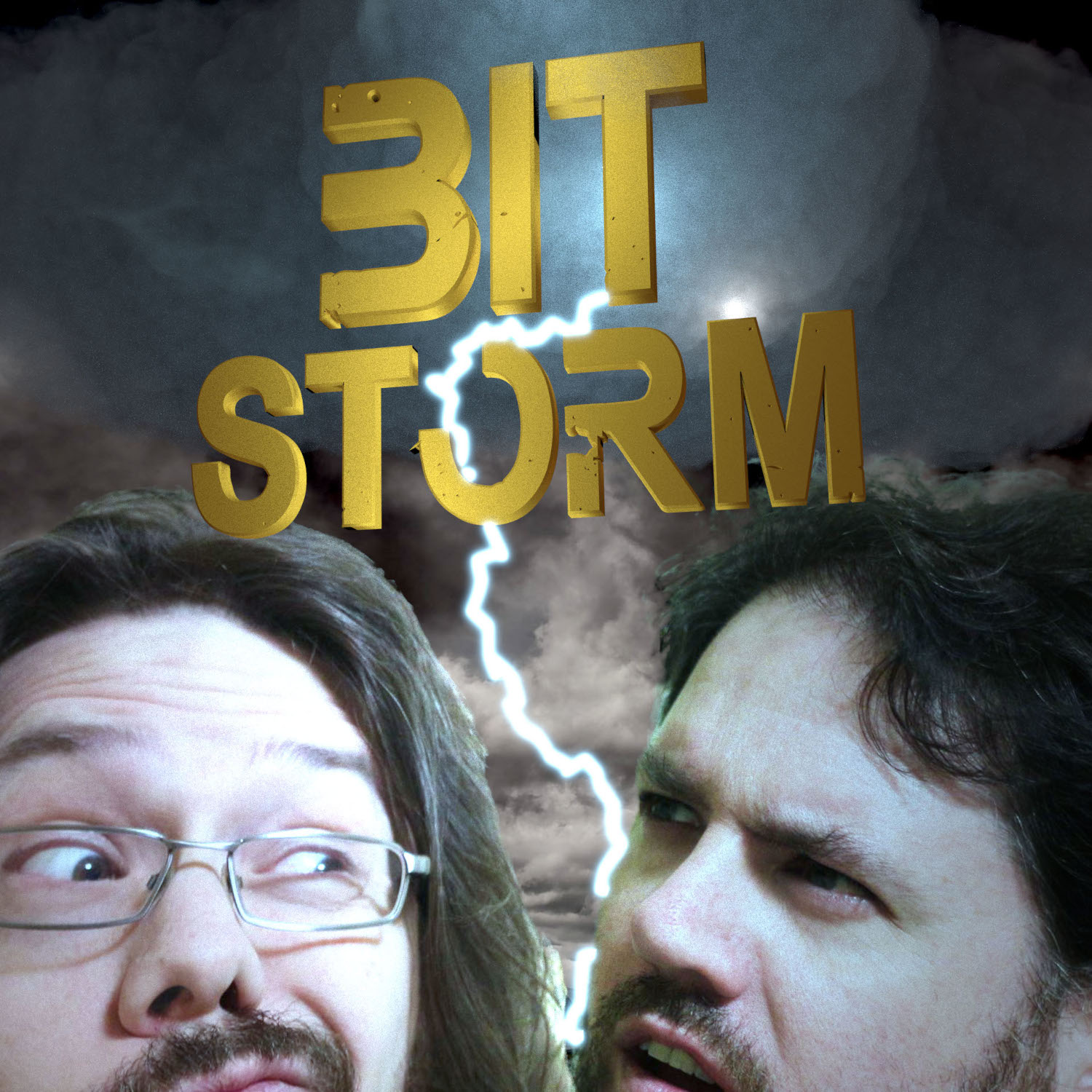
Bit Storm is a comedy game-design podcast built around the pleasure of watching an idea get out of hand. Ben Slinger and Trevor Scott take prompts from random word generators, game jam constraints, imagined game titles, and other loose starting points, then try to turn them into games with mechanics, loops, settings, and endings. The pace is quick. The shape is improvised. A joke may begin as a dinosaur hospital, then become a time-loop surgery game involving pterodactyl medivacs and a strangely serious question about why the player would sacrifice anything. Another riff turns a neighborhood dispute into a cul-de-sac construction strategy game, complete with house upgrades, sabotage, and save data that might carry into a sequel. The show’s rhythm is the point. A silly phrase appears, both speakers grab it, and the conversation keeps adding systems until the nonsense has rules. That gives Bit Storm a specific flavor among comedy shows. It is not only banter, and it is not only game criticism. It is collaborative design play, where the practical questions are often as funny as the premise. How should light work in a one-bit horror game? What does dithering do to a flashlight scene? Could a comedy club become a competitive story game? What happens if a fake dark-web fighting game includes concession stands, tournament timing, and absurd special moves? The answers are rarely tidy, but they are usually energetic. The show also has a casual running texture: deck sessions, lounge sessions, game jam talk, updates on projects, and recurring mentions of music and small games connected to the speakers’ own creative work. That lived-in quality helps the chaos feel friendly rather than random. Bit Storm is best for people who like hearing creative decisions happen out loud. It rewards tolerance for tangents, abrupt pivots, crude jokes, and ideas that mutate faster than anyone can summarize them. Beneath the irreverence, there is real interest in how games communicate, constrain, surprise, and fail. The joke keeps moving, but the design brain stays switched on.