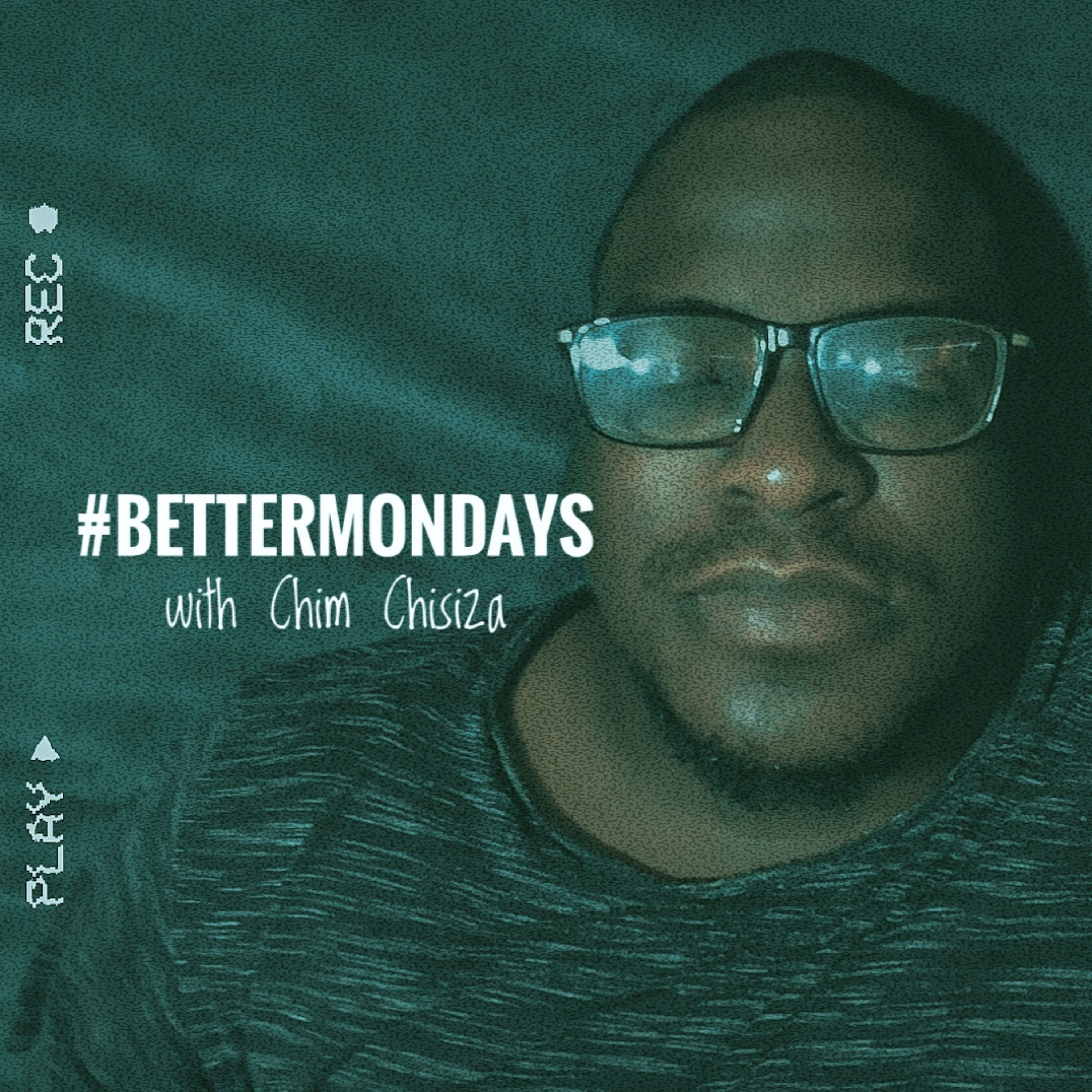
#BetterMondays starts from a small, familiar complaint: a lot of people do not like Mondays. Chimchi Caesar introduces himself at the top of each episode, offers something better to think about, and then talks through what has been on his mind in a loose, conversational run full of asides and second thoughts. The subjects are personal and practical. An upcoming birthday leads him to observe that, for many men, birthdays bring an uneasy check on whether life is going the way they expected. From there he lands on a paradox: the more he knows, the more he realises he does not know. He ties that to the identity people build in their twenties, and to the value of being around those who think differently. Relationships keep coming back. 'What Is Love?' starts from the yearly Valentine's question of what to buy, and from how that conversation tends to centre on women receiving things. He steers it toward character, suggesting love is measured by who actually shows up rather than by what gets bought. 'Friction & Fracturing' questions the habit of announcing a year of cutting people off. His answer is that friction can sharpen two people, while a relationship where one side imposes everything and the other disappears to fit is what breaks. In 'All The Patience' he admits it had been a while, and that he kept circling things he had not fully worked through. He goes on to argue for patience in love, pointing to couples married for decades who say they are still learning. Faith is woven through rather than set apart. He cites First Corinthians 13 on love being patient, leans on the idea that iron sharpens iron, and resolves to take everything to God. The heaviest material is in 'Man Soft Men', which starts from how often men take their own lives. He apologises for bringing something so bleak to the start of a year, then talks about the man everyone sees as strong or funny, whose friends cannot believe he is not okay, and about men who were hurt when someone they finally trusted proved untrustworthy. The remedy is plain: build safe spaces, carry each other's burdens, and reassess your circle if no one is helping carry yours. 'Forget 2025' brings the same directness to new-year plans, urging a look at what went well and a harder look at how much of life is simply happening to a person. Each episode ends on the same words, protect your life, which sound less like a slogan than a standing instruction. 'Friction & Fracturing' makes a good first listen, since it holds the show's usual moves in one place: a relationship question, the iron-sharpens-iron line and that closing charge.