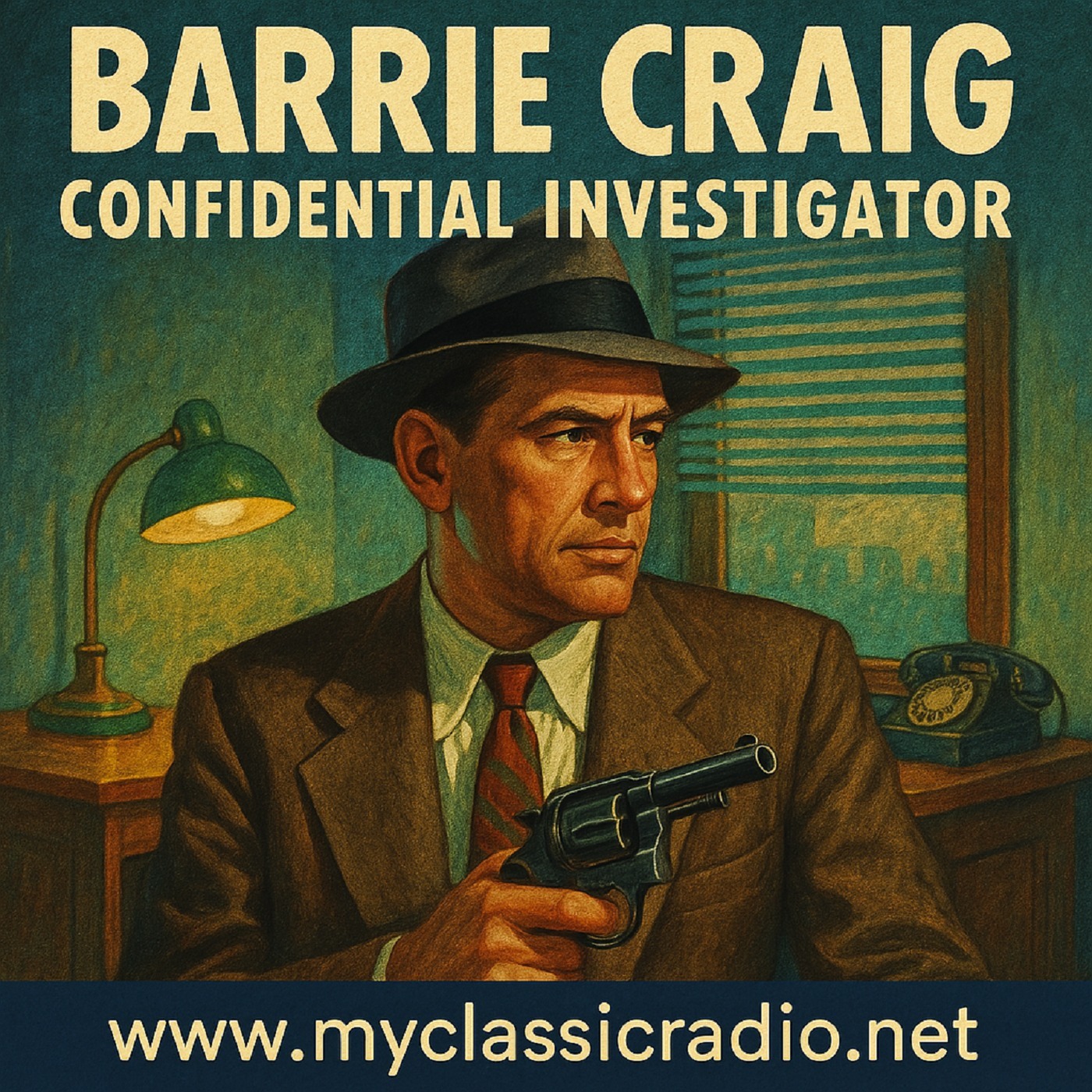
Barrie Craig, Confidential Investigator is a detective drama from the NBC radio network, starring William Gargan as the title character. Its introductions bill Craig as America's number one detective and call the story a transcribed drama of mystery and adventure. Craig narrates his own cases, and that voice is the main attraction. He sounds less like a tough guy than like a man who would rather be asleep. Several episodes open on a sardonic epigram about killers before the network announcement. One notes that murderers, whatever their difficulties, are at least never the ones who get killed. Another warns that a murderer given an inch will take a yard, usually of rope. A third recalls a man who killed for enough money to furnish a house and got the chair instead. The same dry humor follows Craig into trouble. In 'Visitor at Midnight', a noise at his window turns out to be a novelist with a gun, who wants an expert opinion on the murder in a book he is calling the unsolvable crime; Craig answers the pistol with sarcasm. In 'Blood Money', Craig sets up a fellow private eye, Max Marcy, as bait on a quiet street at noon. When a gunman on a rooftop puts a bullet through the crown of Max's hat, Craig assures him a singed hair helps prevent baldness, then admits that if he didn't joke, he would cry. For the second attempt, police officers take up positions on the roofs. More than once, the trail runs into money or show business. One case moves across the grounds of Hilda Hobson's estate and into the world of society tennis, where the chauffeur living above the garage proves to be a onetime South American tennis title holder and a former husband of hers. 'Corpse on the Town' gives Craig a client named Luther Bassett, a dentist for canine performers, whose patient is said to be a grandnephew of Rin Tintin and is playing Napoleon in a play about reincarnation. Beneath the gags sit harder questions about theatrical financing and whether a producer is on the level. 'Death of a Private Eye' works in a colder key: Craig grumbles that dark evenings and cold weather are slowly killing his business, then follows a shoreline road at half past two in the morning to a gate in a high brick wall and a house with its lights still on. Some closings tease the next case in the same punning style, promising a burlesque queen with a knack for unveiling corpses, or a woman with amnesia who forgets everything but her alibi. The credits survive too, naming directors and supporting cast. The advertising comes from two eras: at least one episode keeps an original sponsor pitch for Coleman home heaters, while other recordings carry present-day ads. For a first listen, 'Corpse on the Town' shows the comic side and 'Death of a Private Eye' shows the late-night mood.