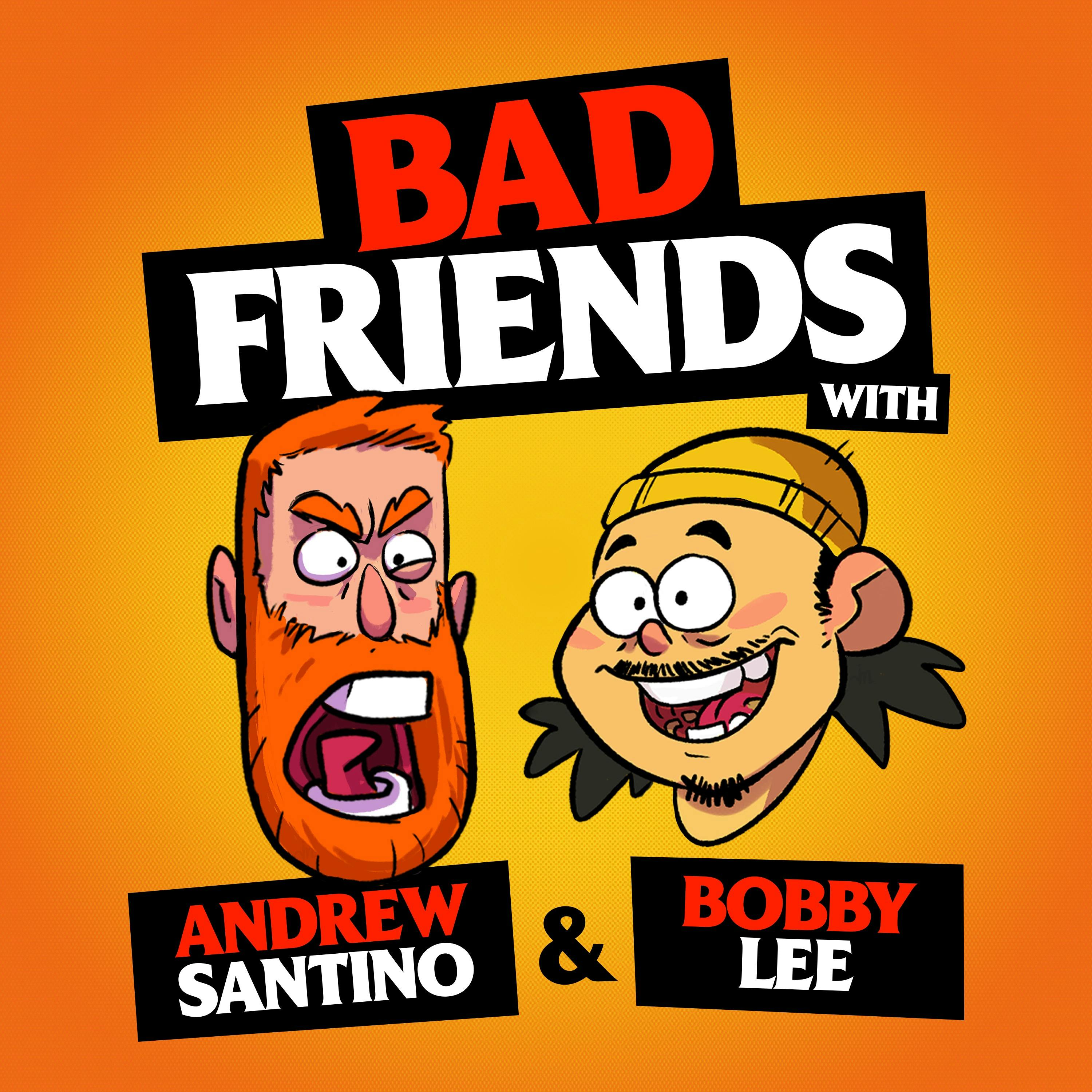
Bad Friends is built from friction. The show sounds like two comedians who can turn any ordinary detail into a public trial, then abandon the trial because a better bit just walked into the room. It is quick. A compliment about a set becomes a dispute over whether the compliment should have happened at all. A birthday greeting gets shoved aside by a dead-dog story. A shirt leads to being put on the spot, then to tour stories, social media confusion, and an old comedy account following people from beyond the obvious explanation. The pace rarely settles. It interrupts itself, corrects itself, and treats every correction as more material. Guests such as Brad Williams, Blake Griffin, and Marcello Hernandez do not turn the show into a formal interview; they get pulled into the existing current of teasing, fake logic, and sudden sincerity. That is the appeal. Bad Friends can spend real time on grief, sobriety, anxiety before a special, or the brutality of addiction, then undercut the gravity with a joke before the room gets too solemn. It can also spend an absurd amount of energy on coffee shop lines, perfume collecting, books, movies, towels, cruises, fake wars, or whether someone is cool in the wrong neighborhood. The humor is blunt and often deliberately uncomfortable. It leans on insults, crude detours, racial and cultural riffs, and mock-serious escalation, so the show is better for listeners who like comedy with rough edges rather than polished interview chat. Still, the chaos has a shape. The running pleasure is watching affection survive constant sabotage. Bad Friends is messy, fast, personal, and proudly ridiculous.