A History of the World in 100 Objects

50 episodes listed below

Listen to the show on

World history, held in the hand.

The gist

A History of the World in 100 Objects treats artifacts as evidence, letting a single thing open onto politics, belief, technology, conflict, and daily life. Its episodes move patiently from close visual detail to wide historical consequence.

PRESS PLAY

Find your next episode

All episodes

About A History of the World in 100 Objects

A History of the World in 100 Objects uses artifacts as compact, physical arguments about human life. The method is plain and powerful. One episode looks at a portable solar lamp and charger, then follows its implications into rural study, household safety, microcredit, unreliable electricity, and low-carbon change. Another holds up a credit card as a small plastic sign of global banking, consumer freedom, religious ethics, and the invisible records created by everyday transactions. The objects are never decorative props. They are treated as evidence. A throne made from weapons carries the history of Mozambique's conflict, Cold War armaments, postwar rebuilding, and the attempt to turn instruments of violence into public art. A British penny stamped with the words of the suffrage campaign shows how cheap money could become blunt political media. The series has a patient rhythm: first the shape, surface, material, and marks; then the world that produced them. It is at its best when that movement changes the scale of the story. A porcelain plate can open onto revolution, famine, propaganda, and the imagination of a radiant future. A slit drum can connect Central Africa, Khartoum, Islam, slavery, empire, and the contest for the Nile Valley. Hockney's In the Dull Village becomes a way to think about art, law, private life, and public freedom in 1960s Britain. The tone is measured, humane, and alert to contradiction. It does not flatten history into triumph. It notices violence, exploitation, fear, invention, faith, and hope living inside the same object. The show suits listeners who enjoy museum objects but want more than labels. It also suits history listeners drawn to global connections rather than a single national timeline. Across the episodes, the series argues that things outlast their first purpose. They remember use, power, damage, belief, and aspiration. That makes the show unusually good at turning distant history into something visible, held, and argued over.

Made for: For listeners who like global history, museums, material culture, and careful storytelling that connects daily objects to power, belief, conflict, rights, and technology.

What sets it apart: Its strength is the close reading of physical things: each artifact is described materially before it becomes a route into broad human history. The show makes large historical forces feel graspable without losing their complexity.

In their own words

Director of the British Museum, Neil MacGregor, narrates 100 programmes that retell humanity's history through the objects we have made.

museum objects as evidencetechnology and daily lifeempire and colonial violencerevolution and propagandahuman rights strugglesmoney and beliefwar, disarmament, and recoverymigration and global connection

Talks about

Best episodes of A History of the World in 100 Objects

Short reviews from the PlayNext desk, based on the episodes we processed.

Object 101Dec 25, 2020

An object bridges fractured migration histories and Arctic lives shaped by a changing landscape.

This episode looks at what an object can carry when history has been divided by borders, memory, and rival ideas of belonging. Migration is treated less as a theme than as a problem of translation: the museum object becomes a way to make lived experience legible to people…

Podcasts like A History of the World in 100 Objects

Episodes

  1. 1

    Object 101

    Hidden gem

    A History of the World in 100 Objects returns with Object 101, a 2010s object chosen to capture the last decade for the British Museum.

    Dec 25, 2020·38m·2 clips
  2. 2

    Solar-powered lamp and charger

    Oct 22, 2010·14m
  3. 3

    Credit card

    Oct 21, 2010·14m
  4. 4

    Throne of Weapons

    Oct 20, 2010·14m
  5. 5

    Hockney's In the Dull Village

    Oct 19, 2010·13m
  6. 6

    Russian revolutionary plate

    Oct 18, 2010·14m
  7. 7

    Suffragette-defaced penny

    Oct 15, 2010·14m
  8. 8

    Sudanese slit drum

    Oct 14, 2010·14m
  9. 9

    Hokusai's The Great Wave

    Oct 13, 2010·14m
  10. 10

    Early Victorian tea set

    Oct 12, 2010·14m
  11. 11

    Ship's chronometer from HMS Beagle

    Oct 11, 2010·14m
  12. 12

    Jade bi

    Oct 8, 2010·14m
  13. 13

    Australian Bark Shield

    Oct 7, 2010·14m
  14. 14

    North American Buckskin Map

    Oct 6, 2010·14m
  15. 15

    Hawaiian feather helmet

    Oct 5, 2010·14m
  16. 16

    Akan Drum

    Oct 4, 2010·14m
  17. 17

    Reformation Centenary Broadsheet

    Oct 1, 2010·14m
  18. 18

    Mexican Codex Map

    Sep 30, 2010·14m
  19. 19

    Shadow Puppet of Bima

    Sep 29, 2010·14m
  20. 20

    Miniature of a Mughal Prince

    Sep 28, 2010·14m
  21. 21

    Shi'a Religious Parade Standard

    Sep 27, 2010·14m
  22. 22

    Pieces of eight

    Sep 24, 2010·14m
  23. 23

    Kakiemon elephants

    Sep 23, 2010·14m
  24. 24

    Double-headed serpent

    Sep 22, 2010·14m
  25. 25

    Benin plaque - the Oba with Europeans

    This episode explores the Benin plaques, brass artworks from 16th-century Nigeria, as artifacts documenting early Euro-African contact.

    Sep 21, 2010·14m
  26. 26

    The mechanical galleon

    Sep 20, 2010·14m
  27. 27

    Durer's Rhinoceros

    Sep 17, 2010·14m
  28. 28

    Jade dragon cup

    Sep 16, 2010·14m
  29. 29

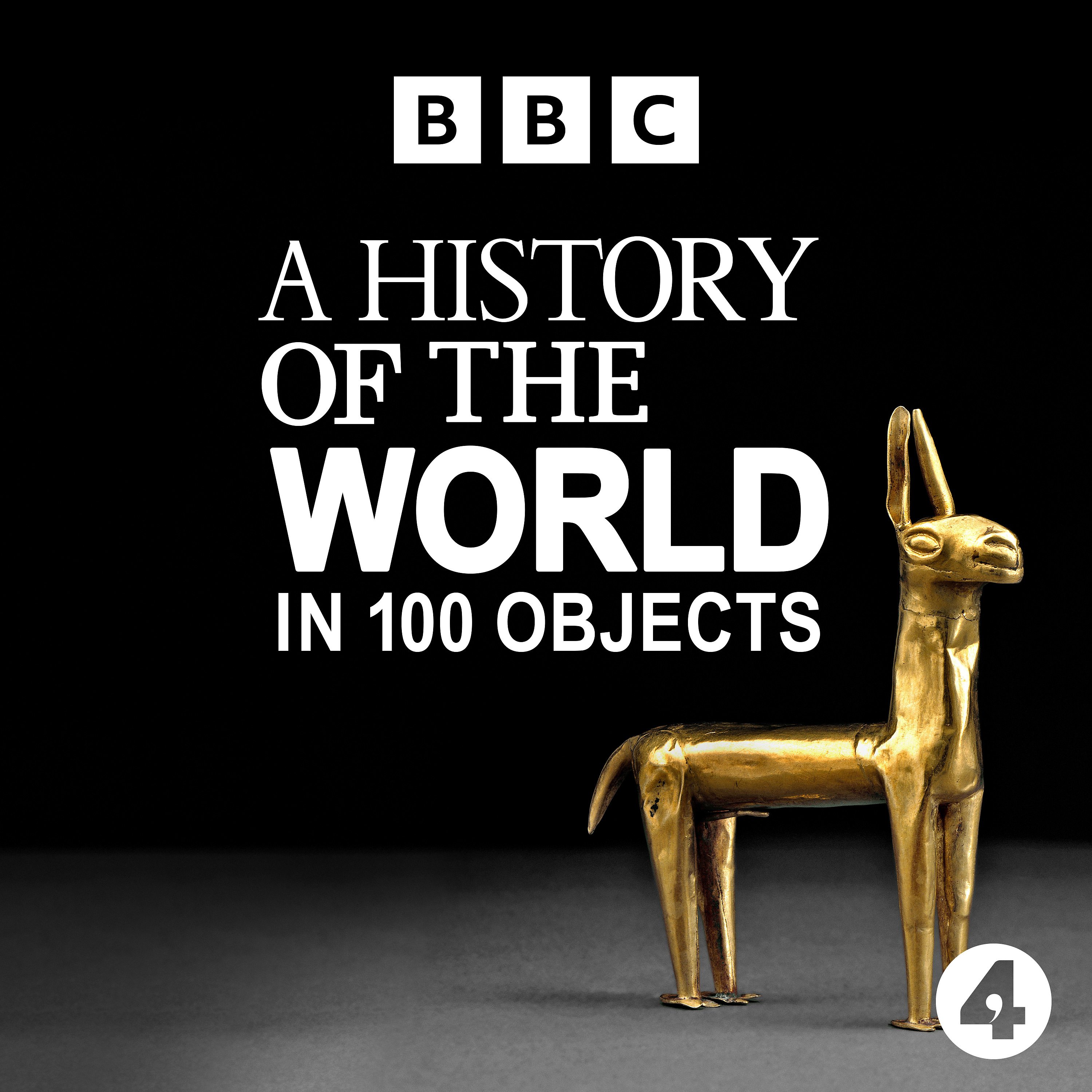
    Inca gold llama

    Sep 15, 2010·14m
  30. 30

    Ming banknote

    Sep 14, 2010·14m
  31. 31

    Tughra of Suleiman the Magnificent

    Sep 13, 2010·14m
  32. 32

    Hoa Hakananai'a Easter Island statue

    Jul 9, 2010·14m
  33. 33

    Statue of Huastec goddess

    Jul 8, 2010·14m
  34. 34

    Shiva and Parvati sculpture

    Jul 7, 2010·14m
  35. 35

    Icon of the Triumph of Orthodoxy

    Jul 6, 2010·14m
  36. 36

    Holy Thorn Reliquary

    Jul 5, 2010·14m
  37. 37

    Taino ritual seat

    Jul 2, 2010·14m
  38. 38

    The David Vases

    Jul 1, 2010·14m
  39. 39

    Ife head

    Jun 30, 2010·14m
  40. 40

    Hebrew astrolabe

    Jun 29, 2010·14m
  41. 41

    Lewis Chessmen

    Jun 28, 2010·14m
  42. 42

    Kilwa pot sherds

    Jun 25, 2010·14m
  43. 43

    Borobudur Buddha head

    Jun 24, 2010·14m
  44. 44

    Japanese bronze mirror

    Jun 23, 2010·14m
  45. 45

    Hedwig glass beaker

    Jun 22, 2010·14m
  46. 46

    Vale of York Hoard

    Neil MacGregor introduces a Viking treasure hoard discovered in Yorkshire, linking it to global history.

    Jun 21, 2010·14m
  47. 47

    Chinese Tang tomb figures

    Neil MacGregor explores how powerful figures in Tang China commissioned their own obituaries and tomb figures to shape their legacy.

    Jun 18, 2010·14m
  48. 48

    Statue of Tara

    Jun 17, 2010·14m
  49. 49

    Lothair Crystal

    Jun 16, 2010·14m
  50. 50

    Harem wall painting fragments

    Jun 15, 2010·14m