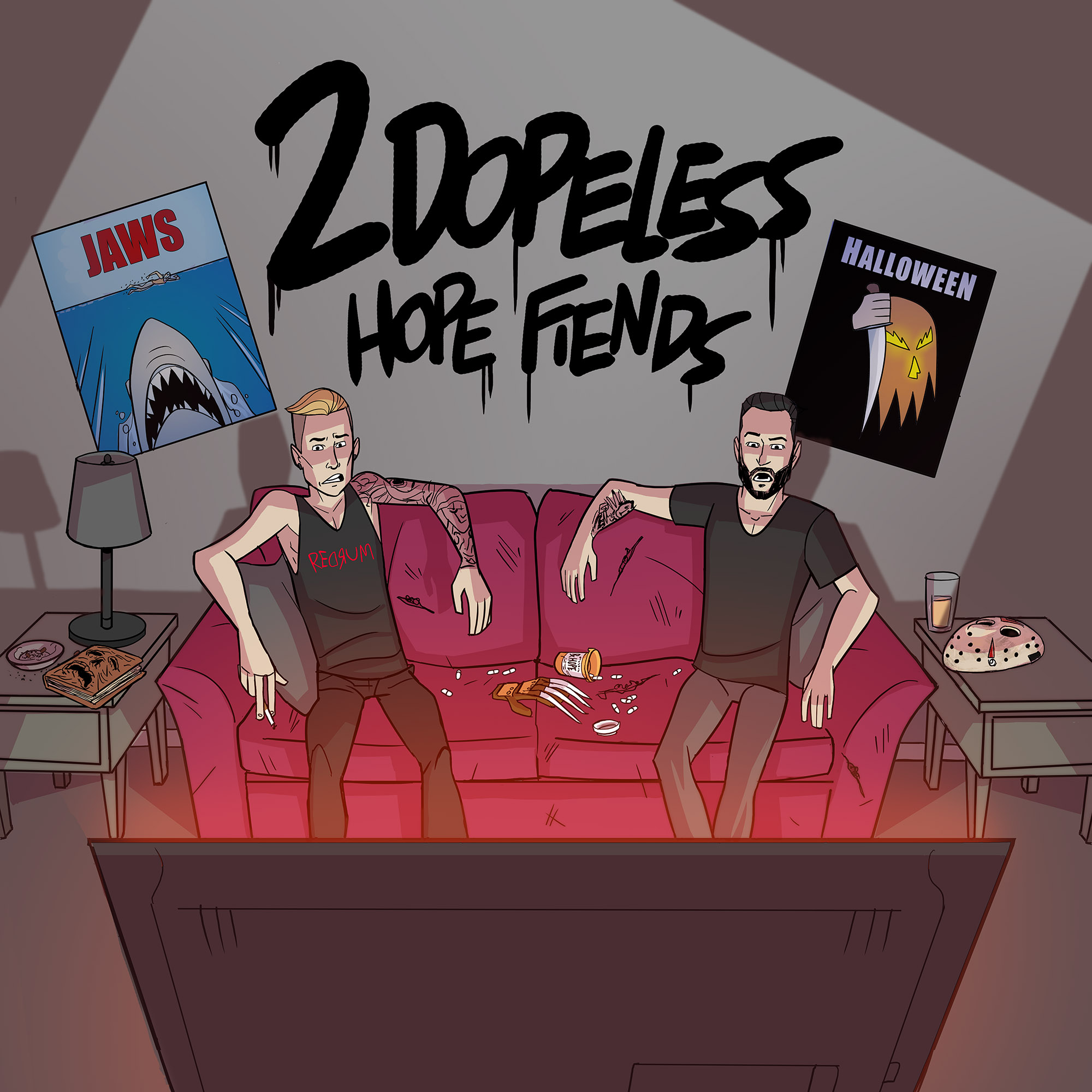
2DopeLess Hope Fiends is built like a long-running inside joke that keeps opening new doors. The episodes have topics, but they rarely behave like topics. A horror review can begin with a nonsense rhyme, wander into Deion Sanders wordplay, and suddenly become a conversation about zombie-kid trends, bobcats, possums, moles, and the weird pride of first-year homeownership. That is the show’s natural habitat. It is fast, blunt, and full of collisions between movies, memory, private-life updates, and whatever strange clip has recently surfaced online. Recent installments lean heavily into horror and cult-movie territory, with references to Little Monsters, Dawn of the Dead, Return of the Living Dead, The Exorcist, Hellraiser, 28 Years Later, Phantasm, The Lost Boys, Primate, and haunted attractions. The movie talk is real, but it keeps getting interrupted by the better fuel: trivia challenges, theater stories, misunderstood lyrics, local-news oddities, and arguments over what something was called. Short riffs turn into longer scenes. Longer scenes collapse into callbacks. The show is not trying to sound tidy, and that is a major part of its identity. It lets repetition, interruption, and correction become rhythm. There is also a recurring sense of friendship around the edges, especially when Aaron appears as a third voice or gets pulled into stories about plans, props, and conventions. Mikey is a frequent named on-air presence, often part of the quick volley that keeps the episode moving. The humor can be abrasive and culturally risky. It includes drug references, sexual references, harsh language, racial commentary, and jokes around death or self-harm. Its best fit is an adult listener who likes rowdy conversational comedy where pop culture is less a subject than a spark. The reward is momentum: one stray phrase becomes a bit, the bit becomes a scene, and the scene somehow loops back into the show’s own mythology.