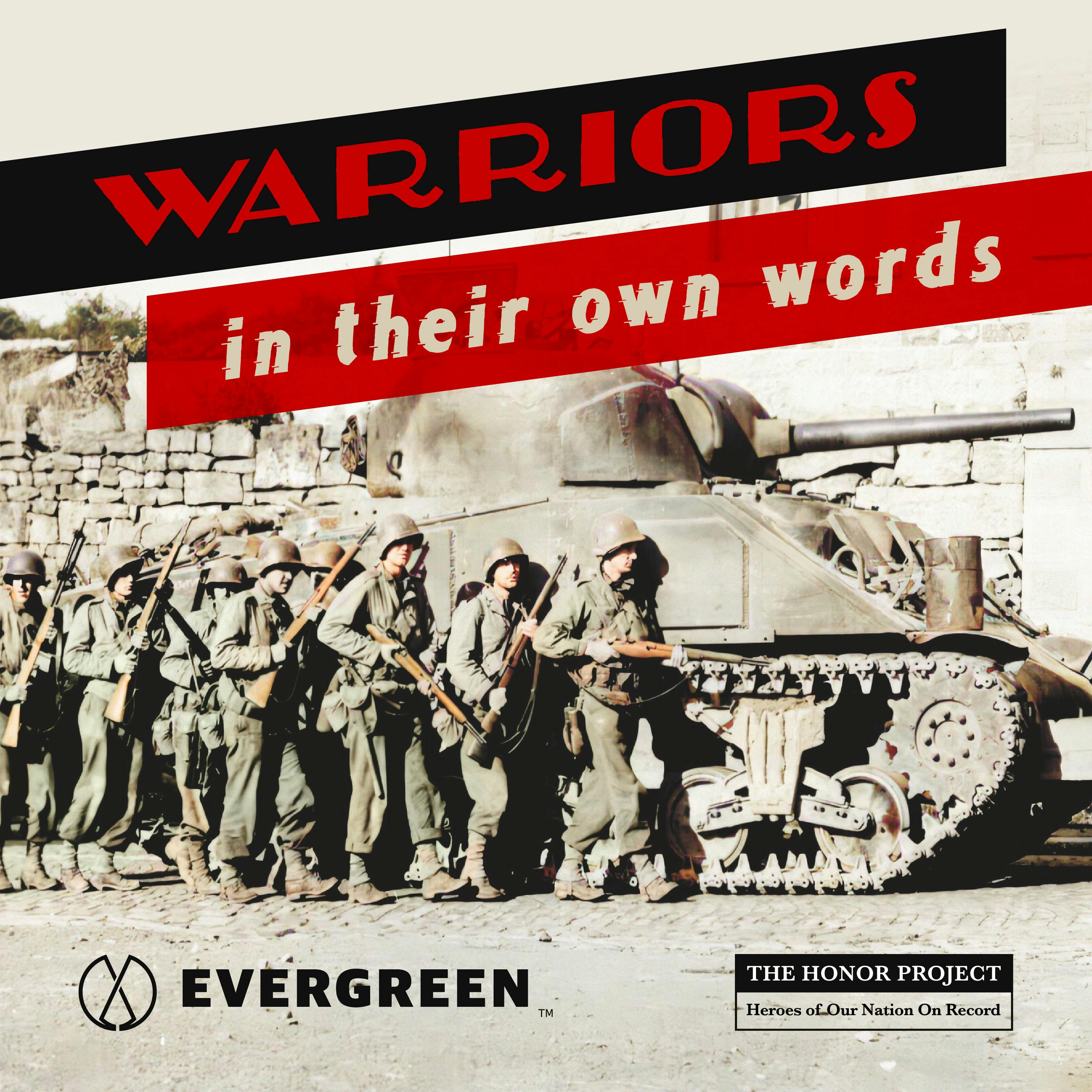
Warriors In Their Own Words | First Person War Stories · Evergreen Podcasts | The Honor Project

Hitting the Beach On D-Day: From the Archive

·1 hr 10 min·5 clips
Markham says Omaha Beach would not have been established without his demolition outfit.
The episode opens by framing D-Day as the opening of a second front in Europe. It describes the Atlantic Wall as a fortified barrier of concrete, guns, and wire. From there it turns to the U.S. Navy combat demolition units assigned to breach the beach obstacles. Jerry Markham is identified as a chief machinist in NCDU 46. He recalls being about 24 years old in 1943. At the time, he was working at a large power plant in a paper mill in Jacksonville, Florida. His job was exempt from the draft, but the war was still pressing hard. The interview then moves to June 6, 1944. Markham explains the assault in practical terms. There were 16 gap teams lined up 200 yards apart. Their job was to blow a 50-yard gap between low water and high water mark. The teams were numbered from west to east. He was in number 11, which put him on Easy Red Beach. He says plainly that this was the first team to hit the beach. He also describes support gap teams waiting farther back, along with Army reserve gap teams held in reserve. Two command boats patrolled behind the line to watch the operation and direct help where needed. He describes the landing craft and the beach as almost empty at first because the amphibious vehicles called water buffalos sank as soon as they hit the water. That left the demolition men essentially alone on the beach. Then the follow-on waves began to arrive behind them, which only made the work harder. Even when they got explosives onto some of the obstacles, they still could not detonate them right away. Soldiers coming in were using the mine obstacles for cover. Markham recalls standing up and using red smoke bombs to warn them to face forward instead of backward. The account stays focused on timing, procedure, and the pressure of trying to do a precise job while men were landing and surviving around it. The closing narration widens the frame again. It calls the day one of the bloodiest of the war and one of the most necessary. It ties the invasion to the broader Allied advance in Europe and keeps the human cost in view. The men who lived through it still carried the carnage with them. The production credits then close the program.

As heard by us

A D-Day demolition account that earns its force through exact, unsettling detail.

The episode turns on the work of U.S. Navy combat demolition units landing in the first waves, clearing beach obstacles so the landing craft can get through.

Read the full review in PlayNext →

Why you'd press play

You want the D-Day landing told from the Navy demolition men clearing Easy Red Beach under fire.

Read the full recommendation in PlayNext →
Listen to the show on