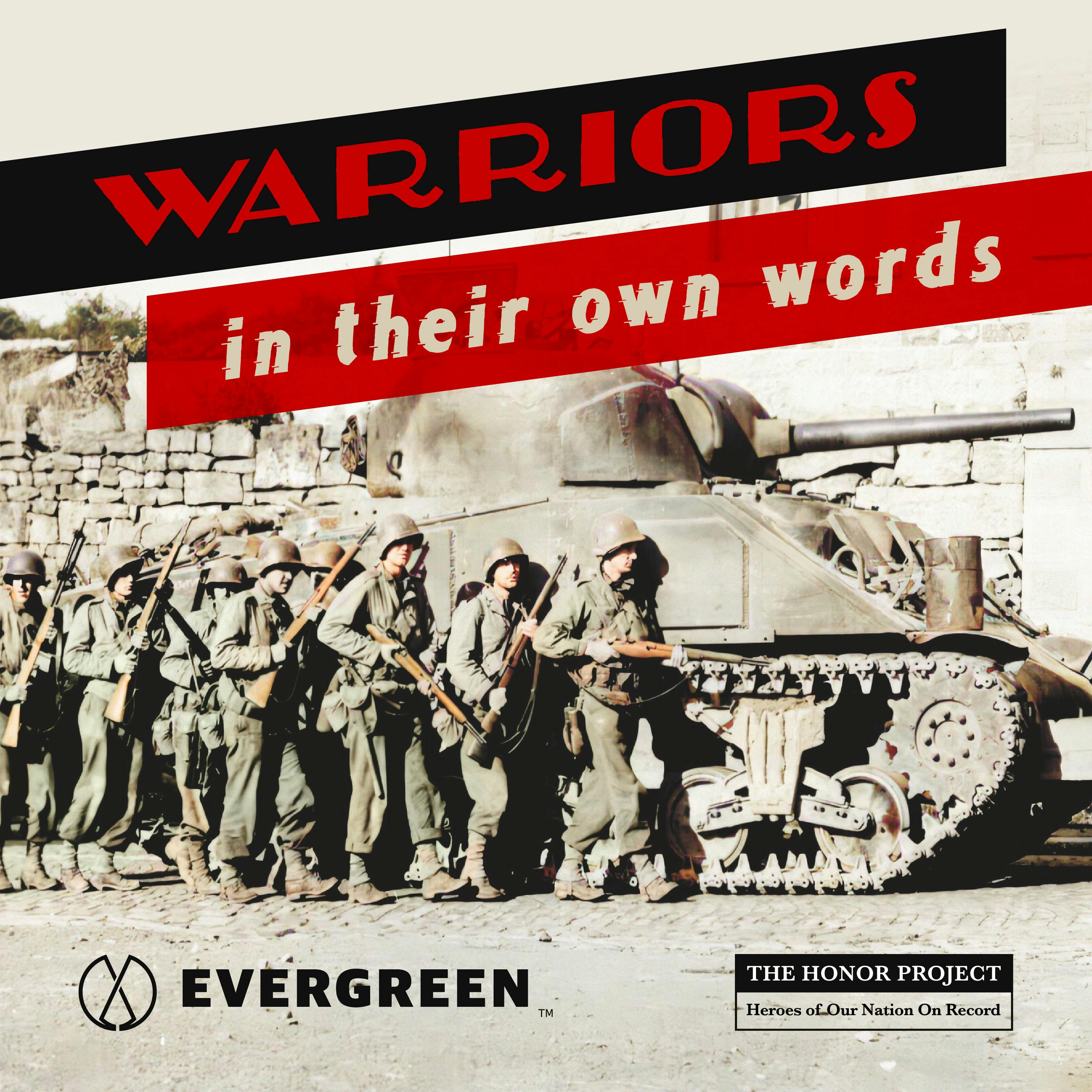
Warriors In Their Own Words | First Person War Stories · Evergreen Podcasts | The Honor Project

Assault on Germany in World War Two: From the Archive

·59 min·4 clips
Weiss says one fire mission knocked out 14 or 16 German guns.
Robert Weiss begins with the path that put him in uniform. He had been in ROTC at Purdue University when the war came, and the school stayed on an accelerated schedule. He graduated in December 1942 and went straight to Fort Sill for Officer’s Candidate School. After that ninety-day course, he was commissioned as a second lieutenant. The assignment that followed placed him in artillery as a forward observer. His job was to move ahead of the troops and locate targets for the guns. That meant he was closer to the enemy than most of the unit. It also meant he could be cut off from his own men. Weiss describes how the fighting moved from the beaches of Normandy toward German soil in 1944. The goal was Berlin. He recalls the first fire mission after being asked if he wanted to shoot some Jerrys, and he says yes. Once the fog lifted, targets became visible and missions came in quickly. He says there were plenty of them. At one observation post, he called in a number of strikes. Then he was shot out of that position and had to move higher on the hill. After a couple of days there, the unit shifted again when circumstances demanded it. He stresses that they kept relocating to wherever visibility was best. The episode keeps returning to the practical side of combat. Weiss talks about spotting a target, radioing it in, and then watching shells land. He admits there was a sense of exhilaration in that work. He compares it to hitting a bull’s-eye at a target range. But the feeling never stays simple. As the battle developed, the situation became very hazardous. He says the position suffered 40% casualties. That rate made the excitement sit beside desperation. The mindset was blunt. Get them, or they are going to get us. He does not dwell on death in a reflective way, but he makes clear that death was always present. The casualty rate was high enough that everyone knew it. He also remembers the infantry commanders trying to manage morale in a brutal environment. Each day they placed the bodies where they could not be seen. It was a practical decision meant to keep men from collapsing under the sight of their dead companions. Weiss explains how food was scarce and medical supplies were nearly nonexistent. The conditions were harsh enough that comfort had no place in the story. Near the end, the interview turns toward the French and their response to the American effort. Weiss says the people at Mortan, and the French generally, were very appreciative. He answers that he felt it was a privilege to have participated. The episode closes on the scale of loss and the cost of victory. Many lives were lost pushing the German Reich back toward Berlin. The final sentiment is plain. Those courageous men are owed the freedom that followed, and it came at a high cost.

As heard by us

A blunt artilleryman's memory of the push toward German soil, carried by hard-earned detail.

Robert Weiss's account traces a U.S. Army forward observer on the push from Normandy toward German soil, where the job meant moving ahead of the troops to find artillery targets and accepting a higher risk of being cut off.

Read the full review in PlayNext →

Why you'd press play

If you want a soldier's-eye view of the push into Germany, start here.

Read the full recommendation in PlayNext →
Listen to the show on