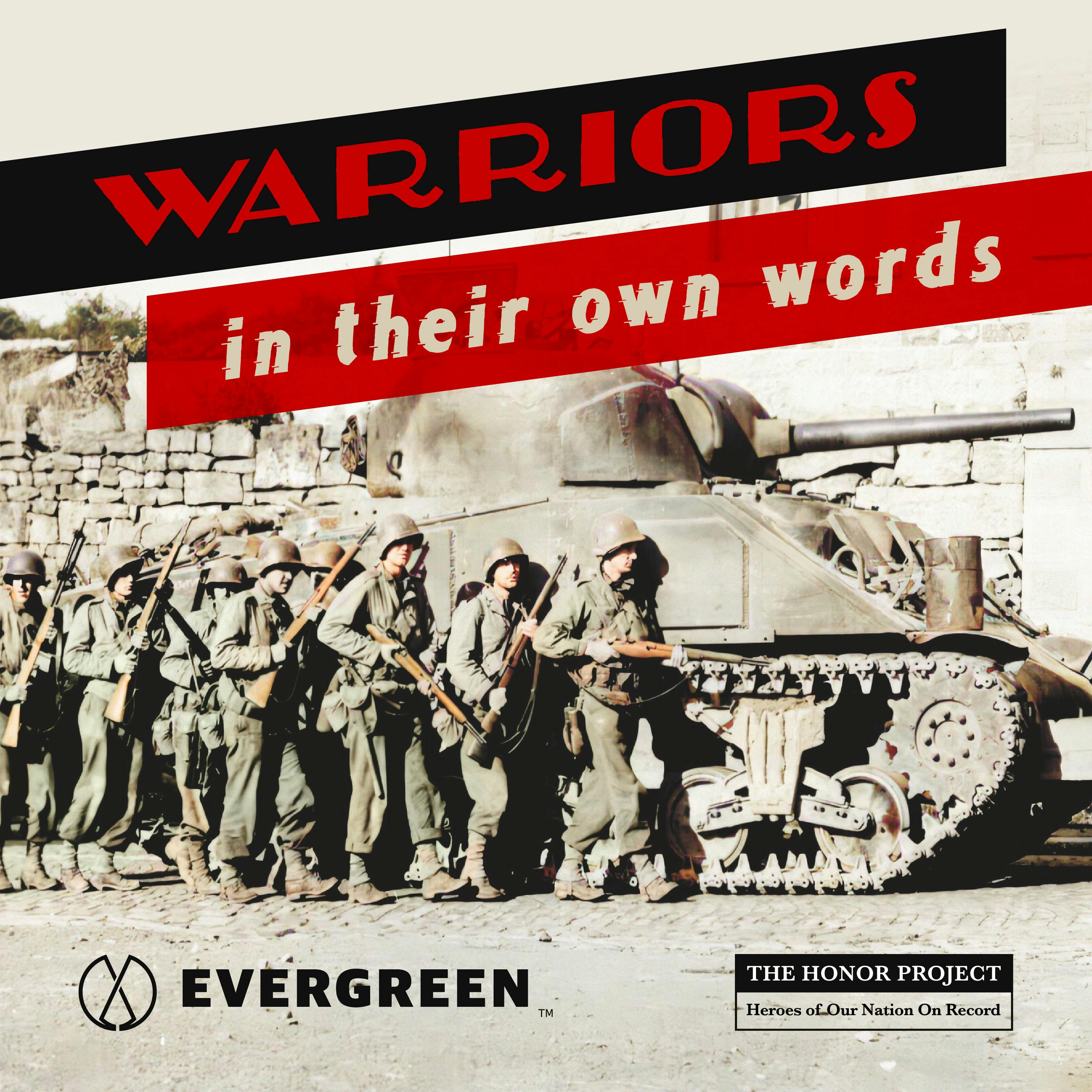
Warriors In Their Own Words | First Person War Stories · Evergreen Podcasts | The Honor Project

Armored Warfare in World War Two: From the Archive

·1 hr 9 min·5 clips
Belton Cooper reveals the 3rd Armored Division lost 580% of its tanks, a staggering rate unmatched by any other military branch.
This episode features archival audio from Belton Cooper, an ordnance officer in the U.S. Army's 3rd Armored Division during World War II. Cooper's firsthand account details the brutal realities of armored warfare in the European Theater, focusing on the technical shortcomings of American equipment. His experiences later formed the basis for his book, *Death Traps*. Cooper describes the M4 Sherman tank as under-gunned and under-armored compared to German Panthers and Tigers, with their guns unable to penetrate frontal armor at standard combat ranges. He cites specific technical disparities: the Sherman's 75mm gun fired at 2,000 feet per second versus the Panther's 3,000, and it had only 2.5 inches of armor against up to 6 inches on German tanks. The 3rd Armored Division suffered a 580% loss rate in tanks, with 560 totally destroyed and another 700 knocked out and repaired. Initial combat in Normandy's hedgerows was a disaster, with tanks getting stuck and becoming easy targets for German *Panzerfausts*. An enlisted man named Cullen invented a simple "hedge chopper" device that allowed tanks to breach hedgerows quickly, which Cooper credits with saving countless lives and enabling the breakout. One of the most harrowing moments describes a P-47 air strike on a German column trapped between American armored units, resulting in what Cooper calls "the worst carnage" he witnessed. He recounts a specific engagement where a Sherman fired three rounds at a Panther's flank, all bouncing off before the German tank destroyed it. Due to catastrophic personnel losses, crews were sometimes reduced from five to three men, and raw recruits were given only three practice rounds before being sent into combat. Cooper tells of a modest instrument repairman named Corporal Smith who volunteered to remove the mangled remains of a crew from a destroyed tank, an act he calls an "extreme act of courage." The narrative details the failed assault at Stolberg, where 48 of 64 tanks were lost in a muddy minefield in just 26 minutes. Cooper argues that the heavier M26 Pershing tank, with its wider tracks and better gun, could have traversed that terrain and potentially captured Cologne, possibly preventing the Battle of the Bulge. He claims a high-level meeting in early 1944, attended by Eisenhower, Patton, and others, decided against mass-producing the Pershing because Patton believed "tanks are not supposed to fight tanks." The episode ends with a brief account of a Pershing successfully engaging and destroying a German Tiger tank during the advance into Cologne. The tone is grimly educational and deeply personal, driven entirely by Cooper's vivid, technical, and often emotional firsthand narration. Listeners interested in unfiltered, gritty military history and detailed technical analysis of World War II armor will find this episode compelling. Those seeking a broad strategic overview or a more polished, narrative production might find the singular, archival focus and graphic descriptions too intense or narrow.

As heard by us

A blunt armored-war account where mechanics, minefields, and bad assumptions decide the fight.

The topic-editor sees this as a blunt account of the Sherman and the gap between what crews hoped for and what the field actually offered. Belton Cooper comes across as strongest when he stays close to the work itself: what failed, what crews expected, and how recovery became…

Read the full review in PlayNext →

Why you'd press play

Want the tank war stripped down to Shermans, Panthers, Tigers, and the hard math of recovery?

Read the full recommendation in PlayNext →
Listen to the show on