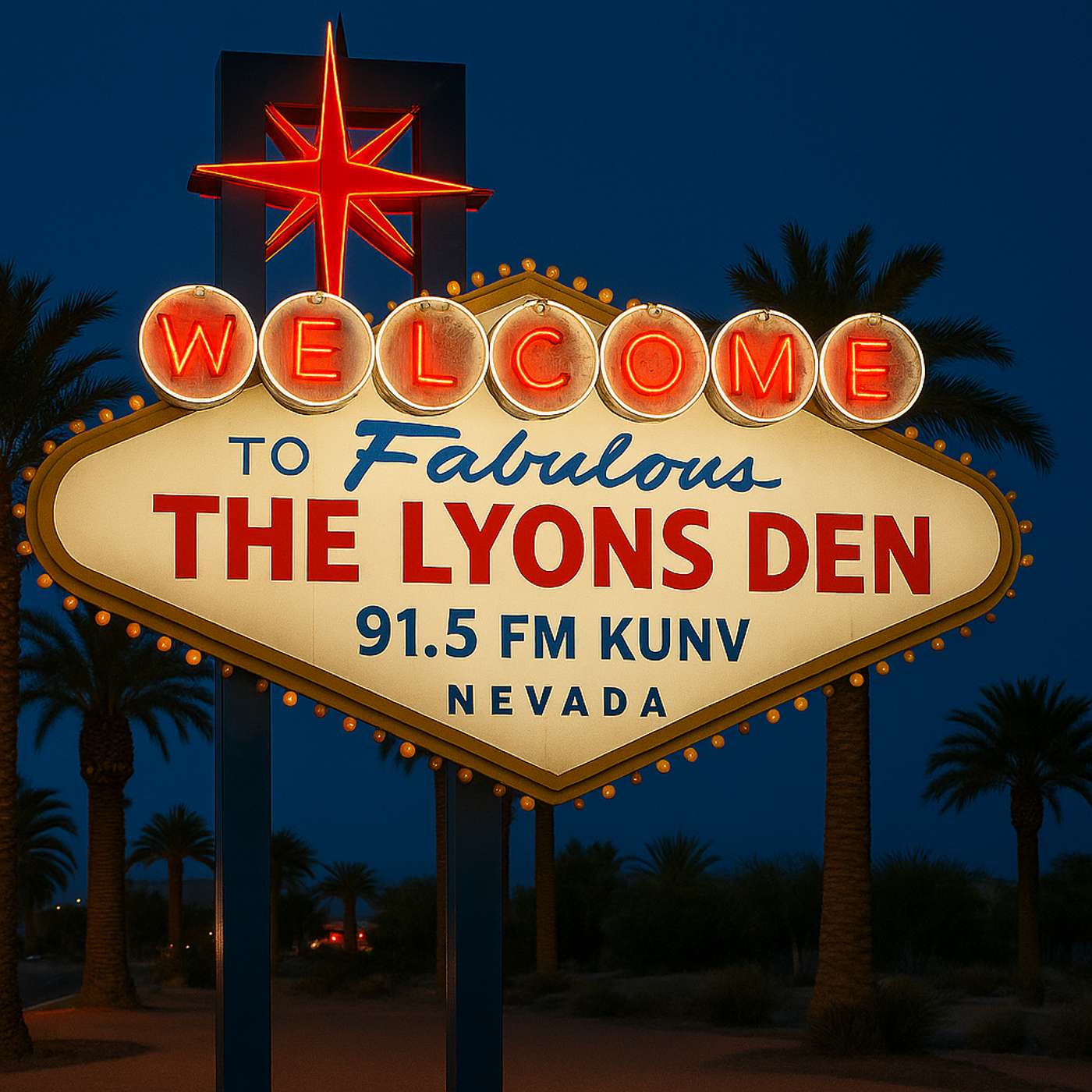
The Lyons Den Radio Show

The Lyons Den Radio Show: Eclectic Jazz, Chill, Rock & Grateful Dead Live Sessions on KUNV Las Vegas

January 19, 2026·3 hr 52 min·15 clips
George Lyons reveals the story behind Miles Davis's 1989 Montreux Jazz Festival opening track from a 20-disc set.
This episode is a curated music program featuring eclectic jazz, chill, and rock selections. The host is George Lyons, broadcasting from KUNV at UNLV in Las Vegas. The show presents long, uninterrupted sets of music as a journey through "techno-organic grooves." The episode opened with "The Girl from Ipanema" by Frank Sinatra from the *Nothing But The Best* compilation. Miles Davis's "Intruder," performed at Montreux in 1989, was featured from *The Complete Miles Davis at Montreux* box set. Early tracks included Bonobo's "The Plug" and "Terrapin" from the *Ultimate Chill Out* and *Frequent Flyer* compilations, respectively. The show played Lamb's "Trans Fatty Acid" and "Bonfire," the latter recorded live in Brussels. A segment focused on Phil Lesh & Friends featured "Big Boss Man" and "Franklin's Tower" from their 1999 album *Love Will See You Through*. The host detailed the band's lineup, including guitarist Jorma Kaukonen and drummer Prairie Prince of The Tubes. Later, Jeff Beck's "Led Boots" from the 1976 album *Wired* was played. The set included The Black Crowes' "Goodbye Daughters of the Revolution" and a cover of The Rolling Stones' "Torn and Frayed," recorded live in Los Angeles in 2008. Two Beatles tracks from *With the Beatles*, "Till There Was You" and "Please Mr. Postman," were featured. Music from the *Woodstock 40 Years On* collection included Arlo Guthrie's "Coming Into Los Angeles" and Janis Joplin's "Work Me Lord." The host paired Joplin with Amy Winehouse, playing Winehouse's "Put It In The Box" from a Giles Peterson compilation. A notable insight is the host's view that "there is no such thing as bad music; if you like it, then it's good for you." The show connects Phil Lesh's 1999 album to his recovery from a liver transplant the previous year. It frames the music as a "healing force" for the listener. The host actively solicits listener feedback via Facebook on how the set is "sounding." The tone is conversational, enthusiastic, and deeply reverent toward the music's history. The style is that of a knowledgeable radio DJ providing detailed backstories for each track. Listeners who love deep-cut music curation and learning historical context behind songs would enjoy this episode. Those seeking talk-based content, interviews, or a single genre focus might prefer to skip it.
Listen to the show on