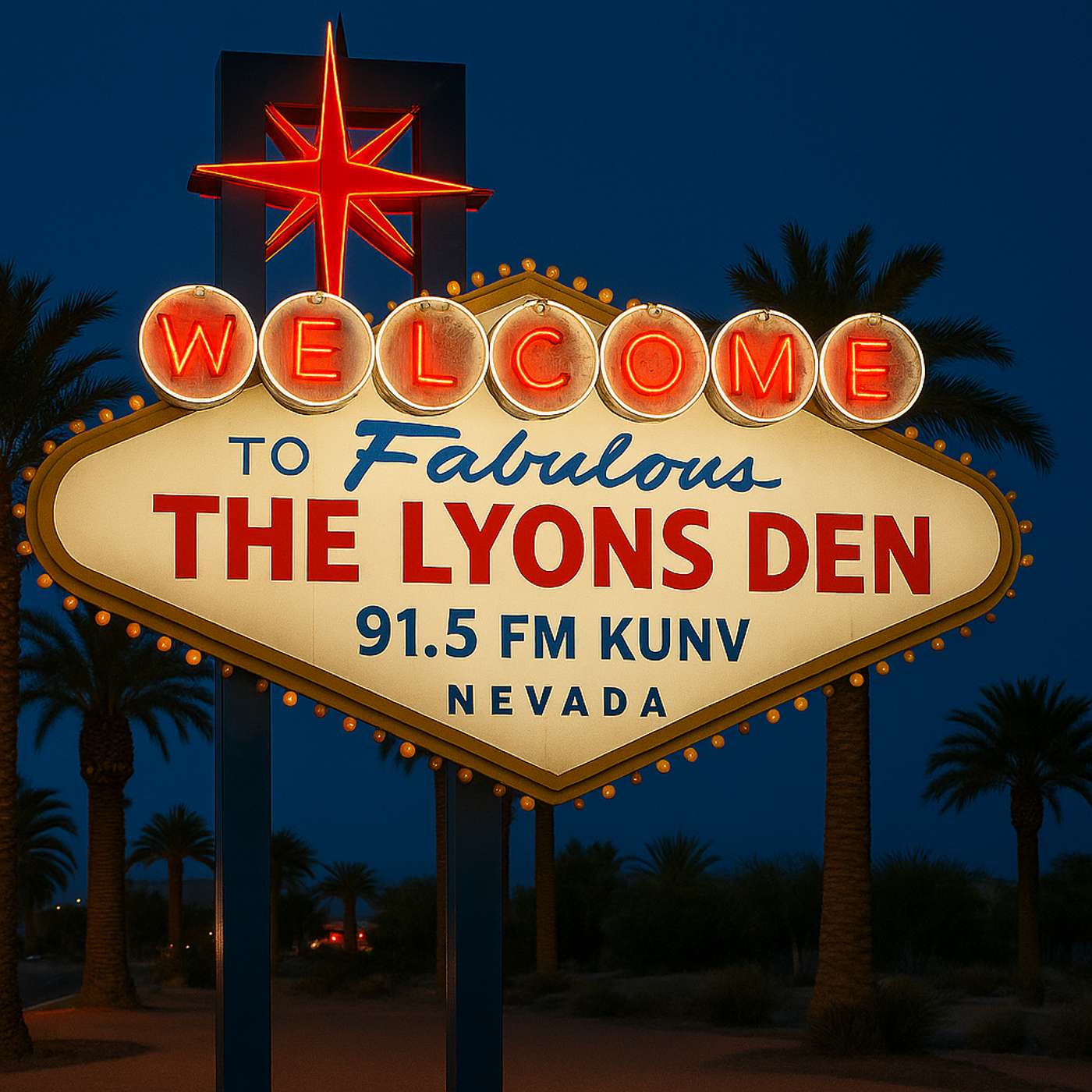
The Lyons Den Radio Show

Night Visions & Needle Drops: The August 24 Lyons Den

August 24, 2025·3 hr 51 min·10 clips
George Lyons wept like a baby when he saw Miles Davis perform Footprints live at the Blue Note in Las Vegas.
This episode of The Lyons Den Radio Show is a music-focused broadcast hosted by George Lyons from the studios of KUNV in Las Vegas. The episode features a special guest mix from DJ Steve Snookus, a UNLV graduate and longtime contributor to the show calling in from Luxembourg. The program is dedicated to playing a curated selection of jazz, funk, soul, and electronic music. The show opens with two tracks from Miles Davis: "Footprints" from the 1967 album *Miles Smiles* and "Wrinkle" from his 1990 Montreux Jazz Festival performance. George Lyons details the musicians in Davis's second quintet, including Herbie Hancock and Wayne Shorter, and recounts Davis's final Montreux performances organized by Quincy Jones in 1991. The host plays music from compilations like *This Is Acid Jazz*, featuring tracks from Shaq Attack and Secret Society. A set of 1970s music includes Ronnie Laws's "Let's Keep It Together" and Gato Barbieri's "Fiesta." Another segment features Willie Nelson's "Roll Me Up" with Snoop Dogg and songs from The Funk Brothers, The O'Jays, and Earth, Wind & Fire. A surprising claim is that Miles Davis's complete Montreux performances are documented in a 20-disc box set. An interesting insight is that guest DJ Steve Snookus, though now in Luxembourg, has had a lasting influence on the show's music library since his "Euroden" segments. The host shares a personal memory of being moved to tears seeing a live performance of "Footprints" at the Blue Note in Las Vegas. Keith Jarrett is noted for his confusion at being asked to play organ in Davis's 1973 band. The episode highlights the global reach of the broadcast, streaming from Las Vegas to listeners like Snookus in Europe. The tone is enthusiastic and conversational, with the host acting as a knowledgeable guide through music history. The style is educational and reverential, particularly when discussing jazz legends, while maintaining a relaxed, late-night radio vibe. This episode would greatly appeal to jazz aficionados and fans of 1970s funk and soul seeking deep cuts and historical context. Listeners who prefer talk-based podcasts or contemporary music might want to skip this music-centric broadcast.
Listen to the show on