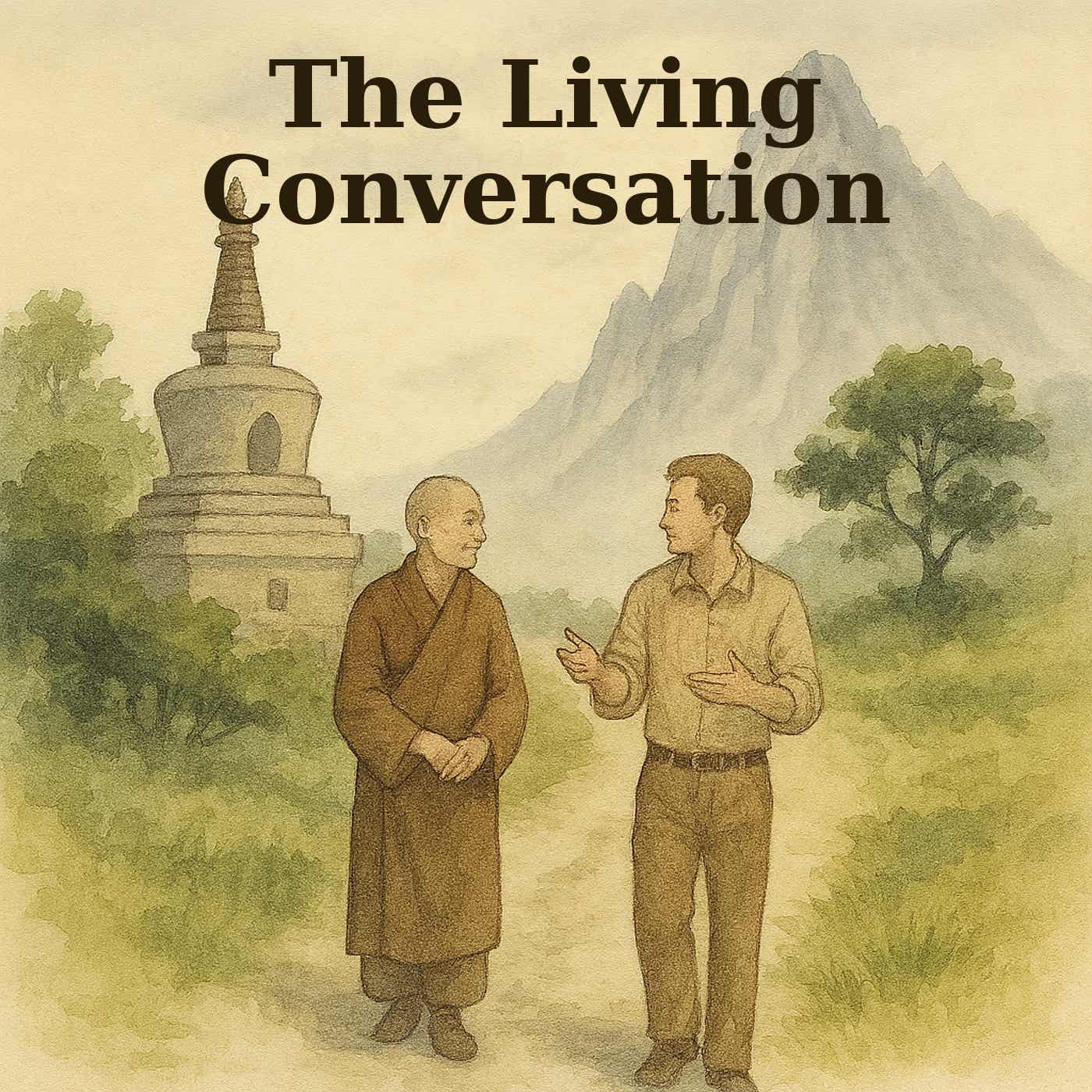
The Living Conversation · A podcast on philosophy

Your Spiritual Autobiography: Story, Self, and Practice (Kristan Swan)

·29 min·1 clip
Kristen Swan says an Episcopal Sunday service led to a “full body” realization that she was “whole and complete.”
1. The Living Conversation centers on Kristen Swan’s spiritual autobiography work and the role of story in spiritual practice. 2. Anthony Wright and Adam Dietz host Kristen Swan, who describes herself as a business coach, a writer, and a spiritual autobiographer. 3. The episode asks how writing, reflection, and group facilitation can help people meet “that which is bigger than ourselves.” 4. Kristen Swan says her work now focuses on small group facilitation, writing, and “discovering your spiritual autobiography.” 5. She describes the practice as non-denominational and says it can include religion, nature, or a science-minded view of the cosmos. 6. Anthony Wright brings up a Taoist and Buddhist exchange, including a reference to the Diamond Sutra and the phrase “if you can think of it, it’s already too small.” 7. Kristen Swan says the exchange helped her point out that concepts can become boxes around experience. 8. She explains that her programs come in an eight-week version and a more intensive retreat version. 9. She says both formats rely on storytelling, timed writing exercises, and prompts that participants reflect on, write about, and share in the group. 10. Kristen Swan says the sessions are in person and that the group talks about things people normally do not discuss face to face. 11. She describes timed writing as an “activator prompt” designed to get people outside their heads and back to themselves. 12. She says many people love the idea of writing, but the actual writing is more difficult than they expect. 13. Anthony Wright mentions Peter Elbow, and the discussion connects timed writing with clearing the deck for thought. 14. Kristen Swan says her earliest adult spiritual moment came when she chose baptism in the Episcopal Church. 15. She says a Sunday sermon about Jesus helped her hear the message that she was “whole and complete” and “loved as you are.” 16. She says that moment led her to realize that a mature relationship with spirituality came from curiosity, self-trust, and knowing herself. 17. Kristen Swan then frames storytelling as three buckets: stories we tell ourselves, stories inherited from others, and stories we are willing to share. 18. She says she wants people to become less intimidated by writing, and she recommends her journal “Spaghetti on the Wall” as a 15-minute daily practice. 19. The tone is reflective and practical, with extended back-and-forth discussion rather than a fast interview pace. 20. People interested in writing as self-reflection, spirituality, or group facilitation will get the most from it; listeners wanting a quick, purely factual interview may skip it.

As heard by us

A calm conversation about meaning, service, and the moment belief becomes personal.

Kristen Swan's conversation treats spiritual autobiography as a quiet, searching look at what lies beyond the self. The best stretches are the concrete ones: volunteering, service, community, and the adult baptism in the Episcopal Church.

Read the full review in PlayNext →

Why you'd press play

Press play if you want a calm, non-denominational conversation about spiritual autobiography, service, and belonging.

Read the full recommendation in PlayNext →
Listen to the show on