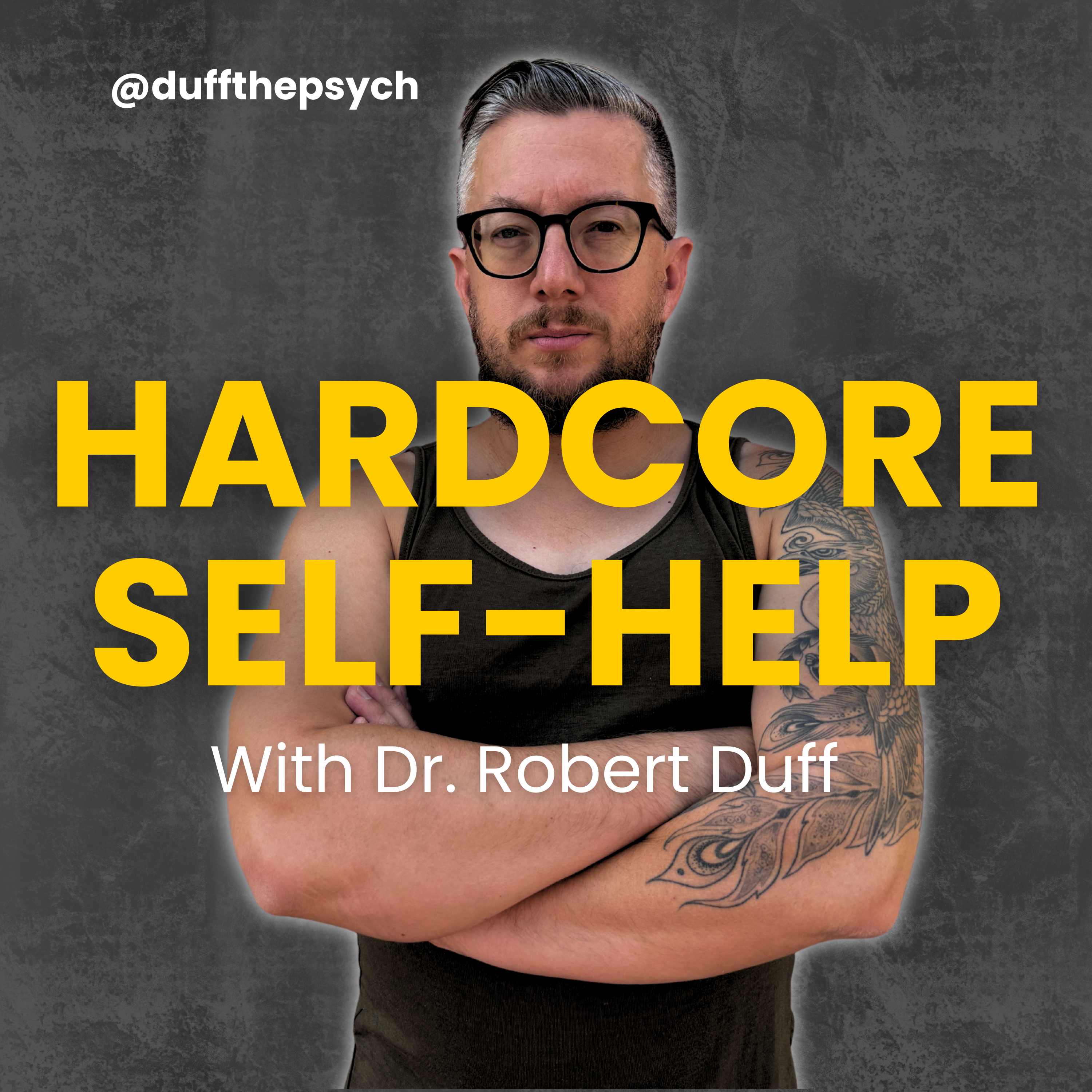
The Hardcore Self-Help Podcast with Duff the Psych · Robert Duff, Ph.D.

Chapter From My NEW BOOK - Bipolar Answers

·39 min·2 clips
Duff calls bipolar “a unique kind of suck” and says it can mean crippling depression plus manic fallout.
1. The Hardcore Self-Help Podcast episode centers on Duff’s book Bipolar Answers and one chapter about returning to college after a manic episode. 2. Dr. Robert Duff is the host, a clinical psychologist from Southern California, and he says the book comes from listener questions on his weekly show. 3. The episode exists to show what Bipolar Answers covers, from bipolar basics to school accommodations and disclosure. 4. Duff opens with the book’s April 16th release date and says the ebook can be pre-purchased on Amazon. 5. He says the book expands podcast answers with case studies, tables, and longer explanations. 6. The introduction defines bipolar as a disorder marked by manic episodes, sleep loss, impulsive choices, and consequences. 7. Duff says the DSM-5-TR places bipolar and related disorders in their own category, separate from depressive disorders. 8. He lists bipolar 1, bipolar 2, cyclothymic disorder, substance or medication-induced bipolar disorder, and bipolar disorder due to another medical condition. 9. Duff says bipolar 1 requires at least one manic episode and does not require depression. 10. He explains the young adult chapter through a student who started college for engineering, was hospitalized by police, and later took a year to work at a boba shop and intern at an animal sanctuary. 11. Duff connects that story to the National Institute of Mental Health estimate that bipolar often begins around age 25. 12. He uses the diathesis-stress model to explain how college stress can trigger symptoms in someone with genetic vulnerability. 13. The chapter describes California’s 5150 hold, the 5250 extension, and three common reasons for involuntary hospitalization: danger to self, danger to others, and grave disability. 14. Duff says mania can leave “wreckage” such as missed classes, skipped work, self-harm, and hazy memories. 15. He argues that the student’s decision to take time off and stabilize was responsible rather than a failure. 16. He recommends weighing school choice with a pros-and-cons chart that includes distance from home, funding, mental health resources, and the environment. 17. The tone is direct, conversational, and personally voiced, with phrases like “unique kind of suck” and “bad little cogs in the machine of capitalism.” 18. The format mixes book reading, clinical explanation, and practical advice for school and work. 19. People managing bipolar, college transitions, or disability accommodations would likely get the most from this episode. 20. Listeners wanting light banter or a purely entertainment-focused episode may skip it.
Listen to the show on