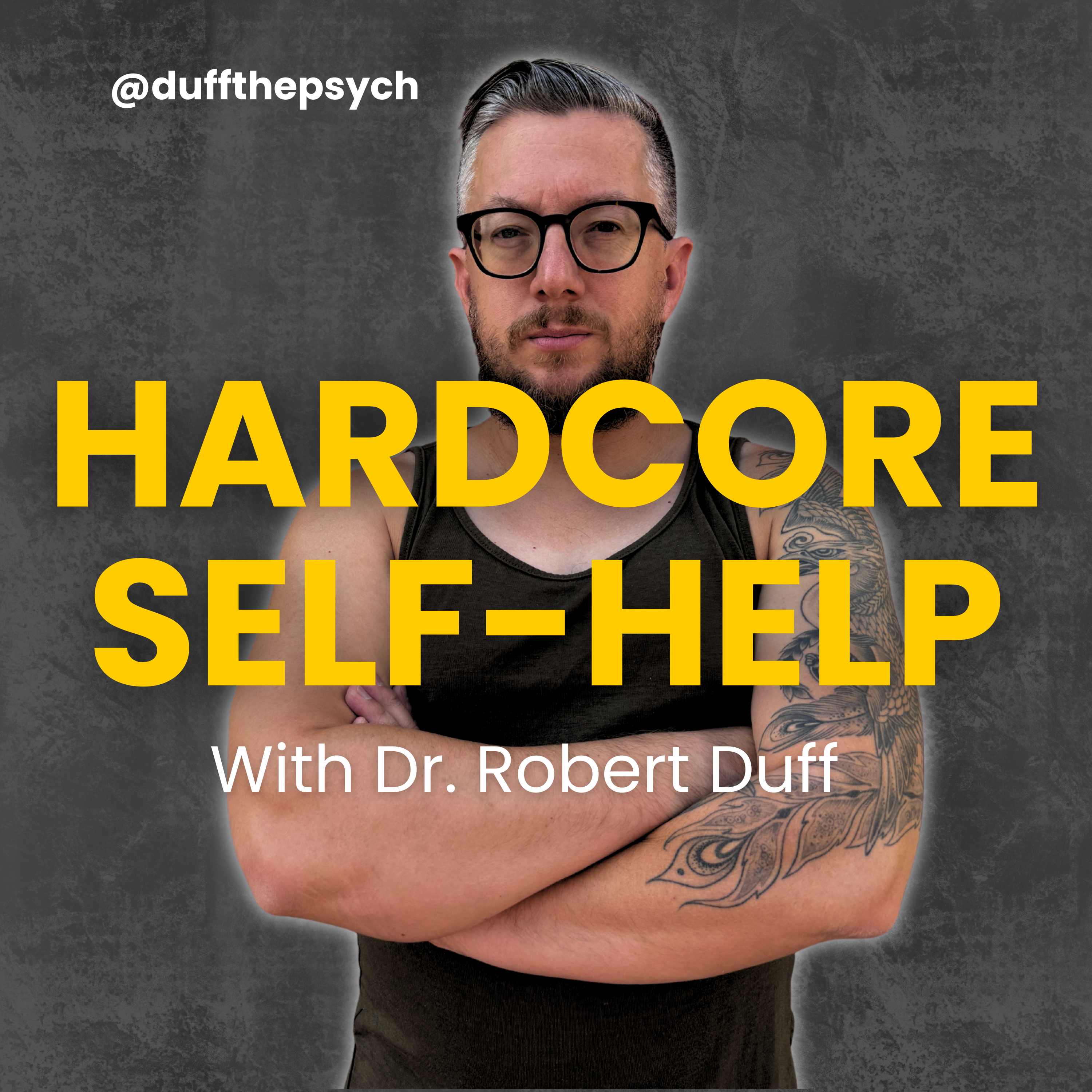
The Hardcore Self-Help Podcast with Duff the Psych · Robert Duff, Ph.D.

423: Neurodiversity Playbook with Dr. Matt Zakreski

·57 min·3 clips
“Quiet and compliant don’t mean attentive.”
The episode opens by revisiting the old message that success would come once ADHD was somehow solved. The guest pushes back on that right away. He describes a world built mostly by and for neurotypical people. He also notes that one out of five people has a brain that is fundamentally different in some way. The conversation treats that difference as neurological, not as a choice or a failure. He says there is something deeply satisfying about helping families and schools see that clearly. He wants adults to stop reading resistance, inattention, or sensory needs as defiance. He keeps returning to the phrase that neurodivergent kids are not failed neurotypicals. He agrees with that framing and connects it to his own experience. He describes ADHD paralysis in blunt terms. He talks about lying on the couch, scrolling, and feeling mentally stuck. He also describes the internal shame voice that says he is lazy or a screw-up even when nobody has said that out loud. That shame, he says, can become its own anchor. The discussion widens from executive function into emotion. He says the ADHD conversations he heard as a kid focused too much on focus and self-control. He thinks the emotional side got ignored. The guest agrees that the emotional cost matters. The episode points to anger, intense feelings, and the constant fear of being exposed as inadequate. He explains why the parenting books he is reacting against do not fit every child. He says the standard strategies are often written for a different kind of brain. The answer is not to force a child into neurotypical performance. The answer is to build something bespoke around how that child actually works. The conversation also touches on code-switching. He notes that he can present in a more neurotypical way when the setting demands it, like at a keynote or professional event. But in more comfortable settings, he is more visibly atypical. That contrast reinforces the point that adaptation is possible, but it is not the same as being fixed. The tone stays warm and practical throughout. The episode ends with discussion of the book, its website, and the fact that he brings copies to conferences. The whole exchange feels like an attempt to replace self-blame with a more accurate map.

As heard by us

A compassionate case for dropping shame and supporting a neurodivergent brain on its own terms.

Dr. Matt Zakreski and Duff the Psych center the episode on a simple but important idea: neurodivergent people are not failed neurotypicals, and the systems around them are often the ones that miss the mark.

Read the full review in PlayNext →

Why you'd press play

If your brain has ever been blamed for being wired differently, press play.

Read the full recommendation in PlayNext →
Listen to the show on