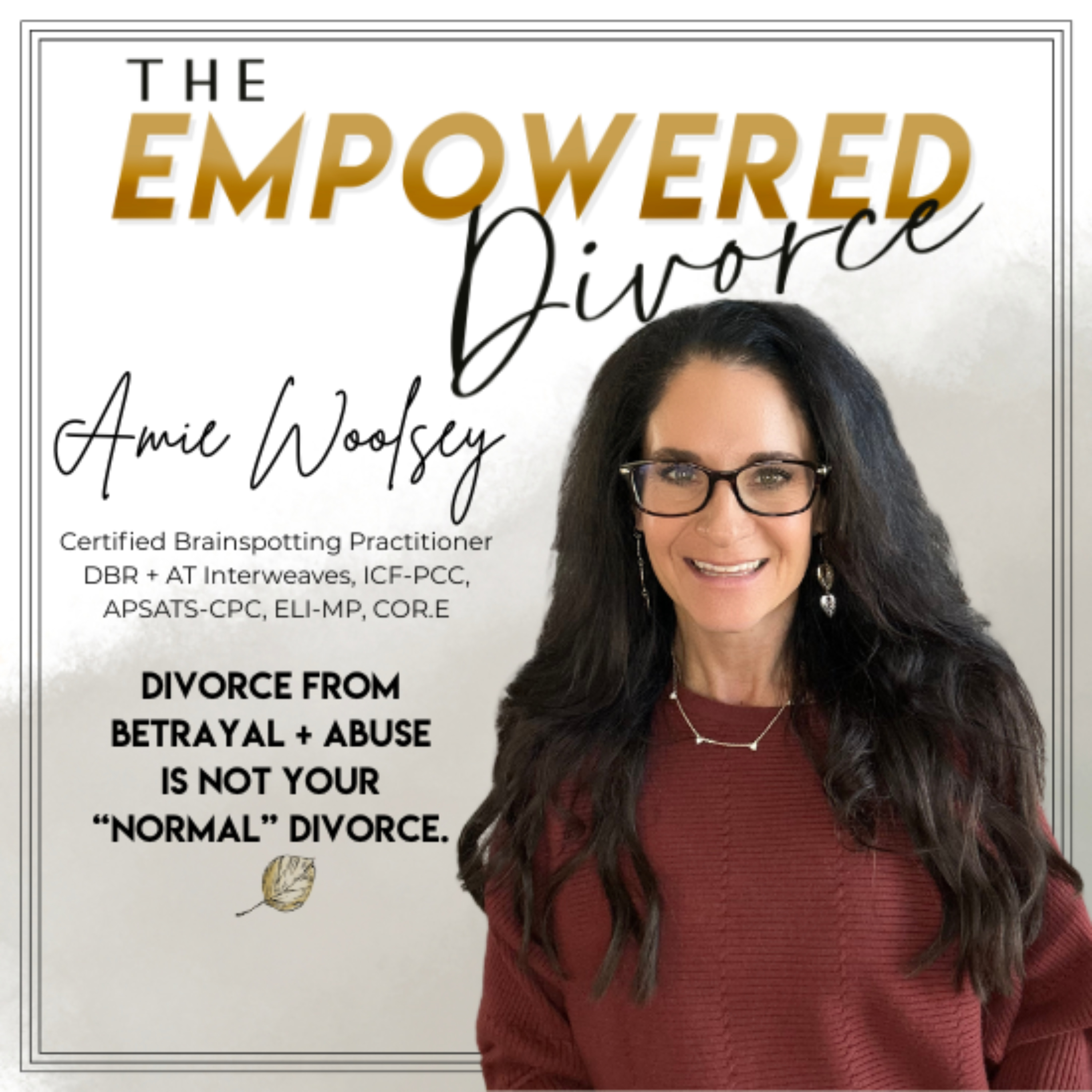
The Empowered Divorce Podcast; Navigating Divorce After Betrayal Trauma and Abuse · Amie Woolsey Certified Brainspotting Practitioner; APSATS-CPC, ICF-PCP,

140. Vulnerability After Betrayal

·31 min·3 clips
How does betrayal trauma impact your vulnerability and intuition in relationships?
This episode of The Empowered Divorce Podcast focuses on the specific challenge of reclaiming vulnerability after experiencing betrayal trauma and abuse within a relationship. The host, a divorce coach, records this as a solo follow-up to a previous conversation with her husband, Scott, about sharing one's story while dating. She aims to validate how betrayal fundamentally impacts a person's capacity for vulnerability. The host explains that abusive behaviors like deception, deflection, and gaslighting were used to hide a partner's betrayal, creating a false reality. She states that continuing to bond with a partner under these conditions adapts the central nervous system to that falsehood. This process, she argues, directly damages one's inherent vulnerability, sensitivity, and intuition. She admits her initial hesitation to discuss the topic, feeling unqualified compared to experts like Brené Brown. The host emphasizes that post-betrayal, vulnerability can feel terrifying because the person you were most vulnerable with became the source of your trauma. She describes how victims often become hyper-independent as a protective mechanism, shutting down the need for connection. The episode explores the journey of learning to be vulnerable again, starting with oneself in a safe, internal way. Rebuilding this skill is framed as a core part of healing and establishing new, healthy relationships. A key insight is that vulnerability after betrayal is not about instantly trusting others, but first about being honest with oneself. The host reframes hyper-independence not as strength, but as a trauma response that can hinder future intimacy. She posits that the nervous system must be recalibrated to recognize safety before vulnerability becomes possible externally. The conversation validates that feeling "broken" or closed off is a normal, protective reaction to profound deception. An interesting perspective is that the betrayed person's vulnerability was exploited, making its restoration a uniquely delicate process. The host suggests that practicing small, internal acts of self-honesty is the foundational step to rebuilding this capacity. The tone is compassionate, educational, and deeply personal, drawn from the host's own coaching experience and reflections. The style is conversational and directive, offering validation and a framework for healing. This episode is ideal for anyone navigating divorce or recovery from a relationship involving infidelity or coercive control. Listeners seeking purely logistical divorce advice or contentious co-parenting strategies might find the content too focused on internal emotional work.
Listen to the show on