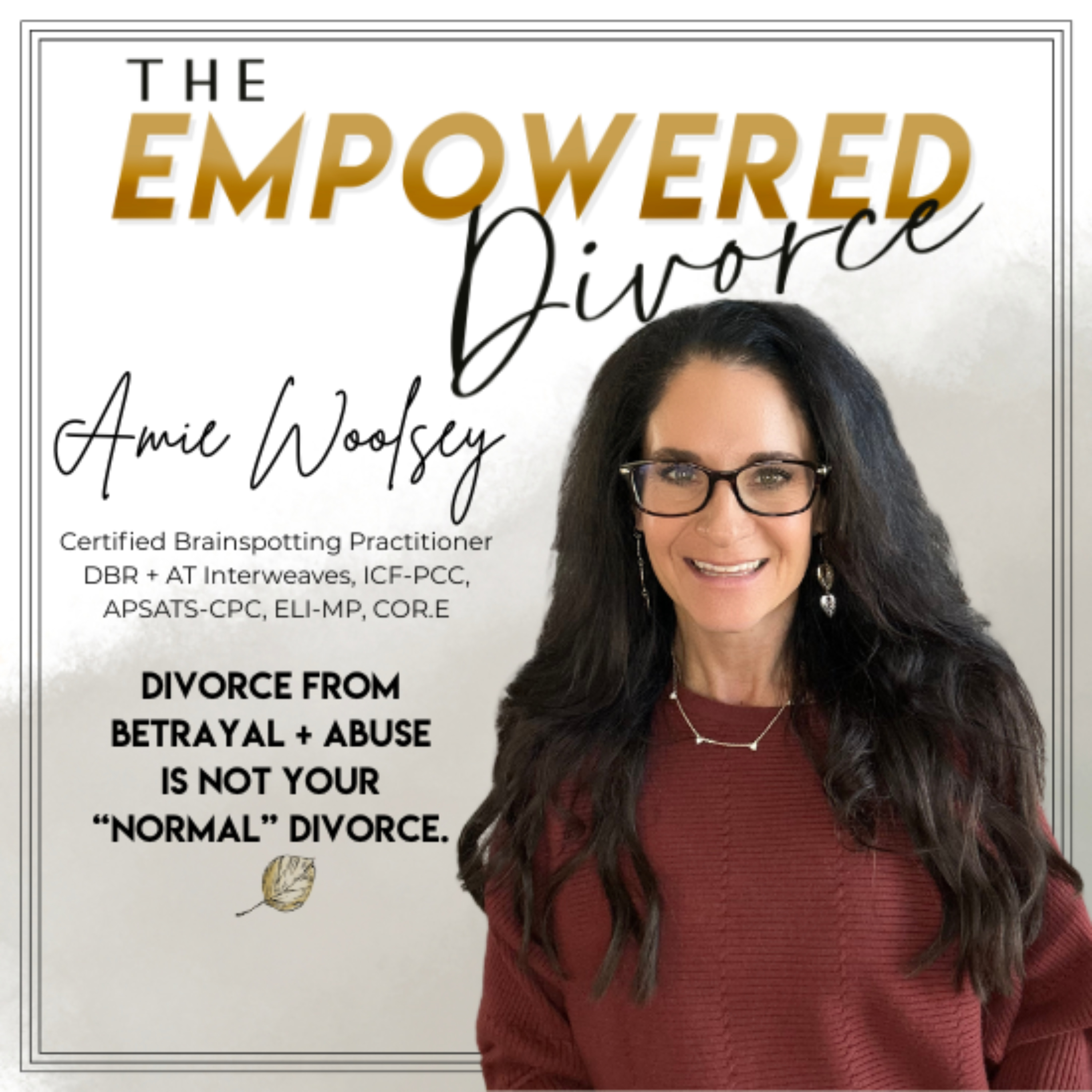
The Empowered Divorce Podcast; Navigating Divorce After Betrayal Trauma and Abuse · Amie Woolsey Certified Brainspotting Practitioner; APSATS-CPC, ICF-PCP,

139. When Should You Share Your Trauma While Dating ; A Conversation With Scott Woolsey

·37 min·3 clips
Scott reveals when to share trauma: when it doesn't feel forced and safety is present.
This episode of The Empowered Divorce Podcast features host Amy Wilsey and her husband, Scott Woolsey, discussing when to disclose past trauma from a "life-saving divorce" to a new partner. Amy, a divorce coach, and Scott, who participates in her workshops, address a common question from women navigating post-divorce dating after betrayal and abuse. The conversation centers on determining the right timing to share one's history, emphasizing there is no single correct answer. Amy and Scott suggest the decision depends on personal readiness, emotional safety, and the foundation of the new relationship. They advise listeners to check their intent for sharing, manage expectations about a partner's response, and be aware of how shame or a desire to "test" the relationship can influence timing. Scott shares that in their relationship, Amy disclosed her past fairly early due to its significant impact on her approach to dating. A key insight is that sharing trauma is not a one-time conversation but an ongoing part of a relationship's journey. The hosts discuss the importance of observing a partner's pattern of response over time, noting that consistency and healthy repair are crucial. They highlight that triggers will inevitably occur, and the work lies in managing one's own reactions, not expecting a partner to fix them. Scott reflects that it is normal for him to feel bad when he unintentionally triggers Amy, which contrasts with dynamics in abusive past relationships. Amy and Scott provide a specific example from their early marriage involving a trigger related to Scott visiting his ex's house. They describe a healthy resolution involving communication, validation, empathy, and collaborative boundary-setting without either person controlling the other. The episode stresses balancing vulnerability, sensitivity, and intuition—what Amy calls "wise femininity"—to gauge safety. The tone is conversational, supportive, and educational, blending personal anecdotes with practical coaching advice. Amy offers trigger warnings and acknowledges the grief that can arise when learning about healthy relationship dynamics. This episode would greatly benefit listeners who are dating after a traumatic divorce and seeking guidance on vulnerability and assessing partner safety. Those who are not considering new relationships or prefer episodes without a male perspective might find it less relevant.

As heard by us

A steady guide to sharing on your own terms without turning disclosure into a test.

The episode keeps its focus on a hard but familiar problem: when, and how, to tell a new partner about trauma, betrayal, abuse, and the fallout from a difficult divorce. It does not drift into abstract advice.

Read the full review in PlayNext →

Why you'd press play

When to tell a new partner about your past?

Read the full recommendation in PlayNext →
Listen to the show on