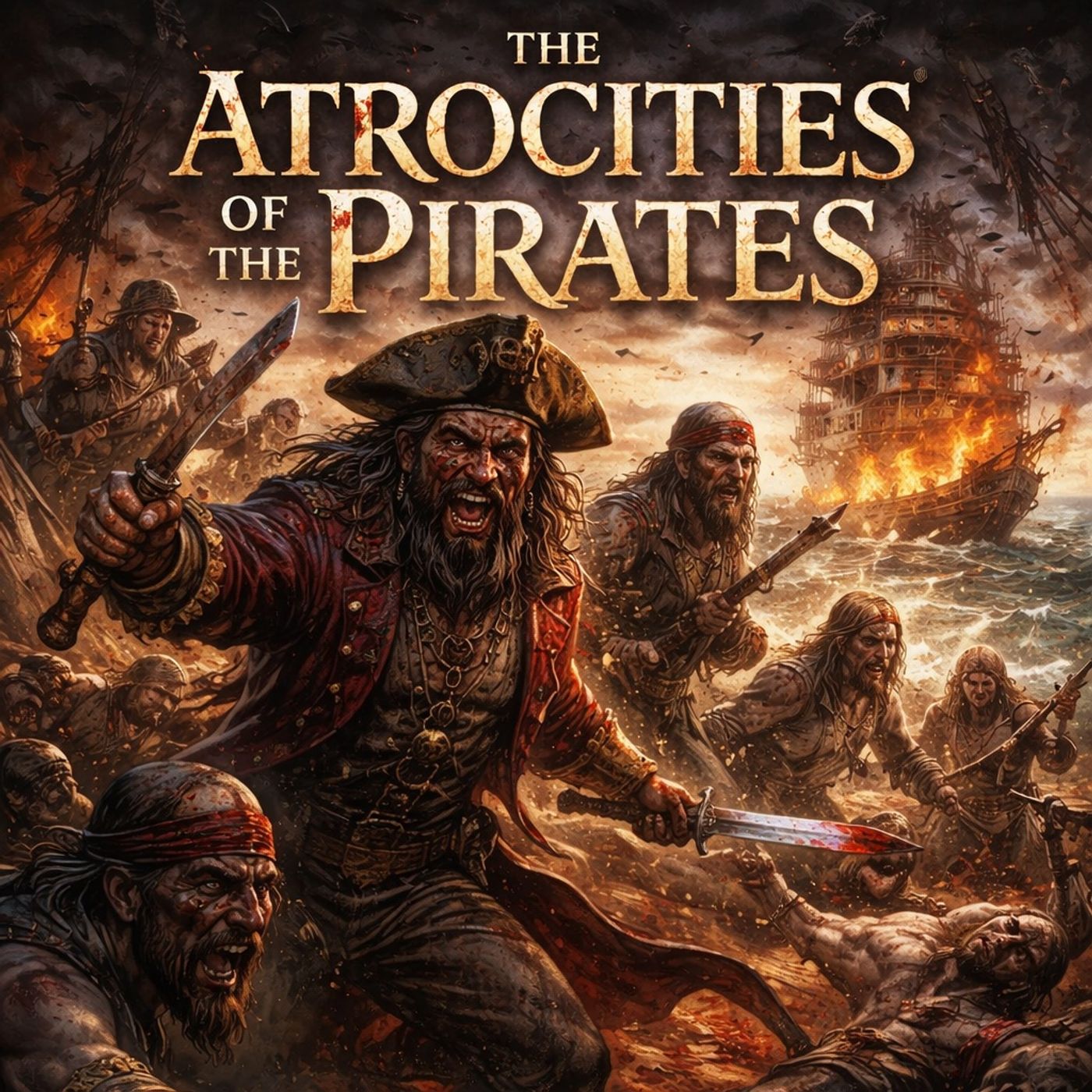
The Atrocities of the Pirates

01 - The Atrocities of the Pirates

·34 min·2 clips
"Do not imagine that I am a fool, sir. I know that all vessels going to Europe have specie on board."
1. "The Atrocities of the Pirates" narrates a first mate's 1822 capture by pirates off the coast of Cuba while serving aboard the merchant brig Zephyr. 2. The unnamed narrator, identified only as Mr. Smith by his captor, is joined by Master Mr. Lumsden, passenger Captain Cooper, and several children traveling from Jamaica to London. 3. The account's core question is how an ordinary merchant voyage descended into an extended ordeal of threats, torture, and forced detention at the hands of a pirate crew. 4. The narrator embarked from Kingston, Jamaica, aboard the Zephyr in April 1822 under Master Lumsden, whom he distrusted for his "ignorance and want of education." 5. Lumsden, against the advice of the narrator and Captain Cooper, chose the leeward passage past Cuba despite warnings it risked encounters with pirates. 6. A suspicious schooner approached near Cape Roman; Lumsden ignored the crew's warnings until the vessel was within gunshot range and fired on the Zephyr. 7. A boarding party of nine or ten armed pirates seized the Zephyr and marched the narrator, Lumsden, Cooper, and the ship's carpenter aboard the corsair. 8. The pirate captain, described as about thirty-two, of Spanish and Yucatan parentage, demanded to know the Zephyr's cargo of sugar, rum, coffee, arrowroot, and dyewoods. 9. He repeatedly accused Lumsden of concealing money, threatening to detain the brig and burn it with everyone aboard if specie was not produced. 10. A stolen goat was brought aboard and slaughtered and flayed alive on deck as a direct warning of what awaited the captives. 11. The captain informed the narrator he would be detained to navigate the schooner because none of the pirate crew understood navigation. 12. The narrator pleaded his family circumstances, but Lumsden's private response revealed self-interest, offering promises of reward if the narrator alone was kept. 13. Overnight, the ship's carpenter revealed to the narrator and Cooper that specie was hidden aboard, a secret Lumsden had confided to him earlier. 14. The pirates looted the narrator's cabin, taking diamond rings and valuables, though he recovered his gold watch and sextant from a seaman who had hidden them. 15. Lumsden and Cooper were lashed to the ship's pumps with combustibles piled around them and threatened with burning unless they surrendered hidden money. 16. Lumsden confessed and produced a small box of doubloons; Cooper, subjected to the same threat, surrendered nine additional doubloons before the fire was extinguished. 17. The narrative is written in formal, first-person nineteenth-century prose, presented as a factual survivor's account rather than fiction. 18. The tone is grim and matter-of-fact, emphasizing physical threats, betrayal, and the narrator's own fear of assassination and forced complicity. 19. Listeners interested in maritime history, piracy, or first-person historical survivor accounts would find this compelling. 20. Listeners seeking modern true crime or fast-paced fictional adventure narration may find the archaic language and pacing slow.

As heard by us

A pirate seizure turns into a grim negotiation over navigation, family, and survival.

Set aboard the merchant ship Harrington, the episode follows a return voyage to England that turns bleak when pirates keep the narrator for his navigation. At Kingston, the captain's poor health and the crew's lack of navigation skill make that knowledge a form of captivity.

Read the full review in PlayNext →

Why you'd press play

A pirate captain decides you are his navigator, and that is where the trap closes.

Read the full recommendation in PlayNext →
Listen to the show on