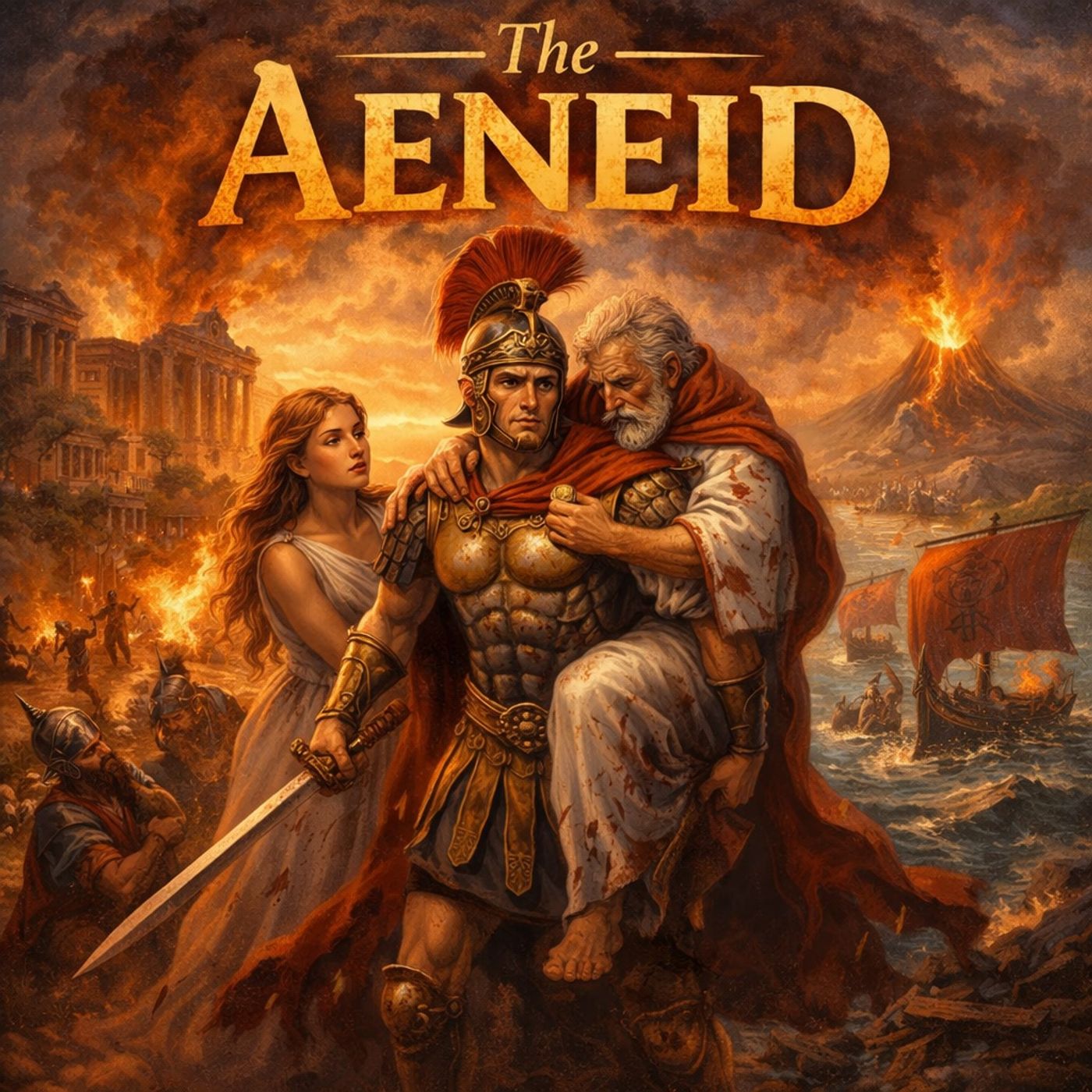
Aeneas, forced by fate and Juno's hate, embarks on a perilous journey to found Rome.
This episode begins Virgil's epic poem "The Aeneid," translated by John Dryden and narrated in this audio production. It introduces the central hero, Aeneas, a Trojan prince destined to found Rome. The narrative opens by invoking the Muse to explain the divine conflicts driving Aeneas's long journey.
The poem states Juno, Queen of the Gods, holds an unrelenting hatred for Aeneas and persecutes this brave, just man. Her wrath forces Aeneas into exile from Troy, condemning him to long labors by sea and land. Aeneas's ultimate fate is to win the Latian realm and build a destined town, restoring his gods and founding a royal line. This lineage will produce the Alban fathers and the long glories of majestic Rome. Juno's specific offence stems from an ancient rumor heard among the people of the sky. The prophecy claims future times will see the Trojan race overthrow her beloved city of Carthage. Carthage is described as a powerful ancient town, a Tyrian colony seated by the sea, which Juno cherishes more than Argos or Samos. She had designed Carthage to be the seat of a future awful empire, making the Trojan prophecy a direct threat.
A central question posed is whether heavenly minds should show such high resentment or exercise their spite in human woe. The episode establishes the core conflict between fate's decree for Rome and Juno's divine spite. Juno's persecution involves involving Aeneas's life in endless cares, exposing him to wants, and hurrying him into wars. The translated verse emphasizes the grandeur and inevitability of Rome's founding myth. The opening lines, "Arms, and the man, I sing," immediately set the scope as a martial epic about a single hero's trials.
The tone is formal, majestic, and poetic, adhering closely to the epic tradition. The style is narrative, driven by prophetic exposition and divine machinations. Listeners who enjoy classical literature, foundational myths, and poetic storytelling will appreciate this episode. Those seeking modern analysis or casual conversation might find its dense, translated verse less engaging.