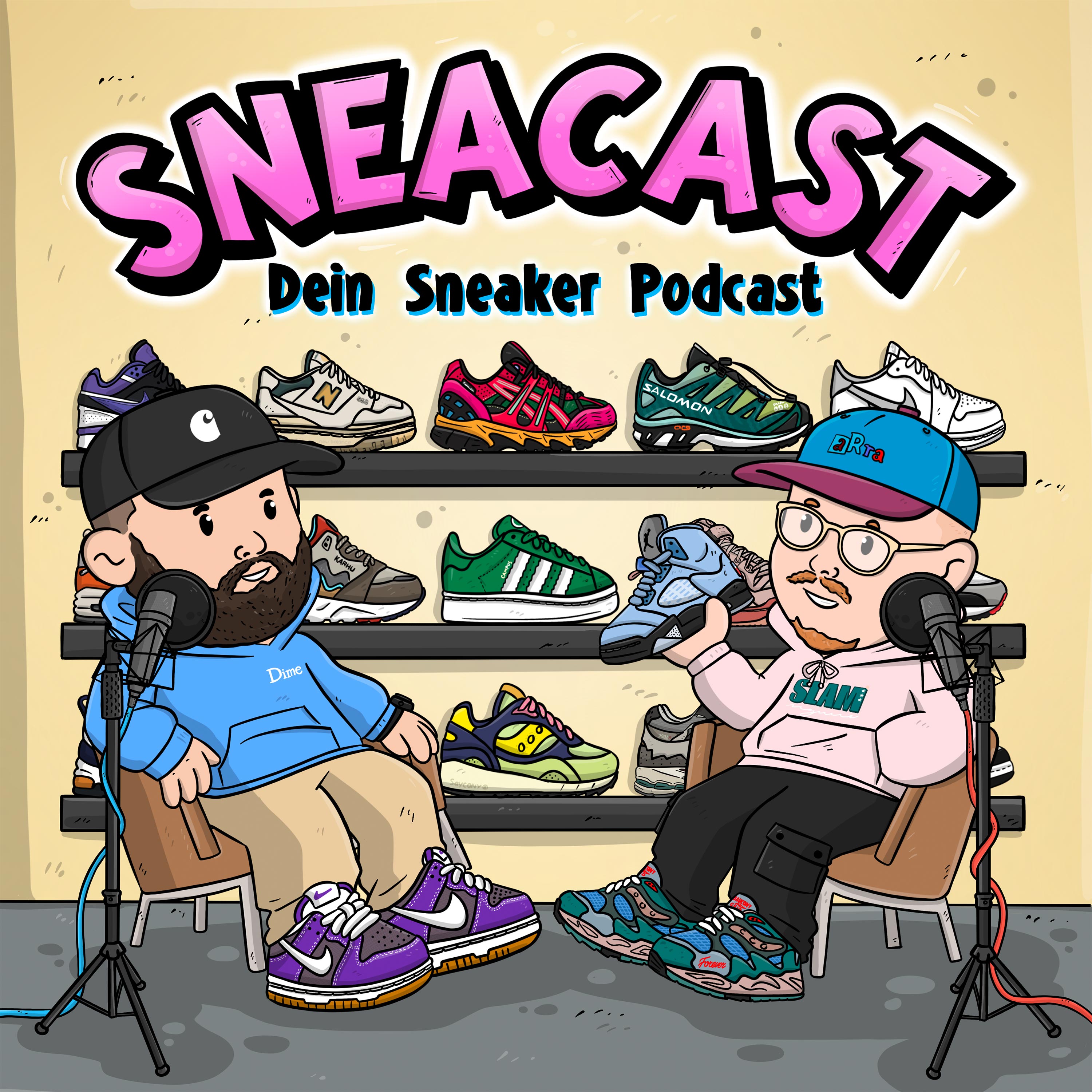
Sneacast - Dein Sneaker Podcast · Adi & Sam

How to: Sneakerstore 2025

·1 hr 9 min·6 clips
Adi and Sam reveal they've always dreamed of opening their own sneaker store, especially now that a space in Hamburg is free.
1. Sneacast, a German-language sneaker podcast, devotes a full episode to the thought experiment of opening the perfect sneaker store in 2025. 2. Co-hosts Sam and Adrian open the episode discussing Sunday outfit routines: Adrian wears sports jerseys matched to current finals, Sam has gone sockless indoors for three years using Hoka recovery slides. 3. The episode is framed around Sam's recurring dream of opening 'Triple S' — Sam's Sneaker Store — which was reignited by the closure of Hamburg sneaker store 'Alike'. 4. Sam asks a ChatGPT prompt for a compact guide to opening a sneaker store in 2025, then reads it aloud: six pillars covering vision, location, brand mix, social media, finances, and 2025 trends. 5. ChatGPT recommends finding a niche (limited drops, sustainable brands, or vintage-retro models), building a local community, and using Instagram and TikTok as the primary storefront. 6. Both hosts acknowledge the AI output is surface-level but not wrong, then proceed to stress-test the advice against real-world experience in sneaker retail. 7. Adrian worked in sneaker retail and says he quickly learned he never wanted to sell products professionally — the pressure of hitting revenue targets at stores like Snipes, Footlocker, and Kicks made staff feel like sales robots rather than sneaker people. 8. Adrian and Sam agree that the best sneaker stores — Glory Hole and Beeson in Hamburg — work because staff stay for years and genuinely know their product, unlike chains where turnover is high. 9. On location, Sam argues German sneaker retail is concentrated in million-cities: Hamburg, Berlin, Munich, Cologne, Frankfurt — anywhere smaller (citing Fulda, Rostock, Gütersloh, Erfurt) is a structural disadvantage. 10. Glückstreter in Bremen is cited as a rare exception that seems to work with a concept well-matched to its region. 11. Sam's home city of Lübeck would need a combined concept — like Kith's café-plus-sneaker model — to be viable, but even then, selling 80-euro candles there won't work. 12. For Hamburg, Sam maps out the obstacles: the Schanze neighborhood already has Biesten, Glory Hole, and Lobby; Mönckebergstraße has Thomas i, Kicks, Snipes and Footlocker; Hafencity might work but is likely unaffordable. 13. Adrian recalls his own 2019-2020 sneaker store fantasy involving a shisha lounge in front and a sales floor behind — an idea he now calls 'absolutely idiotic.' 14. On brand strategy, Sam explains the Vans problem: you cannot order just the Oldschool — Vans requires buying the full collection, and loyal Oldschool customers already buy from Zalando at discount prices anyway. 15. Adrian extends the insight to Champion: the Made in US hoodie dream requires taking the full Champion catalogue, which no small store can move. 16. Both converge on a niche-brand strategy: start with Mizuno, Saucony, Mercer Amsterdam, and Gramicci — brands that want in-store placement, negotiate on terms, and sell shoes people can only evaluate by actually holding and trying them. 17. Sam argues that seeing an Omni 9 or Wave Rider 10 or Shadow 6000 in-store makes people willing to pay full price for it in a way that online browsing does not. 18. The episode tone is relaxed and conversational, driven by Sam and Adrian riffing on shared work experience from their time at the Lübeck sneaker store 'Sneaks.' 19. Sneaker enthusiasts who dream of running their own shop, or anyone curious about the economics and realities of independent sneaker retail, will find the episode useful and entertaining. 20. Listeners looking for news about specific sneaker releases or technical reviews of shoes will not find that content here.
Listen to the show on