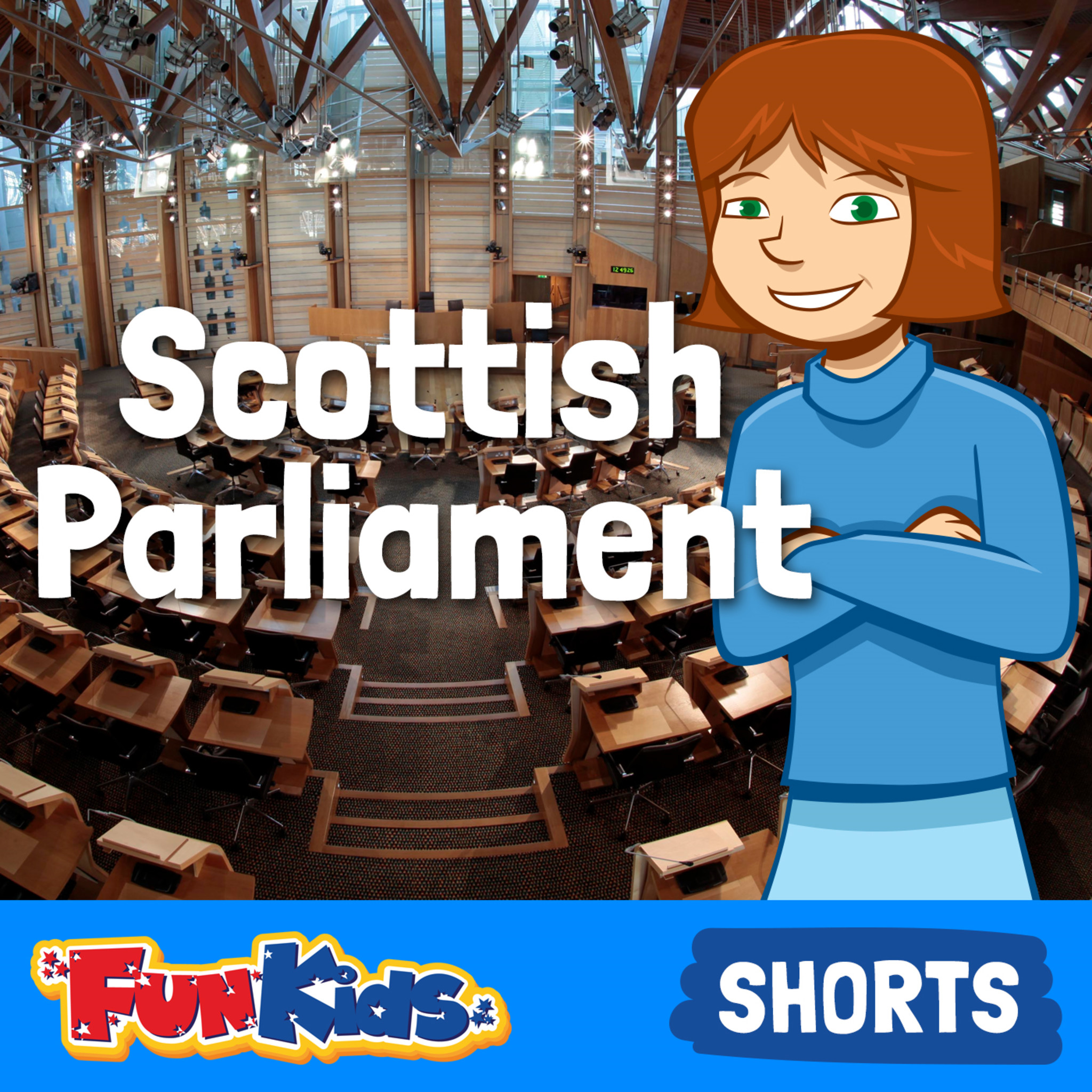
The episode begins by comparing democracy to children deciding on a game through voting, making the concept accessible. It defines democracy as a system for running a country or community, focusing on representative democracy where elected people make decisions. Elections are introduced as the method for choosing these representatives. The host explains that politicians belong to political parties with similar ideas, listing Scotland's five main parties: Scottish Conservative and Unionist Party, Scottish Green Party, Scottish Labour Party, Liberal Democrats, and Scottish National Party. It notes that parties communicate their views so voters can choose based on alignment. The episode then transitions to defining Parliament as the group of elected representatives, emphasizing their role in deciding on behalf of the people. Parliament's main jobs are outlined as creating new laws and allocating the country's money. The episode mentions that multiple parliaments affect Scotland, starting with the UK Parliament based in the House of Commons and House of Lords, where politicians are called MPs. It also references the European Parliament, though details are cut off in the transcript. Throughout, the tone is educational and tailored for children, using clear examples and avoiding jargon. The structure moves from basic concepts like voting to more specific institutions, building understanding step by step. The content is factual and neutral, presenting information without bias. The episode serves as an introductory guide to Scottish political systems, aiming to engage young listeners with relatable analogies and straightforward explanations.