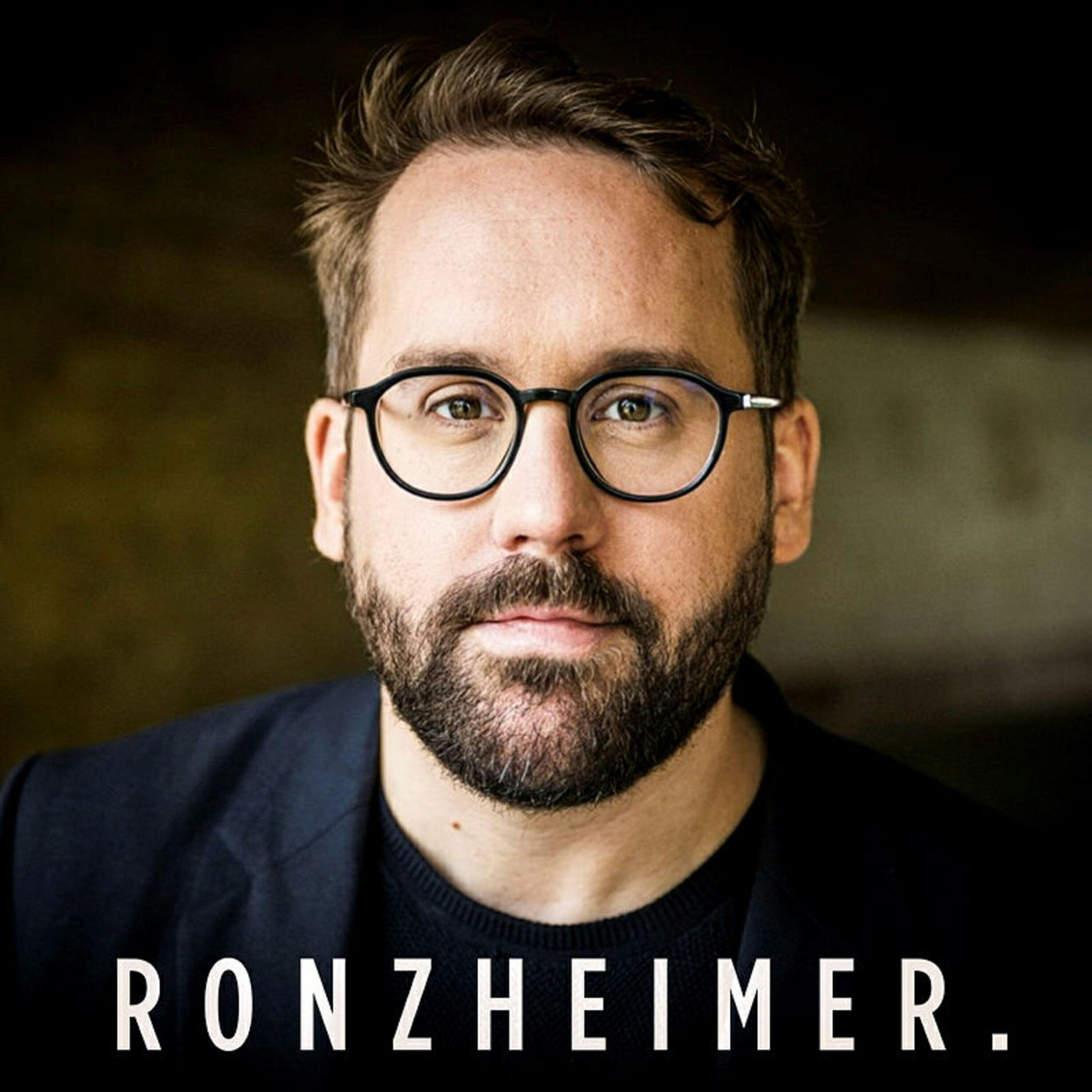
RONZHEIMER. · Paul Ronzheimer

Was Deutschland jetzt aus Trumps Krieg lernen muss. Mit Susanne Wiegand

·1 hr 2 min·5 clips
President Trump declares 'we win regardless' as US-Iran negotiations continue late into the night in Pakistan.
1. RONZHEIMER. host Paul Ronzheimer interviews defense industry veteran Susanne Wiegand on what the Iran-US war means for Germany's military and civil preparedness. 2. Wiegand served as CEO of Rank Group (tank transmissions) until 2025 and previously held senior positions at Rheinmetall; she now sits on the supervisory boards of VW and drone manufacturer Quantum Systems. 3. The episode's core question is whether Germany — and the Western world broadly — has any viable answer to the mass cheap-drone warfare demonstrated by Iran against Gulf neighbors after US-Israeli strikes. 4. Wiegand states that J.D. Vance and Jared Kushner are leading US negotiations with Iran in the Serena Hotel in New York, while Trump told reporters at 23:00 German time that 'it did not matter to him if a deal is reached — we win regardless, we have defeated them militarily.' 5. Iran's negotiating demands — control of the Strait of Hormuz, full sanction removal, and war reparations — were rejected by the US delegation, while talks are set to continue Sunday. 6. Wiegand argues that the Gulf states and the West failed to prepare for mass drone swarms despite Iran's Shahed capability being publicly visible since its first strikes on Kyiv in 2022, when Iran supplied Russia with these weapons. 7. She speculates that planners assumed a fast regime takedown, as achieved in Venezuela, rather than planning for a sustained campaign in which Iran would disperse its drone factories and maintain production under attack. 8. Israel and the US have complete air superiority over Iranian skies — Iranian air defenses cannot stop them — so Iran's remaining asymmetric tool is mass drone and missile pressure on alliance partners and US regional bases. 9. Wiegand argues the fundamental economic problem is that using Patriot and IRIS-T missiles costing millions to shoot down Shahed drones costing $20,000-$40,000 each is not sustainable at scale, and Western inventories cannot keep pace with adversary production rates of 3-5 million drones per year. 10. She identifies Ukraine as the only Western-aligned country that has actually solved the problem, scaling its own drone production to compete in the numbers race while simultaneously developing electronic warfare, jamming, and anti-drone drone systems through rapid iterative cycles. 11. The preferred countermeasure hierarchy Wiegand recommends is: attack enemy production facilities first; then electronic jamming and AI-guided disruption; then cannon-based drone interceptors such as Rheinmetall's existing system; and only as a last resort, expensive air-defense missiles. 12. Wiegand responds to Rheinmetall research chief Armin Pappberger's comments in The Atlantic, where he called Ukrainian drone manufacturers 'housewives with 3D printers' doing 'Lego' work with no real technological breakthrough, calling his statements 'unhappy, disrespectful, and factually wrong.' 13. She argues that Ukraine's distributed household-level production is strategically superior precisely because it is hard to target and destroy, and that innovation should be defined by effectiveness against a threat, not by development hours or high-tech complexity. 14. Wiegand diagnoses a structural conflict between large defense primes like Rheinmetall — which define innovation as high-tech systems — and agile drone start-ups that iterate fast but need industrial partners to scale, arguing neither side alone can solve the problem. 15. On Germany specifically, she says procurement cycles of 3-5 years are incompatible with drone warfare, where software development cycles are measured in weeks, and that Germany still lacks the 'ever-warm production' model needed for continuous output. 16. Wiegand states that Germany is already being attacked by hybrid means daily — cyberattacks, unauthorized drones over military facilities, and infrastructure sabotage — but politicians avoid clear communication about this to prevent public panic, which she argues is both unnecessary and counterproductive. 17. The episode is a structured expert interview, with Ronzheimer asking pointed follow-up questions and Wiegand giving direct, technically grounded answers; the tone is serious but not alarmist, with occasional frank admissions of uncertainty. 18. Wiegand repeatedly acknowledges the limits of her knowledge ('I'm not in the innermost circles') while being willing to make clear normative judgments about procurement failures and political communication deficits. 19. Best suited for listeners interested in European defense policy, NATO readiness debates, or the industrial economics of modern drone warfare. 20. Likely to frustrate listeners who expect policy solutions rather than structural diagnoses, or who do not read German.
Listen to the show on