“There is no trinity” and worshiping Jesus, Moses, Muhammad, or a pastor is called “gross sin.”
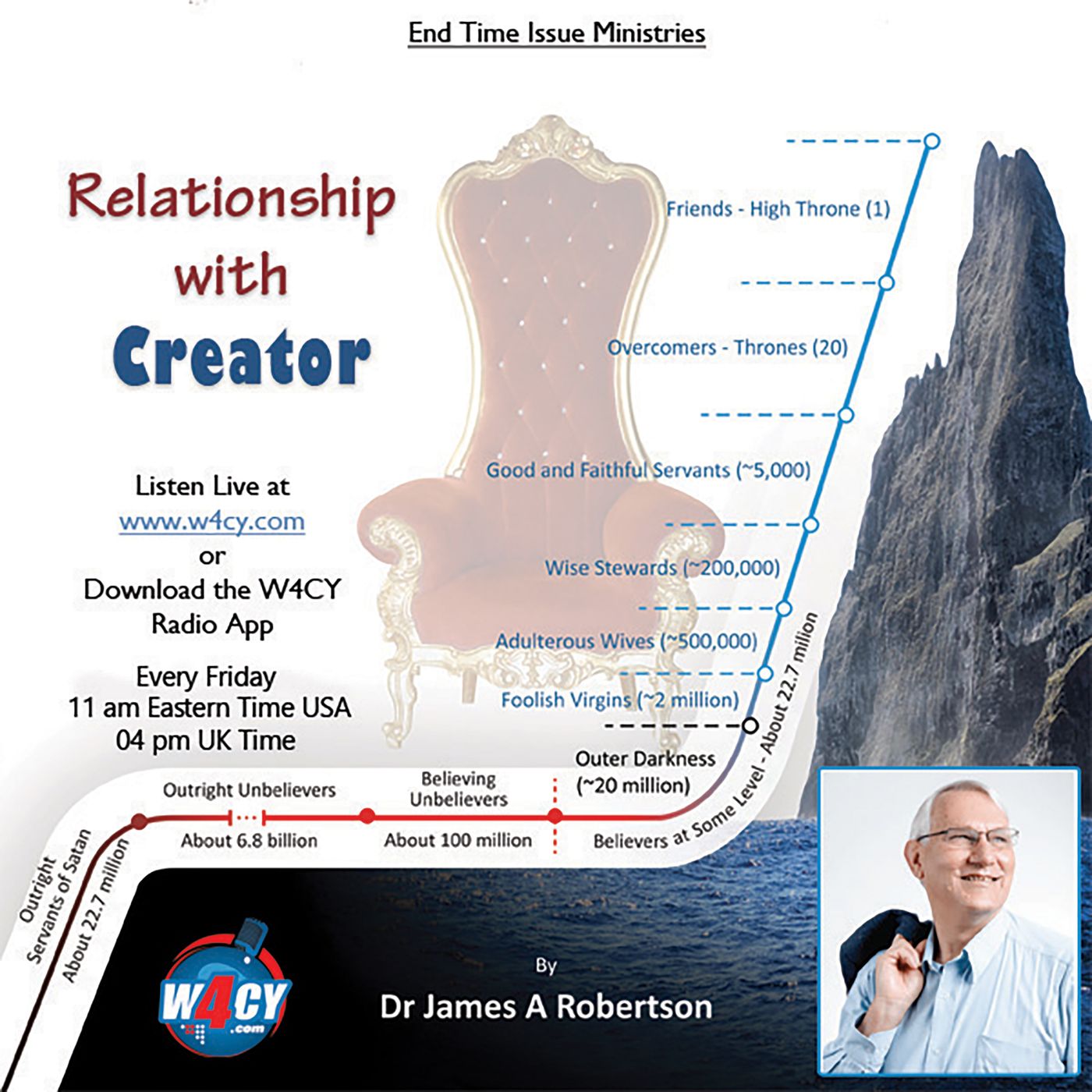
1. Relationship with Creator focuses on James Robertson’s message that people exist to become friends of YAH, the Creator.
2. James Robertson speaks as the host, and he describes himself as a researcher, publisher, teacher, doctor of engineering, and retired military commander.
3. The episode argues that the point of human life is a “deep personal relationship” with YAH, not a religious label.
4. Robertson says there is “no trinity” and states that Jesus is not God.
5. He names Moses, Muhammad, priests, rabbis, pastors, and imams as examples of people or offices that should not be worshiped.
6. He cites Deuteronomy 6:5 and says the whole point is to love YAH with all heart, mind, soul, and strength.
7. Robertson says the Torah, the Bible, and the Koran are human books and “contain error.”
8. He says the Protestant Bible was assembled by a committee about 100 years after the death of Yahushua.
9. He claims there are “over 1,250 discrepancies” between different source manuscripts of the New Testament.
10. Robertson says creation happened in an “iterative, experimental manner” over millions of years.
11. He connects that view to plants, animals, solar systems, and other planets that “didn’t quite work out.”
12. He says a global hydraulic and tectonic event called the flood destroyed the earth’s surface about 4,500 years ago.
13. Noah and his family are presented as surviving that flood, and Robertson says artifacts found on earth therefore cannot be older than 4,500 years.
14. He says Satan rebelled before man was created and challenged YAH to a contest to deceive humankind.
15. Robertson says the rules of engagement limit what YAH may disclose unless a believer asks an appropriate question.
16. He presents Yeshua as the most powerful created being, obedient to death and now seated at the right hand of the Almighty.
17. The tone is combative, instructional, and repetitive, with long direct address to listeners and frequent website references.
18. The format is essentially a solo teaching monologue with occasional self-interruptions and promotional references to articles, emails, and broadcasts.
19. Best for listeners interested in anti-institutional Christian teaching and alternative theology.
20. Skip if you want cautious, mainstream, or academic religious analysis.