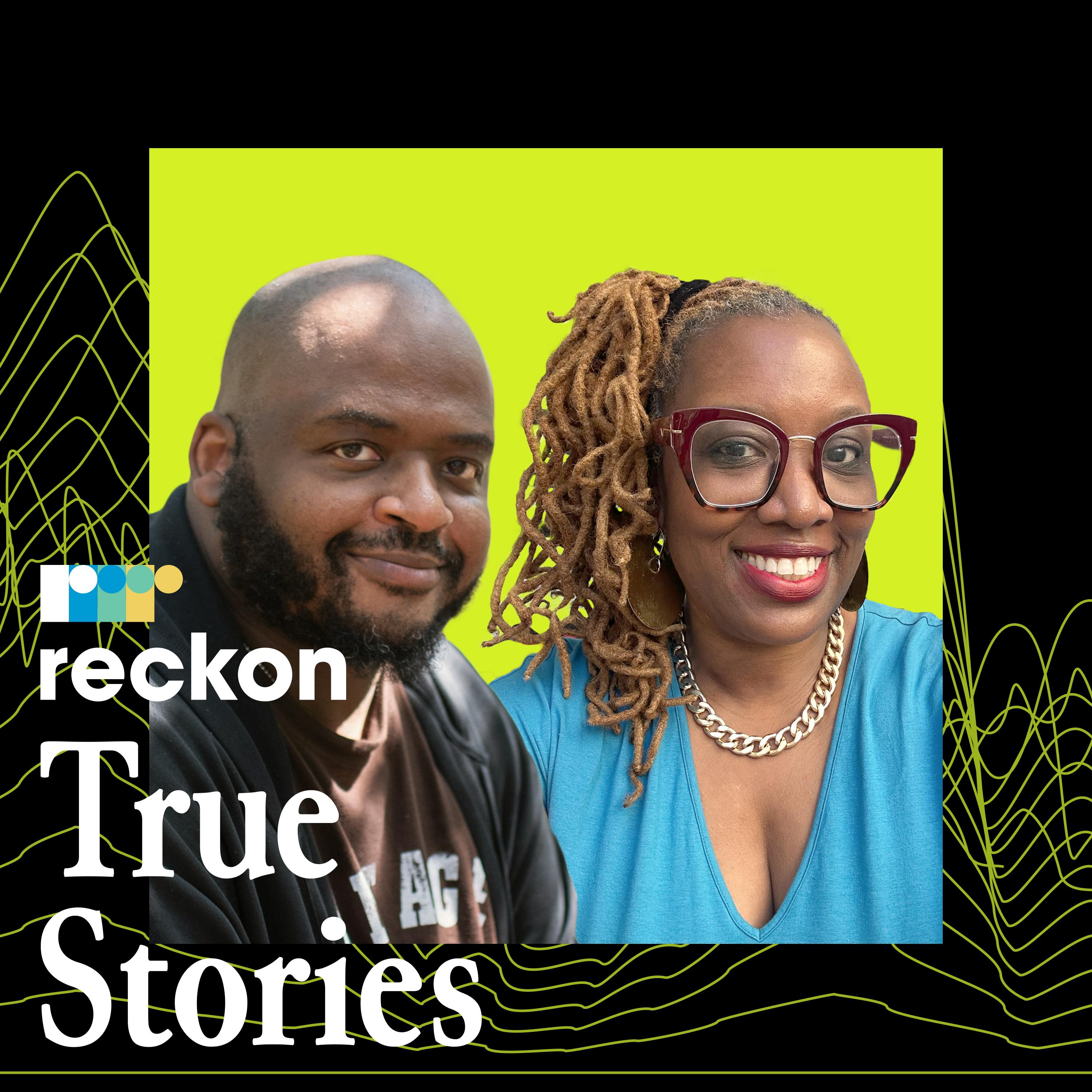
Reckon True Stories · Ursa Story Company

Putting the ‘I’ Back in Essay, with Deesha Philyaw and Kiese Laymon

July 9, 2024·46 min·3 clips
Deesha Philyaw spent 15 years learning that a 20-page emotional essay about her father was a journal entry, not art.
Someone brought the wrong book. That small embarrassment turns out to be the right doorway, because the conversation keeps circling confusion, permission, and the human mess behind polished nonfiction. Deesha welcomes listeners with real affection. She describes Reckon True Stories as a place for essays, journalism, and memoirs that connect people, then turns to Kiese with the ease of a friend who also knows the credentials matter. The banter matters. It keeps the room loose enough for craft talk to feel lived-in, not sealed behind a podium or flattened into advice. The question underneath is personal authority. When the guest remembers school, the bright spot is a poetry contest, an original poem about a lazy sailing crew, and the quiet pride of winning. After that, the record gets foggy. College writing, even from a good student, feels uninspired and forgettable, partly because economics did not ask for the kind of self-reckoning the later work would need. The turn comes after doing everything right. College, marriage, heterosexual respectability, and motherhood are named as markers that were supposed to feel like a prize, and then did not. That gap becomes the pressure point. The guest suggests writing began to matter when there was finally something to say, or at least something she would let herself say. Fiction gave the first cover. From there, the conversation moves toward the essay, where the self is no longer hiding behind invented people and the form cannot be treated like a set of manners. The MFA thread is warm but firm. The guest does not dismiss programs. She says they are exactly what some people need, while naming her own freedom in not having to unlearn someone else's rules. That freedom sounds maternal and bosslike. By the time she is somebody's mother and somebody's boss, the old permissions have less power over what she can write. The ending widens the frame. Essay and storytelling can stay in tension, close to fiction and still answerable to the lived self, with plenty left to talk about.

As heard by us

A warm, searching conversation about essays, selfhood, and the permission to write in the first person.

Personal essay becomes a question of permission in this conversation: when a writer can say "I," what has to happen before the self feels available, and how nonfiction can tell a story without dressing itself up as fiction.

Read the full review in PlayNext →

Why you'd press play

Press play for a porchside conversation about why nonfiction can sometimes say what fiction cannot.

Read the full recommendation in PlayNext →
Listen to the show on