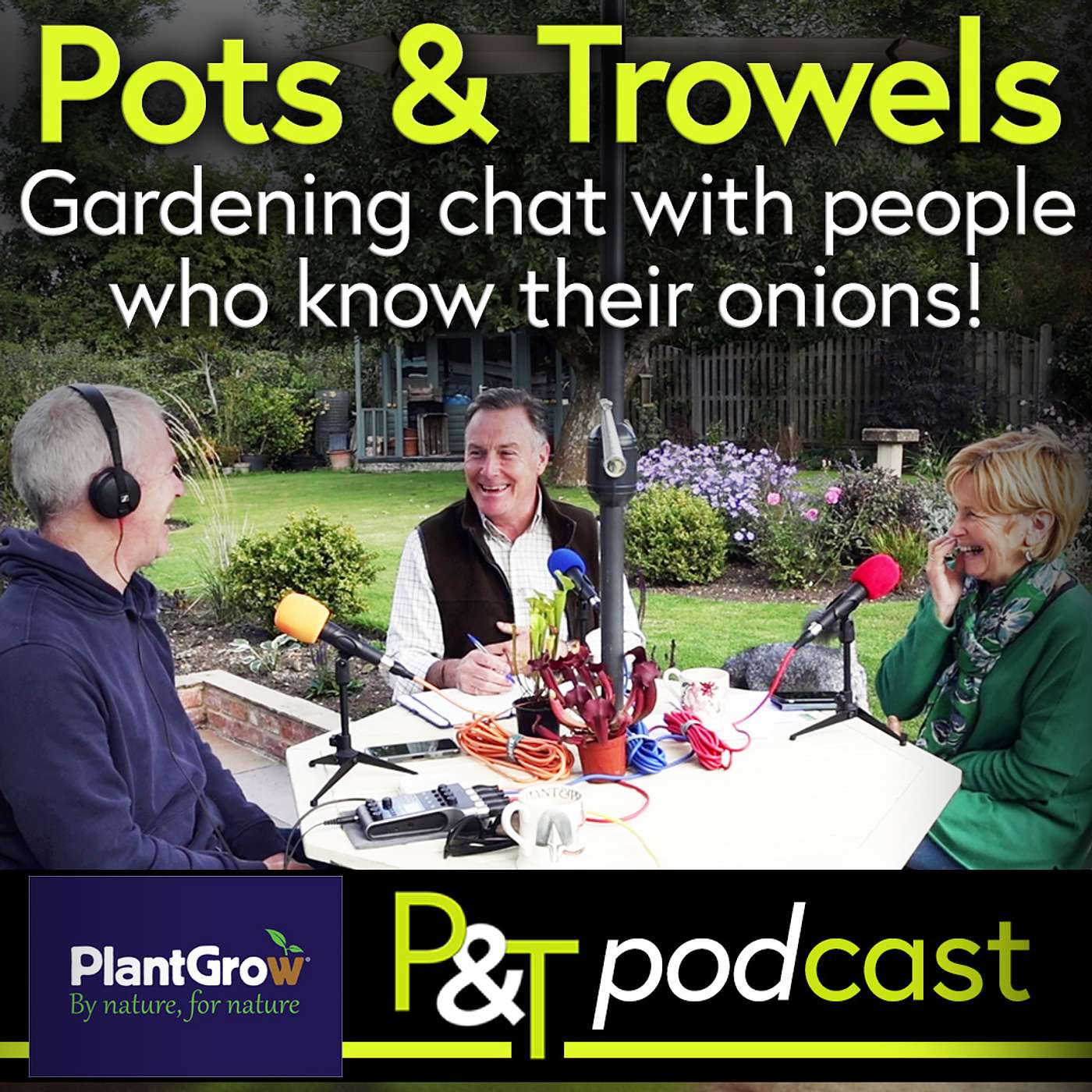
Pots & Trowels The Gardening Podcast · Martin Fish, Jill Fish, Sean Riley

100th Episode! Reclaiming the Chrysanthemum, Dahlia Just from Seed & Screening Options?

·39 min·2 clips
"Leaves are a really valuable commodity" and fallen leaves can become next year’s leaf mould.
1. Pots & Trowels The Gardening Podcast marks its 100th episode with Martin, Jill, Sean, and a visit to Paula at Floral Media. 2. Paula is the horticulturist and floral designer whose Nottinghamshire garden, flower farm, and demonstrations drive much of the conversation. 3. The episode asks what November looks like for a busy flower farm and how a garden can be kept useful through winter. 4. Paula says November is not quiet because she is planting next year’s spring crops, including ranunculus and anemones. 5. She also says there are still dahlias to lift, beds to clear, and organic matter to add while the weather stays dry. 6. Martin and Sean note that every dry, decent day matters because the ground is heavy and the farm still has flowers to pick. 7. Paula and Martin discuss chrysanthemums grown in polytunnels as cut flowers that extend the season. 8. They explain the difference between a chrysanthemum bloom, where one terminal flower is allowed to develop, and a spray, where side shoots are encouraged. 9. Paula says she goes out to flower clubs in the evenings and still has enough crop of her own to design with. 10. She also gathers miscanthus, teasels, and bracken for wreath-making and says about 400 people are booked for that alone. 11. Martin says chrysanthemums used to carry a funeral image, but Paula’s varieties offer deep pinks, oranges, and maroons for the house. 12. He adds that the flowers can last for a couple of weeks in a vase, which he contrasts with shorter-lived imported flowers. 13. Paula says she avoids floral foam because her style is garden-style and she wants mechanics that are as natural as possible. 14. She says she will use a small amount of foam only when needed, but most of her arranging comes from winter foliage, shrubs, and evergreens. 15. Martin and Sean then switch to the home garden and explain that fallen leaves should be kept on borders unless they smother plants. 16. Martin recommends raking leaves from lawns, mixing them with grass clippings and vegetable waste, or packing them into damp bin bags to make leaf mould. 17. The episode also covers rose pruning in November, with Martin advising a cut back by about a third to stop late flowering and protect plants from wind damage. 18. Sean adds that asparagus foliage should be cut to ground level once it has turned yellow and can then go into the compost heap. 19. The tone is practical, informal, and full of side comments, with Martin, Jill, and Sean moving between garden jobs, floral design, and listener questions. 20. Listeners who grow flowers, make arrangements, or need winter garden jobs will get the most from it; listeners wanting a tight, theory-heavy episode may skip it.

As heard by us

A warm anniversary episode with useful garden talk, easy banter, and a lived-in sense of place.

Pots and Trowels settles comfortably into the kind of long-running gardening chat that feels unforced. The off-air chatter, the easy banter, and the practical details all land without much fuss, and the best stretch comes with the visit to a friend and fellow horticulturist,…

Read the full review in PlayNext →

Why you'd press play

Press play for the 100th episode: a garden chat with a friend, houseplants in the jungle room, and a lead-up-to-Christmas flower visit.

Read the full recommendation in PlayNext →
Listen to the show on