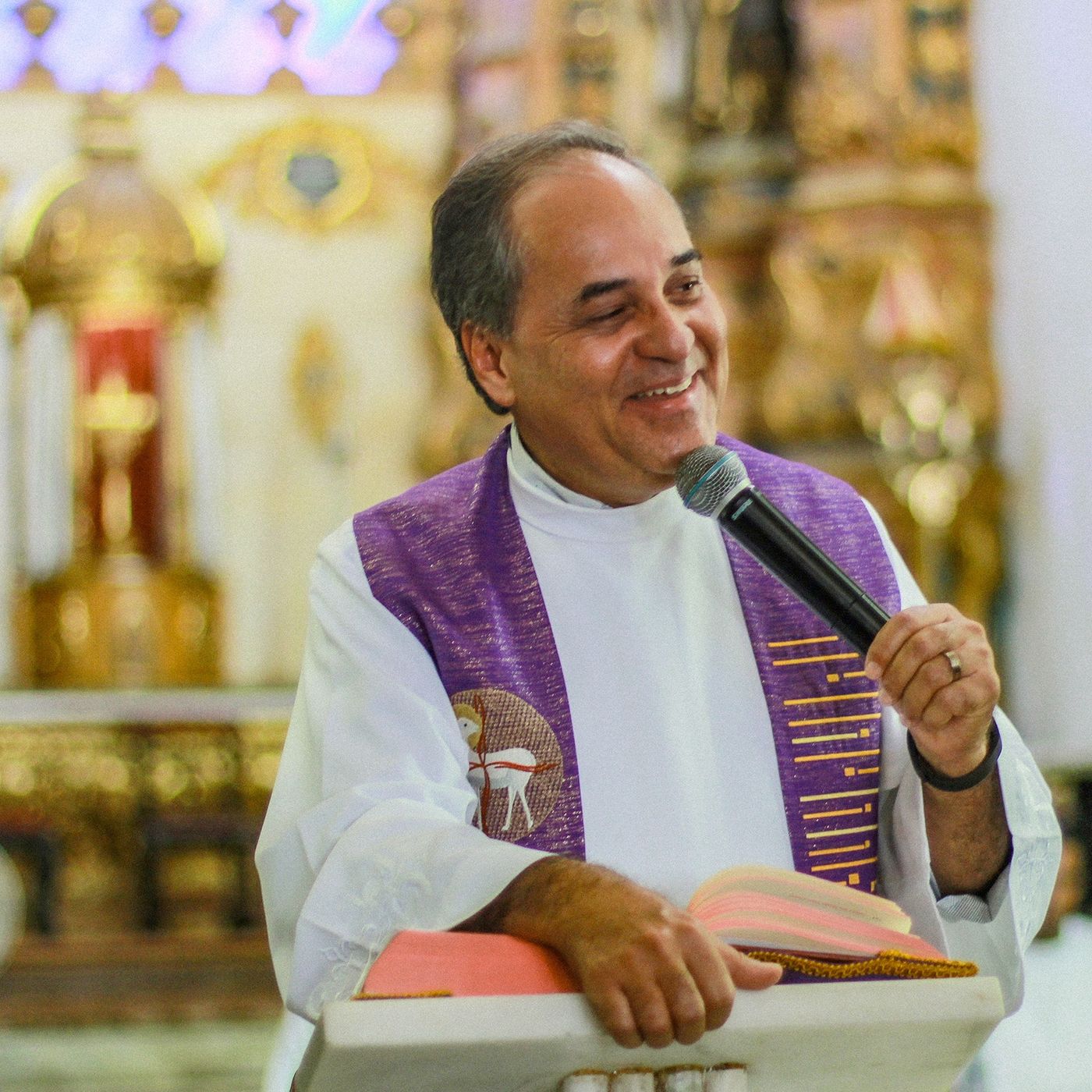
Pe. João Carlos - Meditação da Palavra · Padre João Carlos, SDB

11/04/26 - Programa Padre João Carlos | Tempo de Paz

·56 min·4 clips
Why does Father João Carlos say earthly joys wither quickly while heavenly joy lasts without fear?
1. 'Tempo de Paz' with Father João Carlos is a Portuguese-language Catholic radio program, airing April 11 — the Saturday within the Easter octave — on a network of Brazilian radio stations. 2. Father João Carlos hosts the program; psychologist Verônica Guedes from Campina Grande, Paraíba, appears as a guest expert; multiple listeners call in from across northeastern Brazil and São Paulo. 3. The episode has two main threads: a theological reflection on Divine Mercy Sunday and a pastoral discussion about the decline of family dialogue, framed by the question 'Are people resolving conflicts at home through dialogue?' 4. Divine Mercy Sunday was established by Saint John Paul II in the year 2000 and falls on the second Sunday of Easter; events are announced in Cachoeira Paulista, Fortaleza, Curitiba, Maceió, and the Diocese of Paraíba. 5. Father João Carlos explains the Gospel of John 20 through the lens of the two encounters: Jesus appearing to the disciples and sending them on mission, and Thomas's doubt followed by his profession 'My Lord and my God.' 6. He draws the theological point that God's mercy does not reject doubt but transforms it into a personal encounter with the Risen Christ, presenting Thomas as a model for contemporary faith. 7. In the Gospel of Mark 16 commentary, Father João Carlos highlights that the resurrection appearances were initially disbelieved — first by the disciples when told by Mary Magdalene, then again after the two travelers returned. 8. He asks listeners to admire the paradox that Jesus entrusted the mission of proclaiming the Gospel to all creation to eleven disciples — one fewer than the original twelve, with Judas dead — whom he had just reprimanded for hardness of heart. 9. Father João Carlos then applies the Gospel to listeners' own lives, asking whether contemporary Christians recognize Jesus as genuinely alive and present in the Eucharist, Confession, Scripture, and the church assembly. 10. The call-in segment poses the question: in your opinion, are people managing to resolve family conflicts through dialogue? 11. Listener Quitéria from Porto de Pedras, Alagoas, says dialogue has effectively disappeared in families, blaming mobile phones for isolating people from each other. 12. Listener Estela from São Paulo says dialogue is possible but requires love, patience, and the willingness to listen — and acknowledges a wide generational gap created by internet access that changed how young people learn and relate. 13. Psychologist Verônica Guedes links the current dialogue crisis to the COVID-19 pandemic, arguing that people sought refuge in social media during lockdowns and that the isolation has persisted: 'we left the pandemic, but the pandemic did not leave us.' 14. She articulates a specific clinical observation: families are the place where children learn to win and lose and build their behavioral reference points, and that function has broken down — leaving children to find references outside, in what she calls 'the internet, a land without law.' 15. Father João Carlos extends Verônica Guedes's concern to religious formation, noting families may also be failing to transmit sensitivity to the transcendent and respect for human dignity. 16. Listener Maximiliano Jesusa from São Vicente says his four-year marriage resolves all conflicts through dialogue, providing a positive counterpoint: 'there is no use for one to be blurred on one side and the other on the other.' 17. The episode includes multiple devotional songs, including a narrative ballad about the life of Jesus of Nazareth and a sung blessing for families. 18. Father João Carlos leads a liturgical water-blessing prayer and gives a Paschal blessing to listeners in three parts, in the name of the Father, Son, and Holy Spirit. 19. Best for Portuguese-speaking Brazilian Catholics who follow daily devotional radio programming and are interested in both Gospel exegesis and pastoral social commentary. 20. Listeners who do not speak Portuguese, are not interested in Catholic devotional content, or prefer secular or analytical content will not find this episode relevant.
Listen to the show on