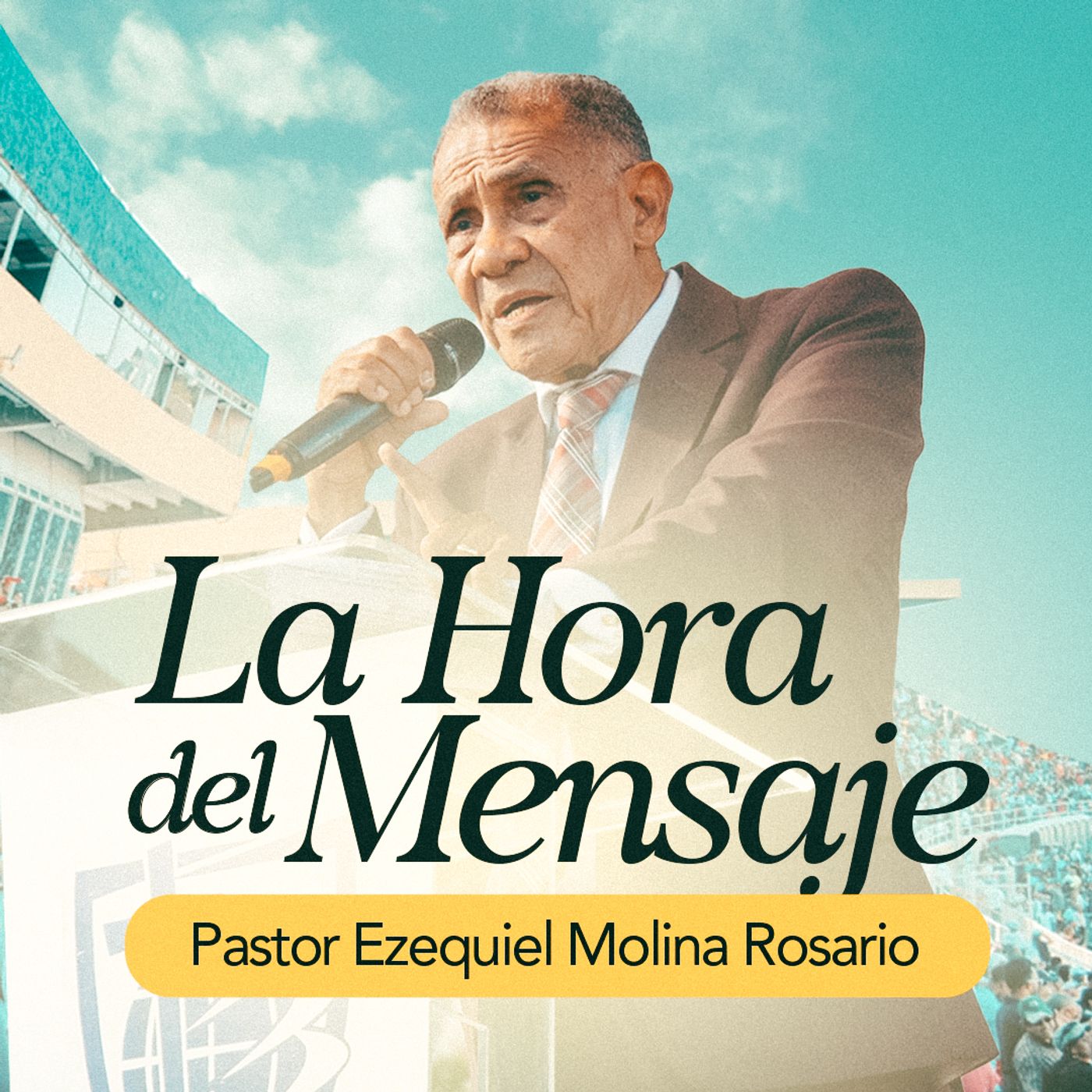
Pastor Ezequiel Molina Rosario · La Batalla de la Fe, Inc.

ESPERANZA VIVA - Prédica Completa

·59 min·4 clips
Pastor Ezequiel Molina Rosario explains how a living hope, based on Jesus' resurrection, offers an incorruptible inheritance reserved in heaven.
1. Pastor Ezequiel Molina Rosario, preaching sermon number 1937, takes 1 Peter 1:3 as his text to explore what he calls 'esperanza viva' — a living hope rooted in the resurrection of Christ. 2. The pastor is the sole voice throughout; he describes himself as 80 years old and a lifelong reader of the Bible, positioning his authority in longevity of practice rather than academic credentials. 3. The core thesis is that hope is not a vague feeling but a theologically grounded expectation, and that Christian hope is categorically different from all other hopes because its object — the risen Christ — is uniquely verified by history. 4. The pastor opens with a formal definition: hope is 'an expectation of something offered, promised, and desired,' and places it as the second of three theological virtues in 1 Corinthians 13:13 alongside faith and love. 5. He illustrates hope with four secular analogies: a surgery patient allowing a scalpel, a student pursuing a degree, an entrepreneur working overnight on limited capital, and a fifth-place competitor aiming to win. 6. Turning to the context of 1 Peter, he describes Peter's audience as Jewish Christians expelled from Jerusalem and scattered across Pontus, Galatia, Cappadocia, Asia, and Bithynia — regions of modern Turkey — who had 'every rational reason to lose hope.' 7. He recounts Abraham's hope 'against hope' from Romans 4:18, arguing that spiritual hope operates against biological and human probability — a 90-year-old becoming a father. 8. The pastor identifies three categories of people without hope: those who deny God (called 'necios' or fools, citing Psalm 14:1), those who reject the Bible, and those who reject Jesus Christ. 9. He tells the story of a former Christian who became a doctor, lawyer, and philosopher after leaving the faith, spent 30 years in philosophical schools, then at age 50 returned to the Bible and said 'all the unknowns in my head opened up.' 10. On the Bible's authority, he notes it was written by more than 40 men across different ages, cultures, and academic levels — from fishermen to doctors like Paul and Luke — and that all 66 books converge on a single axis: Jesus Christ. 11. The resurrection is presented as the factual cornerstone: Christ was seen after death by more than 500 witnesses, the tomb was empty, and the first witnesses were the three Marys — women who went despite the risk that male disciples feared. 12. He argues that the women's courage contrasted with the male disciples, who calculated that going to the tomb would get them crucified, framing the women's testimony as more credible for its lack of strategic advantage. 13. The pastor identifies what he calls a 'diabolical agenda' in contemporary social media: former pastors and believers publicly renouncing faith, which he argues is designed to destroy whatever faith remains in the population. 14. He links the decline in hope to rising suicide rates, stating 'that's why there are so many suicides' — people have no one to call on, nowhere to go. 15. A Canadian doctor is cited (name not given) as having said that activating hope in hospitalized patients saves 70-80% of them, and that losing hope causes physical collapse. 16. The practical prescription for maintaining living hope is twofold: reading Scripture daily ('I'm 80 and still find something new every time') and praying, treating God as 'Abba' — the affectionate Spanish-Greek 'papi.' 17. The tone is direct, pastoral, and conversational, mixing Spanish and occasional English, with frequent congregational interjections ('Hallelujah,' 'glory to God') and humor ('thank goodness it was men and not horses' about Bible authorship). 18. The sermon's pace alternates between doctrinal instruction and personal anecdote, with the pastor speaking from visible personal conviction rather than reading from notes. 19. Those most likely to value this episode are Spanish-speaking evangelical Christians seeking doctrinal grounding for their faith in difficult circumstances. 20. Those who would skip it include listeners who are not religious, find preaching-format audio unappealing, or do not follow Spanish-language content.
Listen to the show on