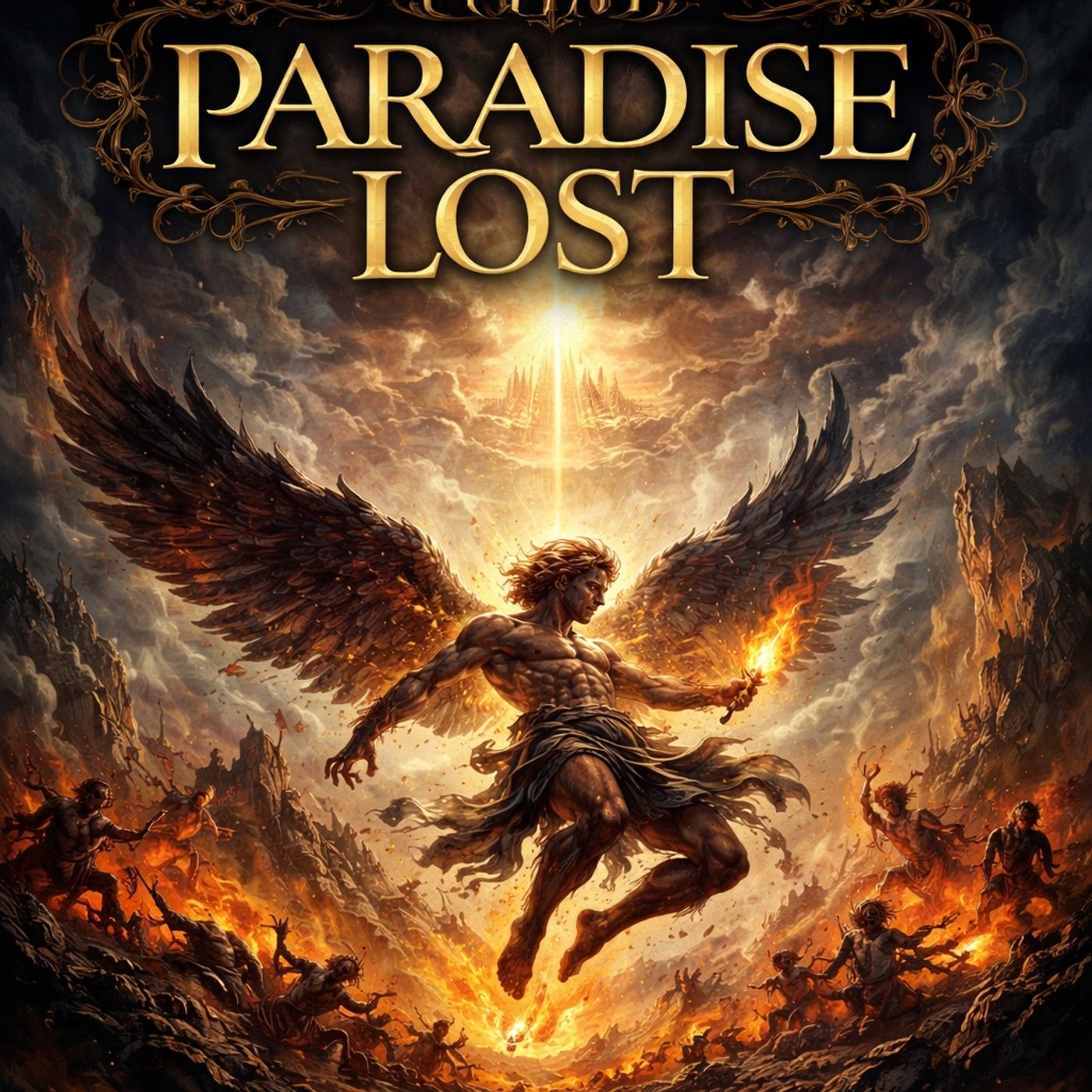
Satan tells Eve she is a goddess among gods, using flattery to undermine her innocence.
This episode features a dramatic reading and analysis of John Milton's epic poem "Paradise Lost," focusing on Book Eight's depiction of the serpent's temptation of Eve. The host guides listeners through Milton's intricate language and the theological themes embedded in the narrative. The presentation centers on the pivotal moment where Satan, inhabiting the serpent, begins his seduction of the first woman.
The selected passage details the serpent's careful, flattering approach toward Eve as she works alone in the garden. Milton describes the serpent using a simile of a skillfully steered ship navigating a shifting wind. The creature actively seeks Eve's attention by curling into "wanton wreaths" and fawning at her feet with a "sleek enameled neck." Eve initially pays little mind, accustomed to animals showing her deference, which the poem compares to the obedience shown to Circe. The serpent finally speaks, using "organic" tongue or "impulse of vocal air" to begin his "fraudulent temptation." His opening words are a calculated address to "sovereign mistress," expressing wonder at her beauty and claiming he cannot fear her "awful brow."
A key insight is how Milton portrays the temptation as a gradual process, starting with visual spectacle before moving to verbal deception. The serpent's strategy involves isolating Eve, suggesting her magnificence is wasted on the "beholders rude" in Eden, with only one man to appreciate her. His flattery insists she should be "seen a goddess among gods, adored and served by angels numberless," directly appealing to vanity and a sense of unfulfilled potential. The language shifts from description of action to the serpent's own cunning rhetoric, showcasing Milton's skill in voicing corruption. The comparison to Circe subtly frames Eve's innocent power over animals as a potential precursor to dangerous enchantment. The episode likely examines how this scene builds dramatic irony, as listeners know the tragic outcome while Eve remains unaware.
The tone is educational and analytical, breaking down a dense literary work into accessible segments. The style combines performed recitation with explanatory commentary to illuminate the text's layers.
Listeners interested in classic literature, Christian theology, or the art of rhetorical persuasion would find this episode compelling. Those seeking modern commentary or casual storytelling might find the focused textual analysis too academic.