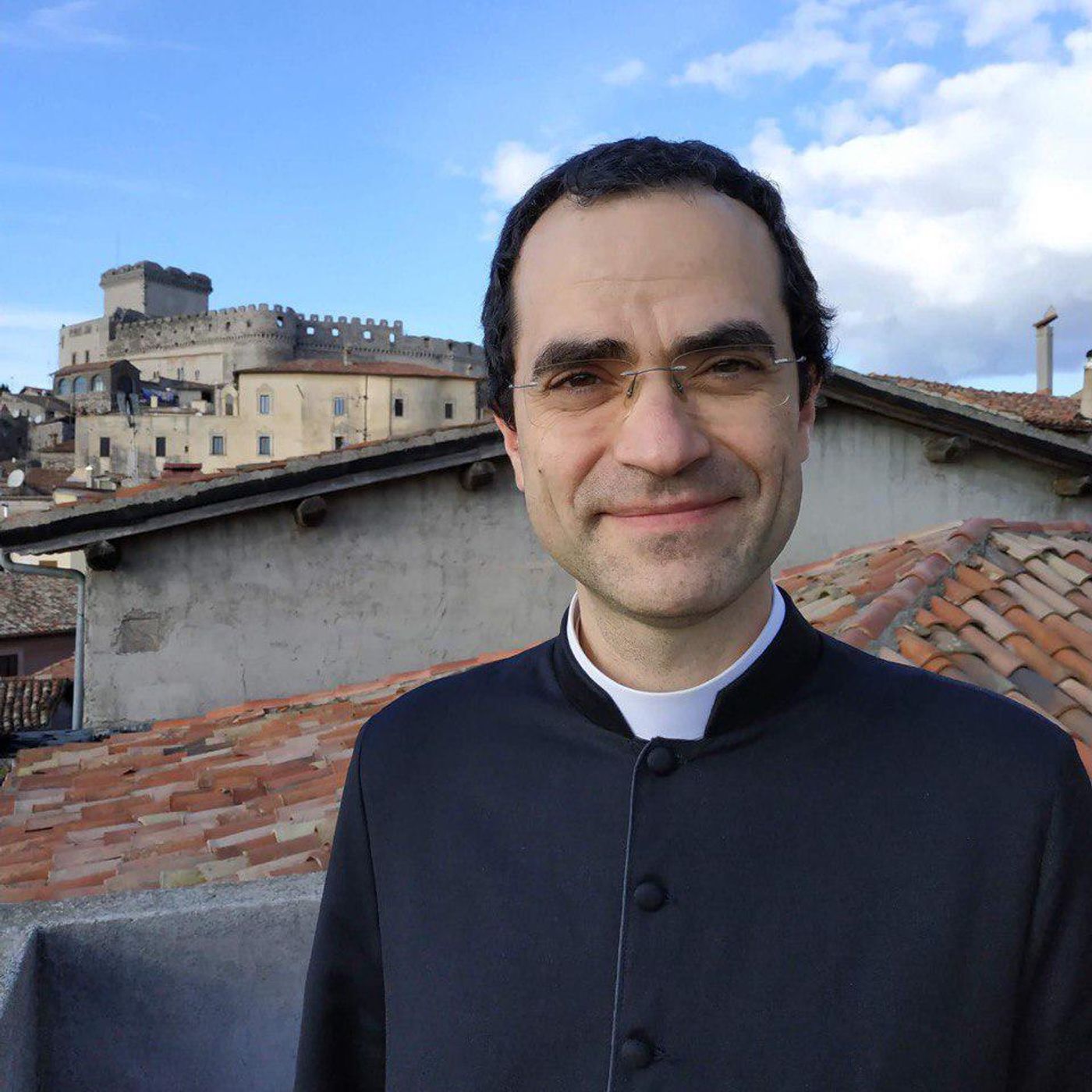
Omelie e Catechesi · Don Pierpaolo Maria Cilla

Solo la divina volontà rende l'uomo simile a Dio

March 24, 2026·33 min·3 clips
Don Pierpaolo Maria Cilla explains why God became incarnate not for worldly issues but to reconnect humanity to the Divine Will.
1. Radio Maria's Omelie e Catechesi program presents a study of Luisa Piccarreta's Book of Heaven, Volume 11, focusing on the theme of the Divine Will making a person resemble God. 2. The host is the sole speaker and identifies as a teacher of Luisa Piccarreta's spirituality; no guest is introduced by name. 3. The episode's core thesis is that performing any human act within the Divine Will transforms it into a divine act with universal, multiplied effects. 4. The host opens by noting that the feast of the Annunciation falls the following day, connecting it to the episode's theme: the Incarnation as the moment the Divine Will re-entered creation. 5. He references the recent exposition of San Francesco's body in Assisi and the feast of San Giuseppe to introduce a key distinction: the episode is about 'Santità grande' (great Holiness) rather than about great saints as personalities. 6. A passage from Volume 11, dated August 24, 1915, is read in which Luisa feels an irresistible desire to give Jesus the kiss of all creatures — including animals, water, and plants. 7. Jesus responds to Luisa: 'If you want to give me the kiss of all, kiss me in my Will, because my Will containing the creative virtue, contains the power to multiply an act into as many acts as desired.' 8. The host explains that acting in the Divine Will means the motive and motor of the action is God's will rather than the individual soul's will. 9. He lists three concrete effects of one act performed in the Divine Will: Jesus receives the love of all creatures, the soul receives merit equivalent to all creatures acting, and all creatures receive proportional spiritual benefit. 10. A practical example is given: a mother whose children refuse to attend Mass is told she can attend 'for them' in the sense that she participates with the Divine Will and implicitly includes all creatures in the act. 11. The host cautions against 'intimismo' — a private, self-focused piety — and argues that genuine intimacy with Jesus is explosive and encompasses all creatures. 12. Jesus uses a sunlight metaphor: the Divine Will is like sunlight that is one source but reaches all creatures; its reception varies according to each creature's disposition, not a defect in the light itself. 13. A stone-thrown-into-the-sea image is also used: the ripples travel in theory to every shore, illustrating how a single act in the Divine Will radiates outward without limit. 14. The host addresses why spiritual effects are often invisible: effects in the spiritual order cannot be measured by visible external results; God sees the interior and effects will be revealed at the Last Judgment. 15. He reads Jesus's explanation of Genesis 1 — that 'let us make man in our image' means the Divine Will originally reigned and operated within humanity, making human acts divine acts. 16. The host states that Luisa's grammatical errors (singular subjects with plural verbs) reflect her limited schooling — only first or second grade — but also encode Trinitarian truths she received from Jesus. 17. The Dicastery of the Doctrine of the Faith is cited as having recently issued a nihil obstat for Luisa Piccarreta's cause of beatification, confirming no clear doctrinal errors in her writings. 18. The tone is contemplative and instructional, with the host reading aloud from the text and pausing to explain each phrase; the pacing is slow and repetitive for emphasis. 19. Devout Catholics interested in mystical theology, particularly the spirituality of Luisa Piccarreta and the concept of living in the Divine Will, will find this episode substantive. 20. Listeners unfamiliar with Catholic mystical tradition or with Luisa Piccarreta's writings will find much of the vocabulary and theological framing inaccessible without prior study.
Listen to the show on