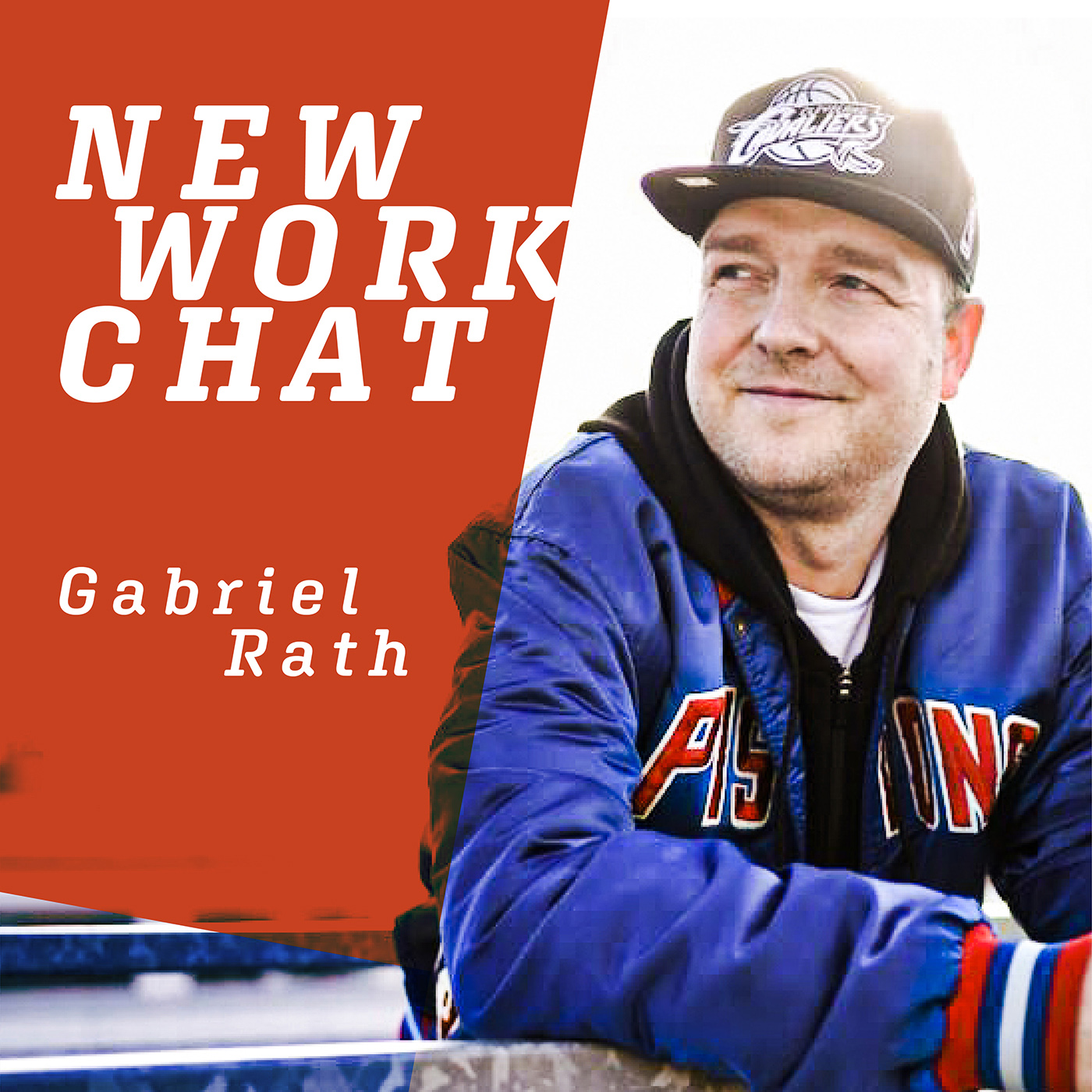
New Work Chat · Gabriel Rath

#368 Sabri Eryigit, Co-Founder & Managing Partner Next Action GmbH: How to start 2026.

·48 min·3 clips
Sabri Eryigit challenges Germany to stop whining about unchangeable topics and finally do their job.
1. New Work Chat host Gabriel interviews Sabri Ergit, founder of Next Action Partners, for a year-end reflection special episode recorded between Christmas and New Year's Eve. 2. Sabri, based in Berlin for 26 years (originally from Essen), runs Next Action Partners, a self-management coaching company he founded in 2013 that applies the Getting Things Done (GTD) method by David Allen. 3. The episode's core argument is that effective self-leadership — clarity about purpose and direction — must come before organizational tools, and that reflection at year-end is the mechanism for re-establishing that clarity. 4. Sabri describes 2025 as the most intense and challenging year in his 13 years of self-employment, with economic difficulty in the first half but a strong comeback in the second half through focused work rather than narrative victim-thinking. 5. He argues that in difficult periods, the absence of 'gossip, sidelines, and workarounds' is actually clarifying — crisis forces focus on what is right and important at each moment. 6. Gabriel and Sabri discuss whether 'crisis' is a useful term anymore, with Sabri suggesting the more accurate framing is 'continuous change' — and that VUCA (volatility, uncertainty, complexity, ambiguity) describes a permanent condition rather than an exceptional one. 7. Sabri identifies three 'victim logic' stories people tell themselves: the victim story ('we can't do anything'), the scapegoat story ('someone else is to blame'), and the helpless story — and argues all three are false because there is always at least one next step available. 8. He criticizes German LinkedIn culture specifically, noting that people spend large amounts of time reacting to political statements by figures like Friedrich Merz, energy that he argues should go toward actual work that can be influenced. 9. His year-end reflection framework uses a four-quadrant matrix: what to stop doing, what to start doing, what to do less of, and what to do more of — applied both at year-end and at each quarterly review. 10. Sabri distinguishes between goals (specific, measurable targets) and aspirations (the higher corridor of possibility if conditions are optimal), arguing people should think in 'goal rooms' rather than 'goal points.' 11. He gives a concrete personal example: a goal of having one free day per week at age 50, set when he was 45, requiring five years of structural preparation about who would take over which roles at Next Action Partners. 12. Sabri argues that 'every decision is a good decision' in the sense that it represents progress — not that every decision produces a good result, but that making conscious decisions is always preferable to avoiding them. 13. He describes a coaching conversation in which a client who 'decided not to change jobs' was reframed as someone who made a decision — 'to stay in this company with everything I don't like' — and that conscious framing changed the client's experience of the situation. 14. His core principle on decision-making: every decision already made can always be replaced by a new one, which reduces the paralyzing fear of permanent commitment. 15. Both Gabriel and Sabri describe handwritten journaling practices — Gabriel writes several times per week, mostly in the mornings; Sabri uses a small black DIN A5 notebook alongside a fully digital task system (ToDo and OneNote). 16. Sabri describes journaling specifically for challenging situations — analyzing why a client conversation did not go well, whether he listened enough, why he lacked confidence in a conflict discussion — treating each entry as a learning log. 17. Sabri reads aloud a personal poetry slam he wrote as his own year-end reflection, arguing that GTD culture's emphasis on 'more tasks, more speed, more output' misses the real problem: suppression of one's inner voice by pace and external demands. 18. The episode is conversational and personal, with both hosts sharing their own year-end experiences; tone is reflective and warm rather than structured or prescriptive. 19. People in self-employment, coaching, or leadership who are currently in their year-end review period would find the most direct practical value. 20. Listeners looking for tactical GTD system setup or technical productivity tool recommendations would find this episode too philosophical and personal to serve that need.
Listen to the show on