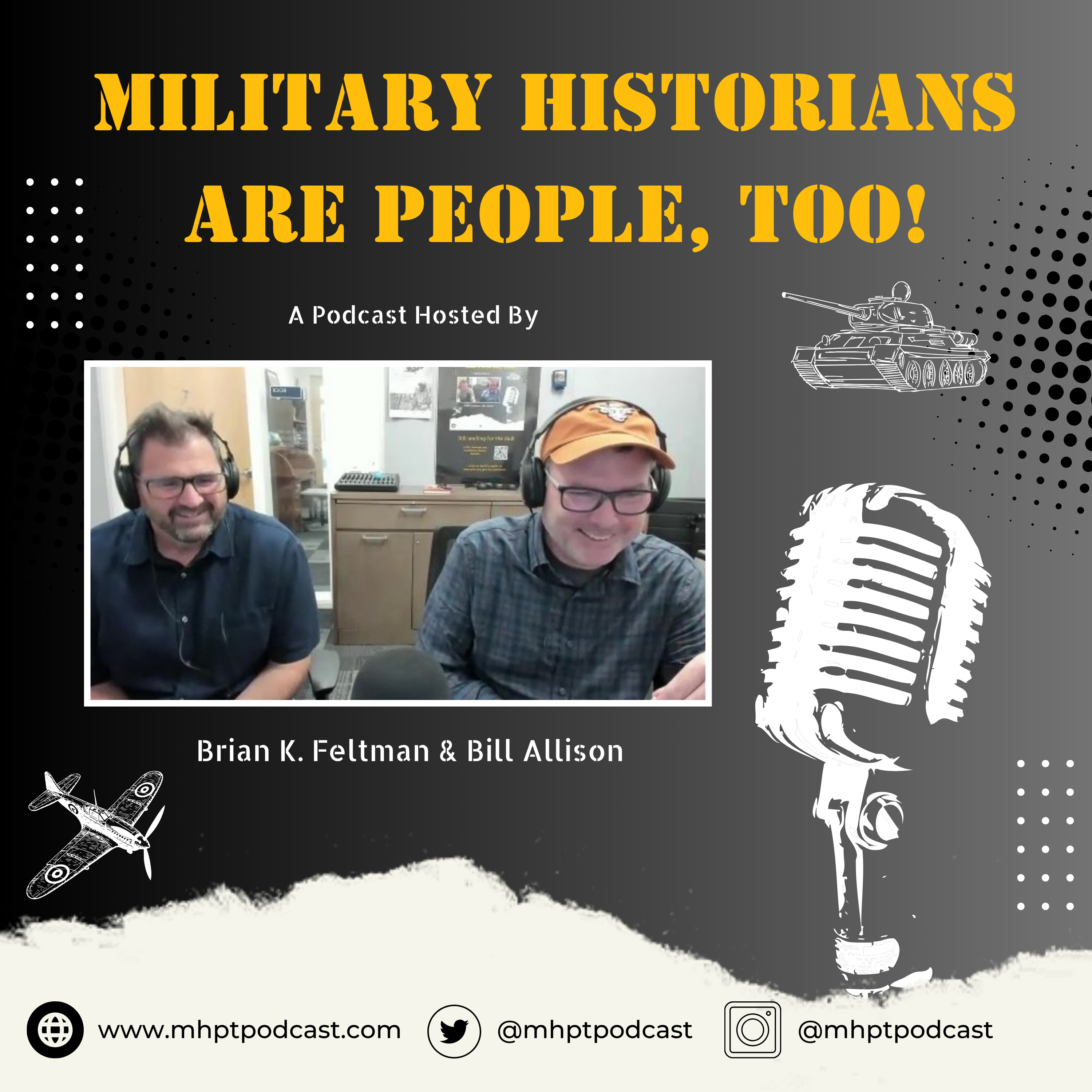
Military Historians are People, Too! · Brian Feltman and Bill Allison

S6E17 Nathan K. Finneyy - US Army Forces Command

March 31, 2026·1 hr 8 min·5 clips
COVID closed the archives, forcing Finney to narrow his World War I dissertation to North Carolina councils of defense.
1. Military Historians are People, Too! talks with Nathan K. Finney about Army service, World War I mobilization, and Orchestrating Power. 2. Hosts Aaron and Brian interview Finney, whose Fort Bragg job, Camp Smith posting, Iraq service, and Duke PhD make him the bridge between military practice and academic history. 3. The episode asks how an armor officer turned historian used World War I to think about Army reconstitution, state power, and a Cornell book. 4. Finney says he grew up moving every three years because his father served in the Navy and then worked for an oil company. 5. He remembers Sunday newspaper reading, a big Civil War picture book on a shelf, and history classes at the University of Arizona as the start of his interest. 6. At Arizona he majored in anthropology, minored in history, and initially lost an ROTC scholarship bid. 7. He later went into an Army recruiter's office to pay off student loans and left on a fast track to Officer Candidate School. 8. An OCS swap put him in armor instead of infantry, after another candidate did not want to be smashed into a tank. 9. Finney describes serving in Iraq in 2005 and 2006 as a platoon leader in Bakaba north of Baghdad, then finishing as a company executive officer at Fort Riley. 10. He earned a University of Kansas MPA on nights and weekends and finished the degree from Afghanistan with taped classes and oral exams. 11. The Army then sent him to Harvard for the strategist program, which shifted him from local budgeting toward national government and international relations. 12. When he started doctoral work at Duke, he first planned to study five World War I strategic decisions, including President Wilson's order to stop Army War College planning in 1916. 13. A 2014 Pentagon study on Army reconstitution, force cuts, and sequestration pushed him toward World War I because conscription and industrial strain still felt relevant. 14. General Tasker Bliss became a central figure in the project after Finney read Bliss biographies and his autobiography. 15. COVID closed the archives he needed, so he narrowed the dissertation to the North Carolina Council of Defense and the relationship between state and federal wartime power. 16. He says the North Carolina State Archives, UNC Asheville, the Lower Cape Fear Historical Society, and county North Carolina rooms yielded material that NARA did not. 17. Cornell University Press accepted the manuscript after two hard but fair reviews, then asked him to tighten the introduction, conclusion, and repeated chapter language. 18. The book conclusion pushes the Councils of Defense story into World War II and beyond, which is where Finney says the dissertation ending had to grow. 19. The conversation is detailed, procedural, and comfortable with Army bureaucracy, archival work, and graduate-school timing. 20. Historians, Army officers, and archive-minded researchers will get the most from it.

As heard by us

A grounded conversation on how coursework, closed archives, and practical constraints reshaped a dissertation-to-book project.

The conversation finds its clearest shape in the guest's move from a carefully planned Duke dissertation toward a reworked book project. He traces how coursework changed the original idea, then how COVID shut down the archives he needed for five strategic questions, pushing the…

Read the full review in PlayNext →

Why you'd press play

You get an Army scholar's candid account of how COVID, closed archives, and Duke coursework reshaped a dissertation into a book.

Read the full recommendation in PlayNext →
Listen to the show on