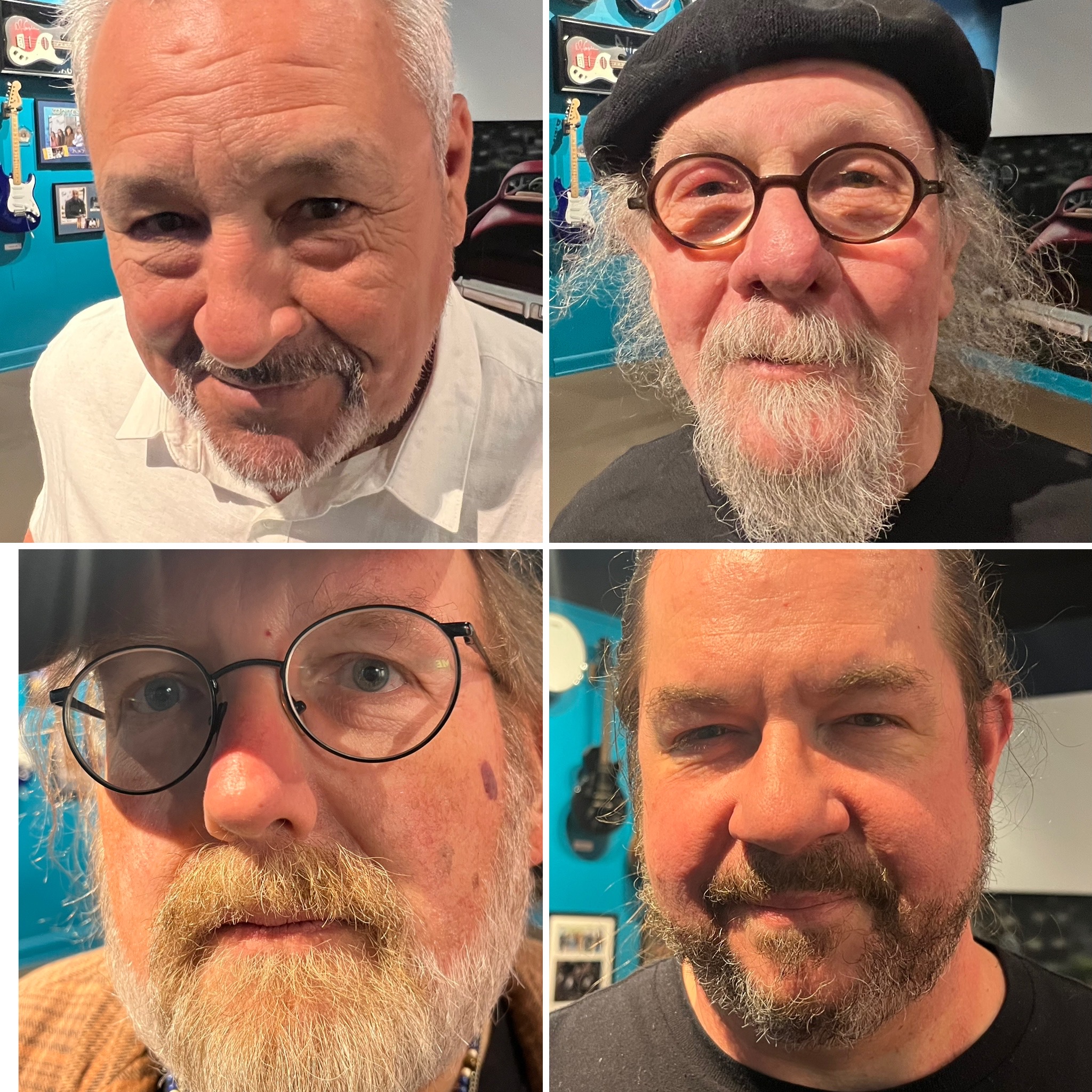
Michigan Music History Podcast -- MMHP989 · Scott Baker, Gary Johnson, Fred Reif, Mike Beattie

Michigan Music History Podcast--Drew Abbott Silver Bullet To The Third Power Part 2 of 2

·52 min·3 clips
Drew Abbott says, 'I wasn't a great guitar player, but I was really good at being in a band.'
1. Michigan Music History Podcast MMHP989 part two centers on Drew Abbott, Bob Seger, and the Silver Bullet Band stories recorded live in Bay City, Michigan. 2. Drew Abbott is the guest guitarist and memoirist, while Scott Baker and the MMHP hosts steer the conversation and ask the questions that bring out the details. 3. The episode asks what Abbott did after the Seger years and how he thinks about playing, recording, and staying in a band. 4. Abbott recalls seeing Bob Seger backstage, with Bill Blackwell calling him over so Seger could talk with him and meet Elizabeth. 5. He dates the last gig he played with Seger to December 8, 1980, after time in Sweden and the second European tour. 6. Abbott says 'Against the Wind' was Seger’s first number one album and best rock album Grammy winner, and he says he went to New York and accepted the award. 7. He says nobody else wanted to go to New York, the ceremony was held there instead of Los Angeles, and there was a salsa band at the event. 8. Abbott says he later joked with Punch about the Grammy and saw Punch react as if the story could have been true. 9. He says Bob Seger fired him and David on the same day after he would not 'play it like the damn record.' 10. Abbott contrasts Seger’s record-copying approach with his own background in improvisation and jazz. 11. He describes playing Engel Stadium after 'Against the Wind' was released and says the Rockets opened that show. 12. Abbott says he liked the Rockets best when they were a trio with Johnny B singing, and he also talks about touring with Mitch Ryder for six weeks. 13. He says the Mitch Ryder band had animosity, no new material, and too much 'greatest hits,' which made him decide it was not going anywhere. 14. Abbott argues that his real strength was being 'good at being in a band' and helping a group move forward for the 'greater good.' 15. He discusses recording an album at Big Sky in Ann Arbor with Jeffrey Michaels and says the studio handled string quartets and progressive folk music. 16. Abbott says he knew Al Jacquet from Savage Grace days, played some duo or small shows with him, and then backed out after watching a video and feeling he was 'in the wrong genre.' 17. The conversation gets technical when Abbott explains that drum cymbals can ruin a track because they bleed over every microphone and cannot be erased. 18. He compares live drumming and studio drumming, cites Motown and the Foo Fighters, and says some producers even remove hi-hat before overdubbing cymbals. 19. The tone is loose, reflective, and detail-heavy, with long answers, musical examples, and occasional guitar playing in the room. 20. Listeners who like Michigan rock history and bandcraft will get the most out of it, while people wanting a tight, fast-moving story may skip it.
Listen to the show on