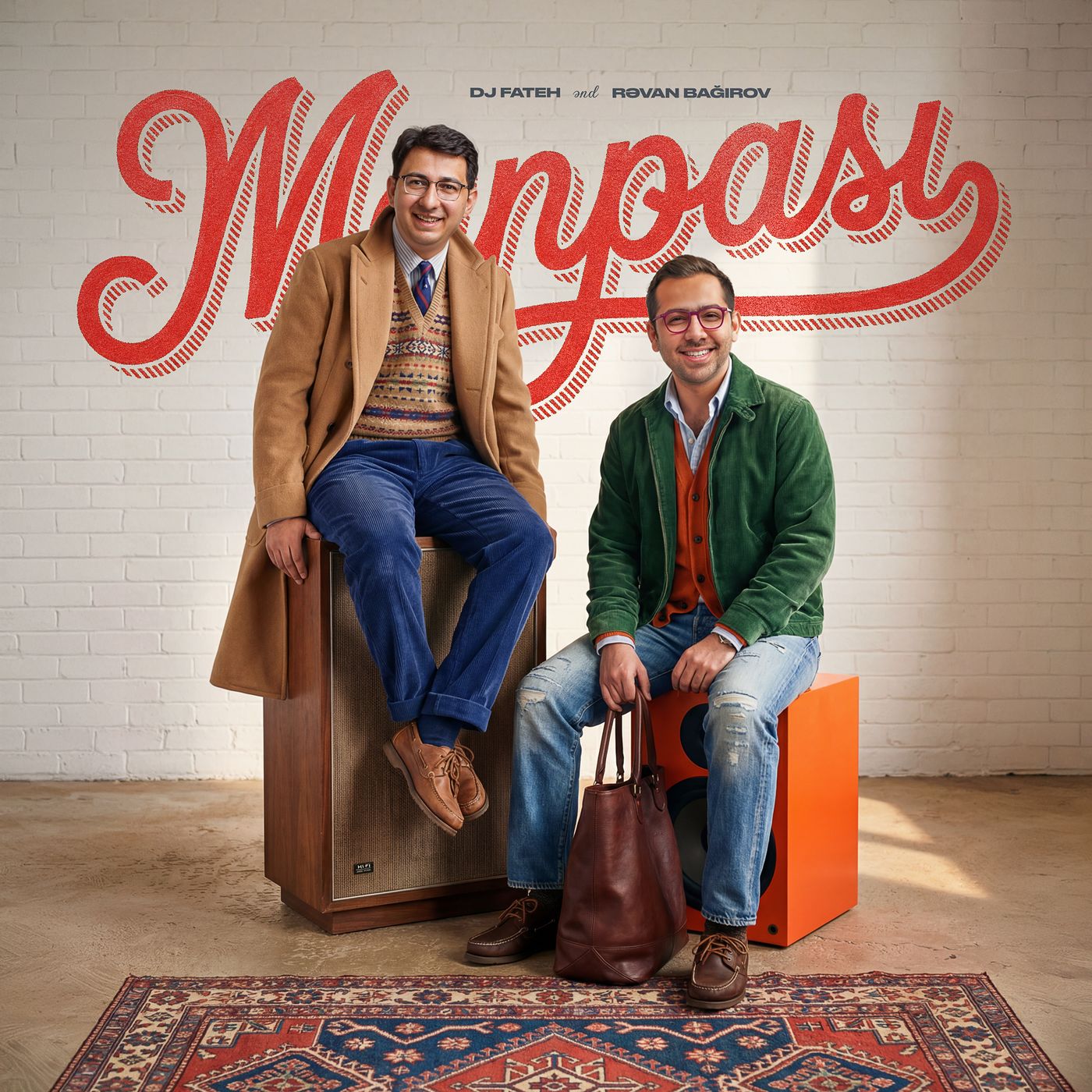
MANPASI · DJ Fateh və Rəvan Bağırov

İlk dəfə xaricə səfərinizdən danışın 10.04.2026

·1 hr 25 min·7 clips
A 13-year-old boy and his 60-year-old grandmother are stopped by armed Chechen fighters on a Moscow road in 1994.
1. MANPASI, Azerbaijan Public Radio's morning show, airs a two-hour call-in session on 10 April 2026 hosted by Fatih Tehti, themed around listeners' first trips abroad. 2. Host Fatih Tehti presents the show alone and fields calls from multiple listeners across Azerbaijan, with no named co-host; Sabina Khan appears as a regular on-air personality making a brief call. 3. The episode's core premise is that every person's first foreign trip is memorable and strange, with Fatih framing it as a universal experience that never fully loses its novelty even after many travels. 4. Caller Ferdakam, now 46, recalls his first trip to Dubai roughly 16-17 years ago, arriving at Jumeirah and refusing a 100-dollar helicopter ride, a 30-dollar camel ride, and a 50-dollar beach entry in sequence. 5. Ferdakam's story ends with an accidental queue at a Rolex watch shop in an airport, where staff brought him tea and coffee thinking he was a customer, and he left as soon as a translator appeared to explain the prices. 6. Caller Emile recounts a 1994 trip to Moscow taken at age 13 with his 60-year-old grandmother; their road convoy was stopped by armed Chechen fighters identified as 'Chechenskiy Bayeviki' who boarded every vehicle and robbed adult passengers. 7. Emile's grandmother shouted that she had survived World War II and told the fighters to get out of her way; the fighters took money and valuables from adult men but left women and children untouched. 8. Caller Sabina Khan, described as a doctor, recalls a trip to a remote region of India approximately 10 years prior to accompany a patient for a heart transplant surgery, noting that Indian surgical facilities at the time performed hundreds of operations in a single day at low cost. 9. Sabina Khan observes that Indian eye surgery centers drew patients from around the world and that high patient volume gave surgeons rapid experience, though she notes this model was not available in Azerbaijan at the time. 10. Caller Derminkan participated in a 2012 international dance festival in South Korea as part of a 28-person Azerbaijani ensemble, staying 21 days; the group found local food incompatible and went out to eat five times a day while still feeling physical pain from hunger. 11. Korean hosts took the hungry dance troupe to a restaurant they described as a prestigious mansion, where national low-floor tables were set and a boiling pot containing a whole stew and a boiled egg was brought to each dancer. 12. A young Korean named Ji-Hoon watched the Azerbaijani dancers react with bewilderment to the meal; Derminkan told him the food was not right and asked for the pot anyway, eating it out of hunger. 13. After several days, the troupe bought flour and cooked khengel — a traditional Azerbaijani pasta — using a floor mop handle (shvabra) as a rolling pin because no proper kitchen tool was available, and skipped meat because it was too expensive. 14. A customs-worker caller describes a first trip to Tabriz, Iran, where he was hosted by an Azerbaijani family; he was presented with a series of individual dishes sequentially without knowing the order of eating and was uncertain whether to peel the fruit or start with another course. 15. A child caller named Ferdakam recalls a family trip to Istanbul in the year 2000 at age seven, during which his parents took him to Dolmabahce Palace; he and his sister cried when offered kalem dolması (stuffed vine leaves) and refused to eat at the Bosphorus waterfront restaurant. 16. Caller Gulokham states she recently arrived in Cuba, describing fruit plantations and mountain snow visible from the road, and shares that her first trip abroad was a one-week health package to Antalya won at age 20 as a top-performing employee. 17. The episode includes a trivia game called MAMPASI competition: contestant Ismail correctly answers that Azerbaijan imported more from India than Mexico, and that Uzbekistan supplies more dry beans (lobia) than Turkey, winning 100 manat before losing a bonus question about Botswana's currency word 'Pula' (sun or rain). 18. The show's tone is informal and warm, with Fatih laughing frequently with callers, regularly teasing guests, and punctuating stories with rhetorical questions; the format is classic public-radio call-in with short ad breaks. 19. Listeners who grew up in post-Soviet Azerbaijan or who traveled in the 1990s-2000s would find the cultural references to Dubai prices, Moscow instability, and Indian medical tourism most recognizable. 20. Those seeking structured travel advice, destination guides, or polished production would find this episode too loose and anecdote-driven to be useful.
Listen to the show on