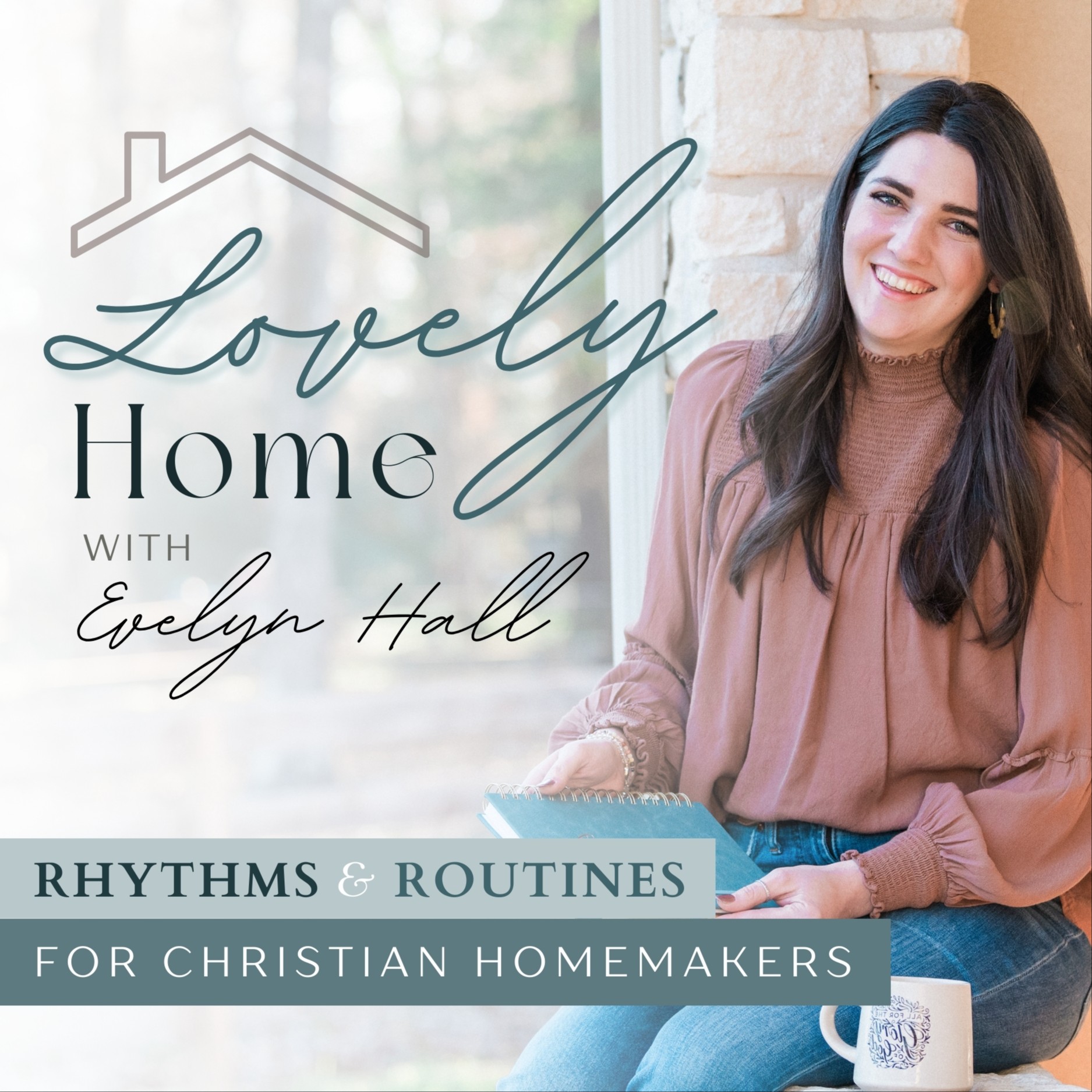
Lovely Home Podcast | Home Management, Grace Filled Mindset, Healthy Habits, Routines & Rhythms for Christian Homemaker Wives · Evelyn Hall | CEO of All Things Lovely Co., Christian, wife, Business owner & friend

61 | Why Weekly Cleaning Works: From Ancient Homemakers to Modern Rhythms | christianhomemaking | weeklycleaningroutine | homemakinghistory

·34 min·1 clip
Exodus 20:11 frames a six-day work rhythm and a seventh-day rest pattern for home life.
1. Lovely Home Podcast episode 61 centers on why weekly cleaning rhythms are the “sweet spot” for a Christian homemaker’s home. 2. Host Evelyn says she is the host, and Nathan appears in a conversation about how work and home responsibilities feel differently for men and women. 3. The episode asks whether weekly reset rhythms reflect both science and the “rhythms God has designed for us.” 4. Evelyn starts with dust, saying it includes dust mite droppings, pollen, dirt, dead skin cells, pet dander, and fabric fibers. 5. She says a week of dusting neglect lets the buildup double or triple, and she links weekly dusting and vacuuming to lower allergens and fresher rooms. 6. She then moves to bacteria on kitchen counters, bathrooms, and other high-touch surfaces. 7. She says new bacteria grows every 48 to 72 hours and argues that waiting 7 to 10 days can mean 200 to 400% more bacteria. 8. Evelyn next turns to clutter and says neuroscience shows clutter triggers the amygdala, her “stress center in your brain.” 9. She says weekly resets can help lower cortisol, improve focus, and support better decision making. 10. She also says cleaning whenever you feel like it, or every other week, can sever the pathway the brain is trying to form. 11. The strongest theological claim comes when she quotes Exodus 20:11: “For in six days the Lord made the heavens and the earth, and on the seventh day he rested.” 12. She says that pattern was not just for ancient Israel, because women throughout scripture lived with weekly rhythms for Sabbath, meals, festivals, and hospitality. 13. Evelyn argues that weekly cleaning is “not legalism” and “isn’t perfection,” but grace. 14. She then says homemaking began at creation, when Adam and Eve were told to work and take care of the garden. 15. She separates homemaking from the curse by saying thorns, problems, and weeds entered later, but stewardship was already part of the design. 16. Her history segment names the Proverbs 31 woman, early church hospitality, medieval washing and baking days, Victorian homemaking manuals, and the 1950s and 1960s as a visually iconic era. 17. The delivery is conversational and self-reflective, with repeated asides about her own laundry mountain, procrastination, and needing to wipe down counters. 18. The format mixes devotional reflection, practical cleaning advice, and a short history lesson, then ends with a “Would You Rather” question. 19. This suits Christian homemakers who want grace-filled, practical weekly cleaning rhythms. 20. It may not suit listeners wanting a short, purely secular cleaning checklist.
Listen to the show on