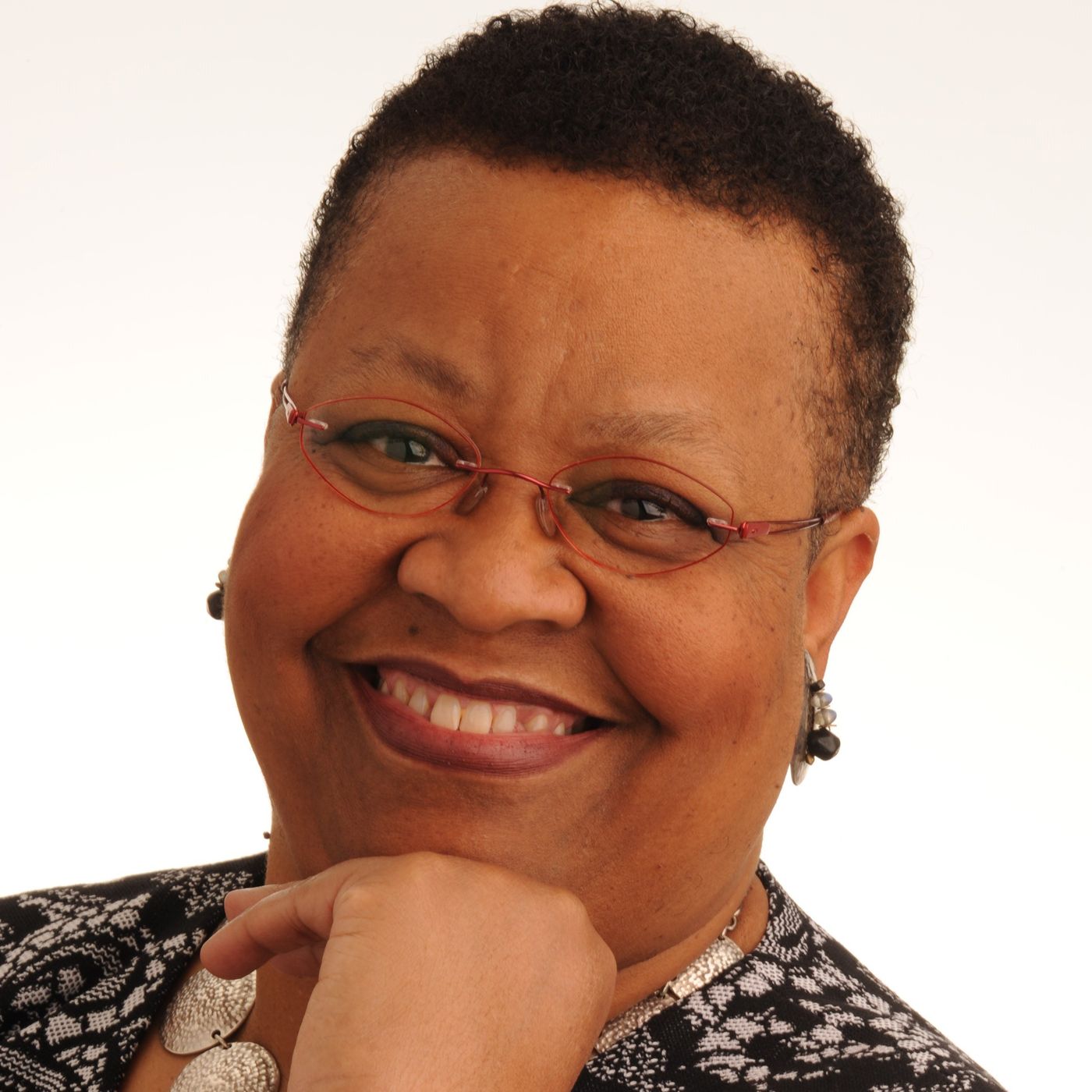
Legacy Living with Dr. Gloria Burgess · Talk Network Radio Podcasts

Light in the Darkness | Episode #492

April 1, 2026·50 min·3 clips
Dr. Burgess's father — a Black janitor at segregated Ole Miss in the 1950s who openly dreamed of attending college — was offered free tuition by William Faulkner and turned it down because he didn't know how he'd pay it back.
1. Legacy Living with Dr. Gloria Burgess, Episode 492, is a National Poetry Month celebration focused on poems about light, with Dr. Burgess serving as host, reader, and poet. 2. Dr. Burgess identifies as a speaker, author, poet, and entrepreneur; she distributes her work across schools, healthcare settings, corporate environments, government offices, first responder communities (firefighters, police, EMTs), and families with children in foster care. 3. The episode's thesis is that poetry is a resource for any setting — not a literary luxury — and that the specific quality of poetic language can slow people down, connect them to their purpose, and reveal 'the light from within.' 4. The first poem, Langston Hughes' 'Mother to Son,' is read twice; its central image is a Black mother telling her son that her life has been 'no crystal stair' — full of tacks, splinters, and bare boards — but she has kept climbing, and he must not turn back or sit down on the steps. 5. Dr. Burgess frames Hughes' use of darkness as a device to heighten the light of the crystal stair metaphor: 'the poet uses the notion of dark so that the light of that crystal stair is emphasized — the light is heightened all the more.' 6. Her friend and mentor Estris applied 'Mother to Son' to his community organizing work in Central City Fort Worth, hosting neighborhood meetings with three ground rules: be kind, listen well, speak from the heart. 7. Two questions posted on the wall drove those Fort Worth meetings: 'What kind of place do I dream of for those I love?' and 'What do I love doing?' — and from those conversations grew a community garden, voter registration rallies, predatory lending protests, and a neighborhood association. 8. A young man at one of those meetings said: 'When people listened to me, I felt like I was somebody worth hearing. When people trusted me, I felt trustworthy. When you open your heart first, and then open your eyes, you see people and places differently.' 9. Dr. Burgess introduces her father's story as a parallel to 'Mother to Son': her father Ernest McEwen Jr. grew up as a sharecropper's daughter's child in rural Mississippi in the 1930s, where a little Black boy talking about going to college 'could actually get you killed.' 10. Her father worked as a janitor at the University of Mississippi (Ole Miss) in the 1950s — when Black students could not enroll — yet talked to anyone who would listen about his dream of attending college. 11. An administrator heard of her father's dream, introduced him to Pulitzer Prize-winning author and Nobel Laureate William Faulkner, who was moved by her father's 'faith, determination, humility, gratitude, and leadership' and saw him as a man with 'birthright dignity.' 12. Faulkner offered to pay for her father's full college education — tuition, room and board, and books — with no strings attached; her father declined because he did not know how he could ever repay him. 13. Faulkner replied: 'I don't expect you to pay me back. You just pass this blessing on when you're able.' That fall, her father enrolled at Alcorn A&M College. 14. This story became both a children's picture book and a visual biography, and Dr. Burgess says God gave her the same story arc first as a poem: 'Sanctuary,' dedicated to Ernest McEwen Jr. and William Faulkner. 15. 'Sanctuary' is read twice; its imagery contrasts 'the brush of angels' wings and furious hooves,' an 'antebellum brass' architectural backdrop, and a 'familiar stranger' across a 'great divide' choosing to extend sanctuary and shade. 16. The Elizabeth Kubler-Ross quote is introduced as the episode's philosophical anchor: 'People are like stained glass windows. They sparkle and shine when the sun is out. But when the darkness sets in, their true beauty is revealed only if there is a light from within.' 17. Dr. Burgess extends the quote into an identity claim: 'When there is a light from within, it does not matter what people around you do. The only thing that matters is who you are and whose you are.' 18. Alberto Rios, inaugural Poet Laureate of Arizona and Chancellor of the Academy of American Poets, is introduced; his poem 'On Gathering Artists' from the collection Whispering to Fool the Wind describes artists as 'tailors of light and framers of the earth' who 'drink forbidden waters and eat invisible food.' 19. Listeners who are drawn to poetry as a tool for personal reflection, leadership development, community building, or spiritual formation will find this episode both contemplative and practically inspiring. 20. Listeners seeking information-dense or analytical podcast content will find the episode's slow, reflective pace and its multiple uninterrupted poetry readings less suited to their style.

As heard by us

A reflective take on poetry, family memory, and passing a blessing on.

Legacy Living treats poetry as a way to think about family memory, dignity, and passing a blessing on. Dr. Gloria Burgess hosts with gratitude and purpose, and the story around her father, his faith, and William Faulkner gives the episode its strongest pull.

Read the full review in PlayNext →

Why you'd press play

For when you want a quiet story about dignity that still leaves a mark.

Read the full recommendation in PlayNext →
Listen to the show on