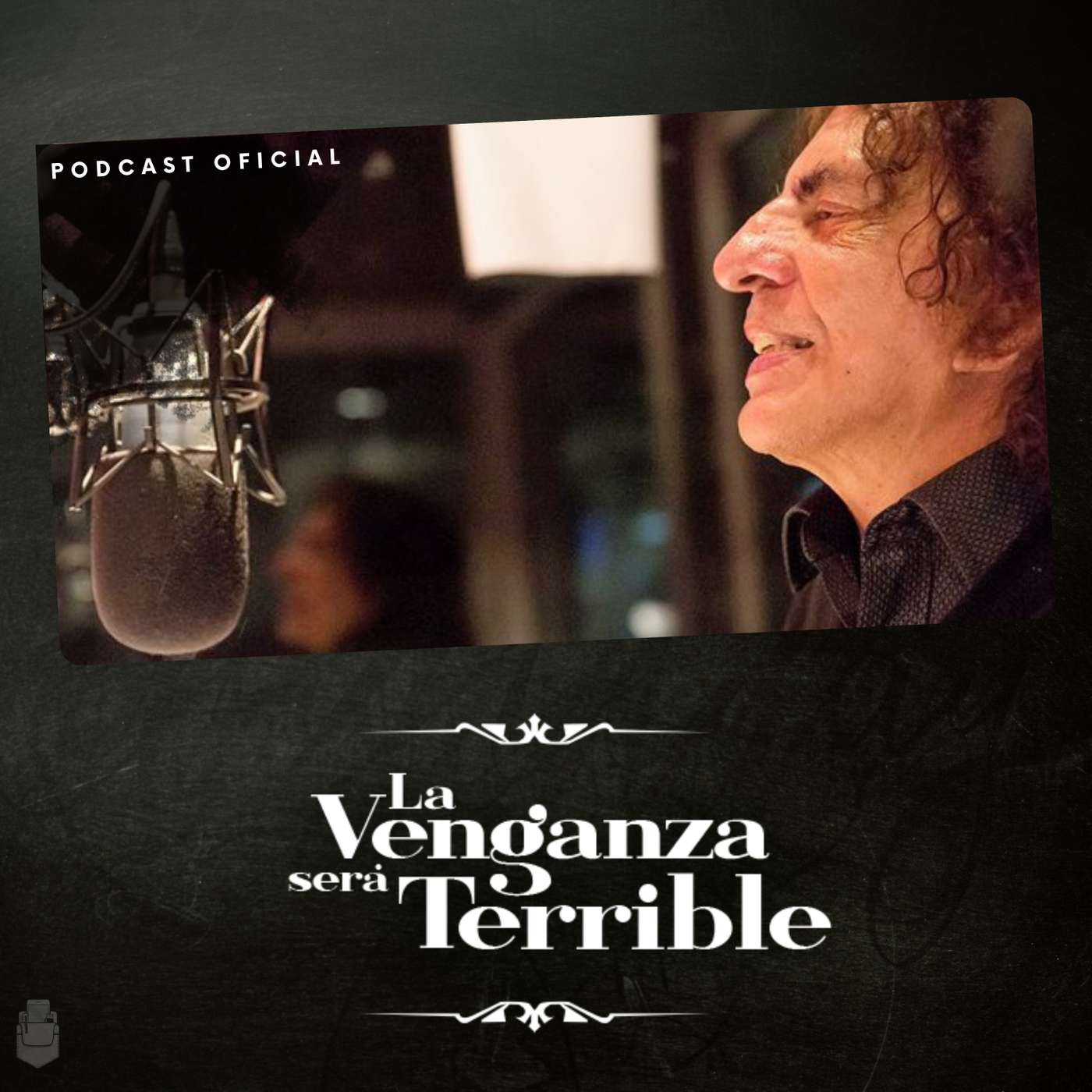
La Venganza Será Terrible (oficial) · Alejandro Dolina

LVST 11 de abril de 2026

·1 hr 24 min·7 clips
Alejandro Dolina hosts with Gillespie and Patricio Barton, who collect jokes from friends because they find ordinary people funnier than professionals.
1. La Venganza Será Terrible, Alejandro Dolina's long-running Argentine late-night radio comedy show, aired its April 11, 2026 edition with co-hosts Gillespie and Patricio Barton. 2. The three hosts — Dolina as primary voice, Barton contributing observations and playing characters, Gillespie taking notes on jokes told by friends — set the conversational tone immediately. 3. The episode's implicit thesis is that authentic, spontaneous humour from non-professionals is more effective than marketed 'comedy' spectacle, a recurring Dolina preoccupation. 4. Dolina opens by ridiculing Argentine comedy promotion: performers wear polka-dot trousers so audiences start laughing before a word is said, and posters promise 'dos horas de risas garantizadas,' which Dolina says is itself bad news since two hours of anything is too long. 5. He contrasts this with the European deadpan tradition, which he prefers, noting it is rarer in local theatre but common in Argentine film. 6. Dolina announces Karina Biorlega's performance the following night at Club Atlético Fernández Fierro (Sánchez de Bustamante 772), describing her as one of the few artists seriously pursuing tango-fado fusion, a style she has developed over many years. 7. He lists her current ensemble: pianists Fernando Marzán and Federico Mirra, cellist Dimitri ('el ruso'), and violinists including Pablo Agri (son) and Christine Bribes. 8. The hosts then preview 'La Conversación Infinita' with Darío Stanz Reichberg at Teatro Broadway on Sunday the 19th, noting it will soon be fully revised as 'La Conversación Infinita Dos' with a new script — the current version focused on death, the next 'also on death, but more aggressively.' 9. A third show, 'La Noche Extraviada o Los Libretistas del Mundo,' is previewed for April 30 at the new Teatro Conex (Sarmiento 3131), which the hosts acknowledge is still getting accustomed to them. 10. The main comedic segment begins after Dolina mentions seeing a televised segment about a Buenos Aires municipal jobs fair that drew 20,000 people to Movistar Arena, framing it as a 'job interview of historic dimensions.' 11. Dolina reads from a listener-sourced guide on job interview technique, and the hosts enact each rule with a mock interview in which Barton plays candidate 'Raúl del Cerro' and Dolina plays both interviewer and commentator. 12. When asked his name, the candidate introduces himself as 'Raúl del Cerro' then adds 'puede llamarme Becerro,' which the interviewer interprets as insubordination. 13. A word-association exercise produces answers Dolina describes as 'exactly what a normal human would say but completely wrong for the interview': 'Dinero — Mío,' 'Vacaciones — Ya me las tomé,' 'Sacrificio — No acepto.' 14. The psychological evaluation requires the candidate to draw a house; when he notes there is no paper or pencil, the interviewer marks him down for finding problems instead of solutions, then criticises the eventual imaginary drawing for a small window ('like a prison cell') and absence of a ground line. 15. The posture module generates an extended riff on the 'two imaginary strings' technique — one from the navel pulling forward, one from the chin — and an imaginary pole running up the spine like the rod through a merry-go-round horse. 16. Gabriel Rolón is casually revealed as one of the owners of the fictional media group, prompting Dolina to drop his jaw in mock surprise, leading to a satire of media consolidation where rival stations are secretly owned by the same group. 17. The whispered-news bit satirises radio station segmentation: the ABC1 station delivers even breaking disaster news in a hushed voice while the mass-market station targets 'DEF or even below H.' 18. The episode is structured as a live, unscripted radio conversation with the hosts interrupting, correcting, and undercutting each other throughout; there is no formal separation between news commentary, interview technique tips, and absurdist fiction. 19. Fans of Dolina's philosophical tangents and Buenos Aires cultural scene references, particularly theatre and tango, will find the episode representative of the show's appeal. 20. Listeners seeking a structured narrative or unfamiliar with Argentine radio humour and River Plate Spanish may find the dense, overlapping dialogue difficult to follow.
Listen to the show on