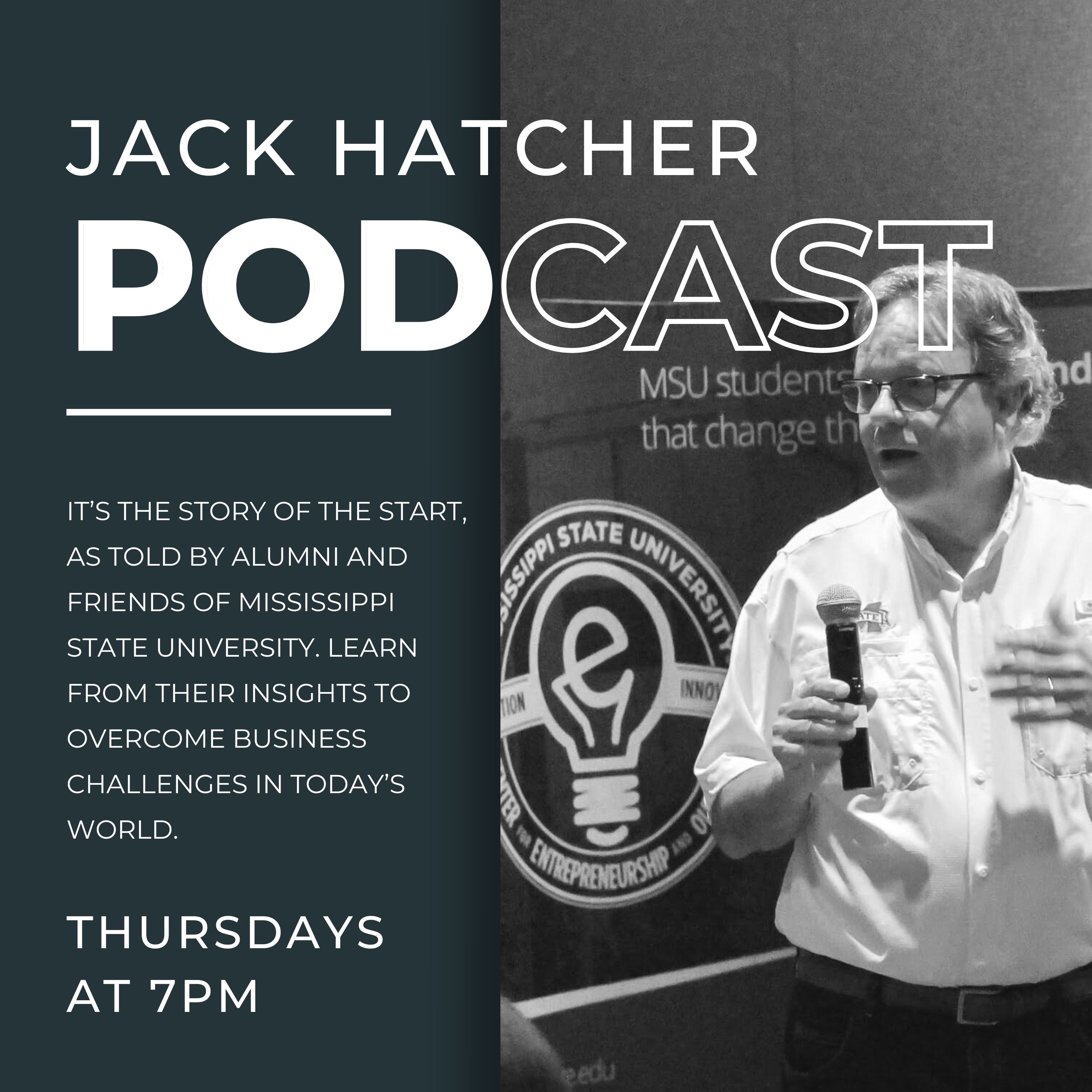
Jack Hatcher Entrepreneurship Podcast · Mississippi State University, Center for Entrepreneurship and Outreach

RJ Reed, Founder of Reed Food Technologies

September 1, 2023·48 min·1 clip
Thank you. Thank you. Thank you very much. My voice does not project very well. I will try, but if I
The speaker starts with a thank-you and a warning that his voice is not built to project well. He says he is glad to be there, wishes entrepreneurship had existed as a formal program when he was in school, and notes that he has judged competitions and invested as an angel in quite a few startup companies. Then he asks the room for a definition of entrepreneurship. He answers it himself by describing entrepreneurship as a person who organizes and operates a business while taking on more responsibility and more financial risk than usual, and he uses that definition to keep the discussion grounded instead of drifting into theory. He also pushes back on the idea that a degree is required. To make that point, he mentions a successful entrepreneur he recently met who only had a GED and had sold a $50 million business before retiring, which frames entrepreneurship as a path shaped by execution rather than pedigree. The talk then moves into categories of entrepreneurs, which he says he read about somewhere, and he invites the students to think it through with him, leaning into the classroom format and keeping the room involved instead of turning the talk into a polished lecture. His own history gives the lesson weight. He says he majored in food science, worked full time while going to school full time, and managed a restaurant that used to be a Western Sizzling before becoming a Mexican restaurant near Starkville High School. That job taught him a lot. He remembers giving free coffee and pie to the cops every afternoon and jokes that being nice to cops turned out to be very helpful, then tells a late-night motorcycle story that ends with a trooper letting him go after he had been speeding with expired tags and an expired inspection sticker. The story lands like a lesson in judgment. He does not present it as magic or luck, just as one more example of the strange practical education that comes from working hard, staying alert, and learning how the world responds when you have built enough trust. From there, he returns to business growth. He says the company now gets acquisition interest almost every week and that it has moved out of one building into bigger facilities, including 50,000 square feet in Hernando after leaving Memphis and more than 100,000 square feet in Pearl, even while still running out of space. He treats that as proof of demand. The closing advice circles back to communication, with the speaker pointing to Stephen Covey's The Seven Habits of Highly Effective People and calling communication skills key and critical, the kind of practical soft skill that matters when you are building with other people. He ends by wishing the students luck. The final note is stern but encouraging, the voice of someone who has spent years working the hours, learning the trade, and expecting others to do the same if they want a business to survive and grow.

As heard by us

A founder talk about work, risk, and hard-won judgment.

This piece makes entrepreneurship feel lived-in rather than abstract. The strongest part is the path itself: food science, full-time work, restaurant management, then ownership, with regular acquisition calls coming later.

Read the full review in PlayNext →

Why you'd press play

A food-science-to-entrepreneurship talk that turns long hours, restaurant ops, and company growth into practical lessons.

Read the full recommendation in PlayNext →
Listen to the show on