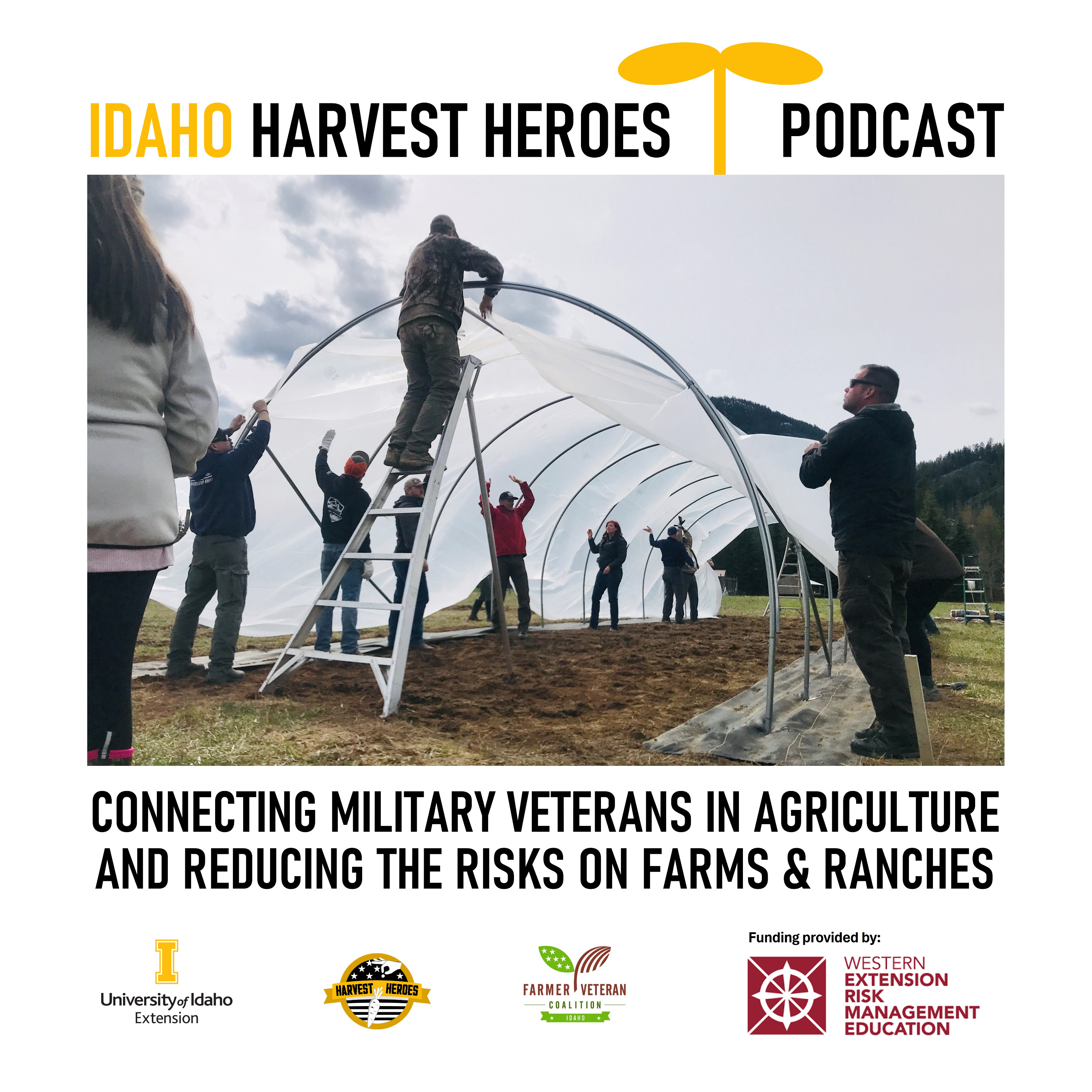
Idaho Harvest Heroes Podcast · University of Idaho Extension and the Farmer Veteran Coalition Idaho Chapter

Managing Risks in Small Farm Agritourism with Ron Kern of Back Forty Farms, Nampa, ID

·14 min·1 clip
Connie May, a retired Air Force veteran, explains how this podcast helps veterans manage farm risks through peer stories.
1. This episode of the Idaho Harvest Heroes Podcast features host Connie May interviewing veteran farmer Ron Kern from Back 40 Farms in Nampa. 2. Connie May is a retired Air Force veteran and the program coordinator for the University of Idaho Extension's Harvest Heroes program. 3. The conversation focuses on Ron Kern's practical experience using agritourism as a risk management and marketing strategy for his small farm. 4. Ron Kern explains that his farm operates on just under five acres of land. 5. He details how he has diversified his farm business to include a wedding and event venue. 6. Kern describes hosting educational farm tours for school groups as another agritourism activity. 7. He discusses offering on-farm workshops, such as a chicken processing workshop, to engage the community. 8. The episode covers Kern's approach to building a customer base through these direct, on-farm experiences. 9. Kern talks about the importance of creating memorable interactions that encourage visitors to return and become regular customers. 10. He shares insights on converting agritourism visitors into buyers for his farm's primary agricultural products. 11. A key insight is that agritourism provides a financial buffer by generating income independent of crop yields or market prices. 12. Kern emphasizes that face-to-face interactions at events build stronger customer relationships than traditional advertising. 13. He reveals that the wedding venue business helps sustain the farm during slower agricultural seasons. 14. The school tours are presented as a tool for community education and long-term brand building. 15. Kern advises other farmers to start small with agritourism, suggesting a simple farm stand as an initial step. 16. He stresses the need for clear communication with visitors about the working nature of a farm for safety and expectations. 17. The tone is educational and conversational, grounded in personal experience and practical advice. 18. The style is interview-based, with the host prompting detailed explanations of on-farm practices. 19. Military veterans exploring small farm entrepreneurship would find this episode directly relevant and useful. 20. Listeners seeking theoretical economic analysis or large-scale corporate agribusiness strategies might find the content too niche.
Listen to the show on