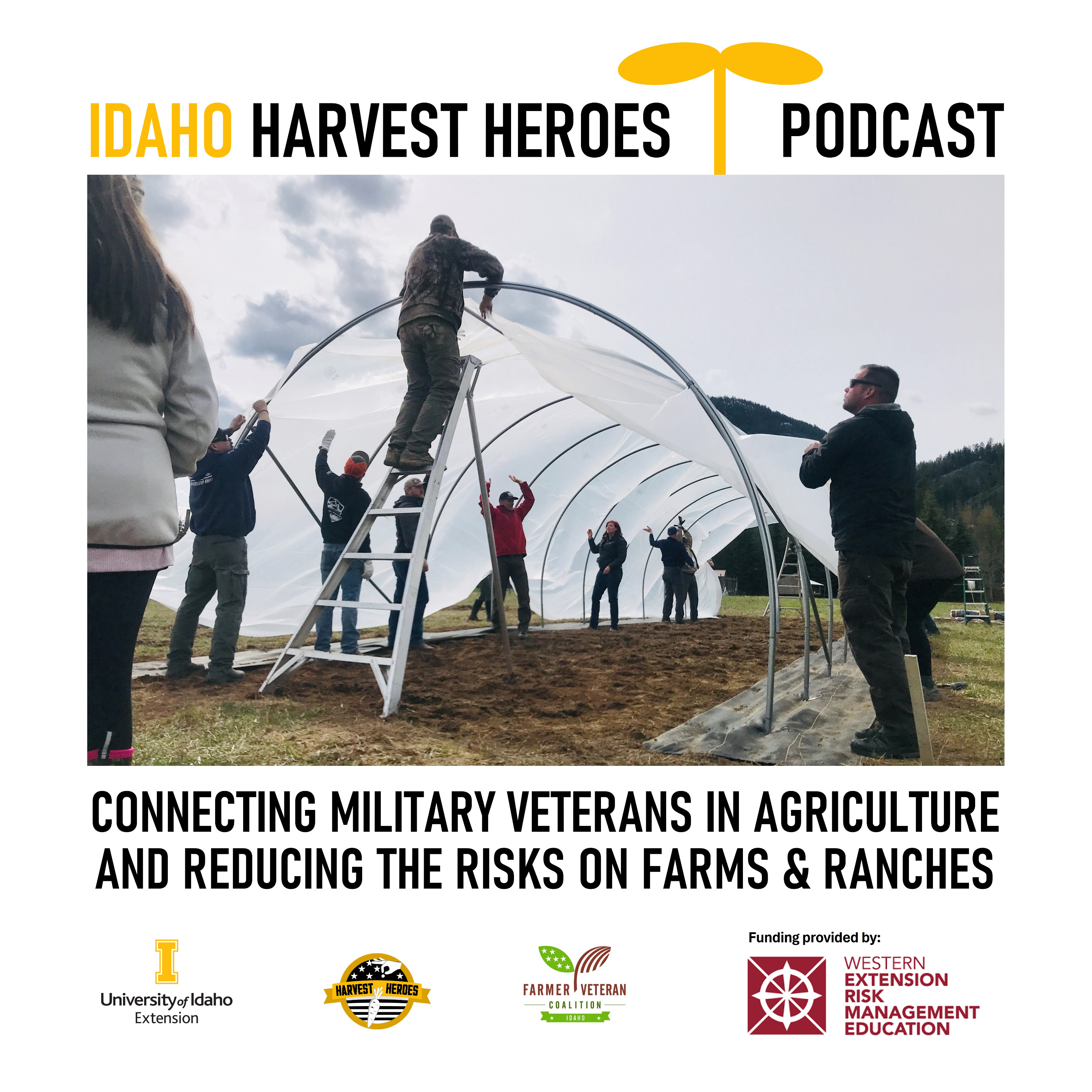
Idaho Harvest Heroes Podcast · University of Idaho Extension and the Farmer Veteran Coalition Idaho Chapter

Diversifying Small Farm Production to Manage Risk with Veteran Ted Kovarik of Sonshine Acres, Emmett, Idaho

·15 min·1 clip
Connie May, a retired Air Force veteran, launches a podcast to help veterans reduce farm risk through diversification.
This episode features host Connie May interviewing veteran farmer Ted Kovarik about managing risk through agricultural diversification. Connie May is a retired Air Force veteran and coordinator of the University of Idaho's Harvest Heroes program. Her guest, Ted Kovarik, operates Sunshine Acres farm in Emmett, Idaho. The conversation focuses on Kovarik's specific strategies for diversifying his crops and livestock to stabilize his farm's income. He details raising pastured poultry, including meat chickens and laying hens, alongside a market garden. Kovarik explains his direct marketing approach, selling products through a farm stand and to local restaurants. He discusses the practical benefits of rotating livestock to improve soil health and manage pests naturally. A key insight is Kovarik's view of diversification as a financial safety net, where one underperforming enterprise is supported by others. He shares that adding a high-tunnel greenhouse extended his growing season and allowed for premium early-season produce. Kovarik emphasizes the importance of building personal relationships with customers as a core marketing strategy. He also describes how his military service instilled skills in planning and adaptation directly applicable to farm management. The episode reveals Kovarik participated in the Harvest Heroes program primarily to connect with a community of fellow veteran farmers. He finds value in peer-to-peer learning for solving practical problems. Kovarik advocates for starting small with new ventures to test their viability before scaling up. His approach integrates animal husbandry and crop production into a single, synergistic system. The tone is educational and conversational, structured as an interview sharing real-world experience. The style is straightforward and practical, avoiding theoretical abstraction. This episode would greatly interest new or small-scale farmers, especially veterans, seeking actionable diversification tactics. Listeners looking for highly technical agronomic data or debates on agricultural policy might find it less applicable.
Listen to the show on