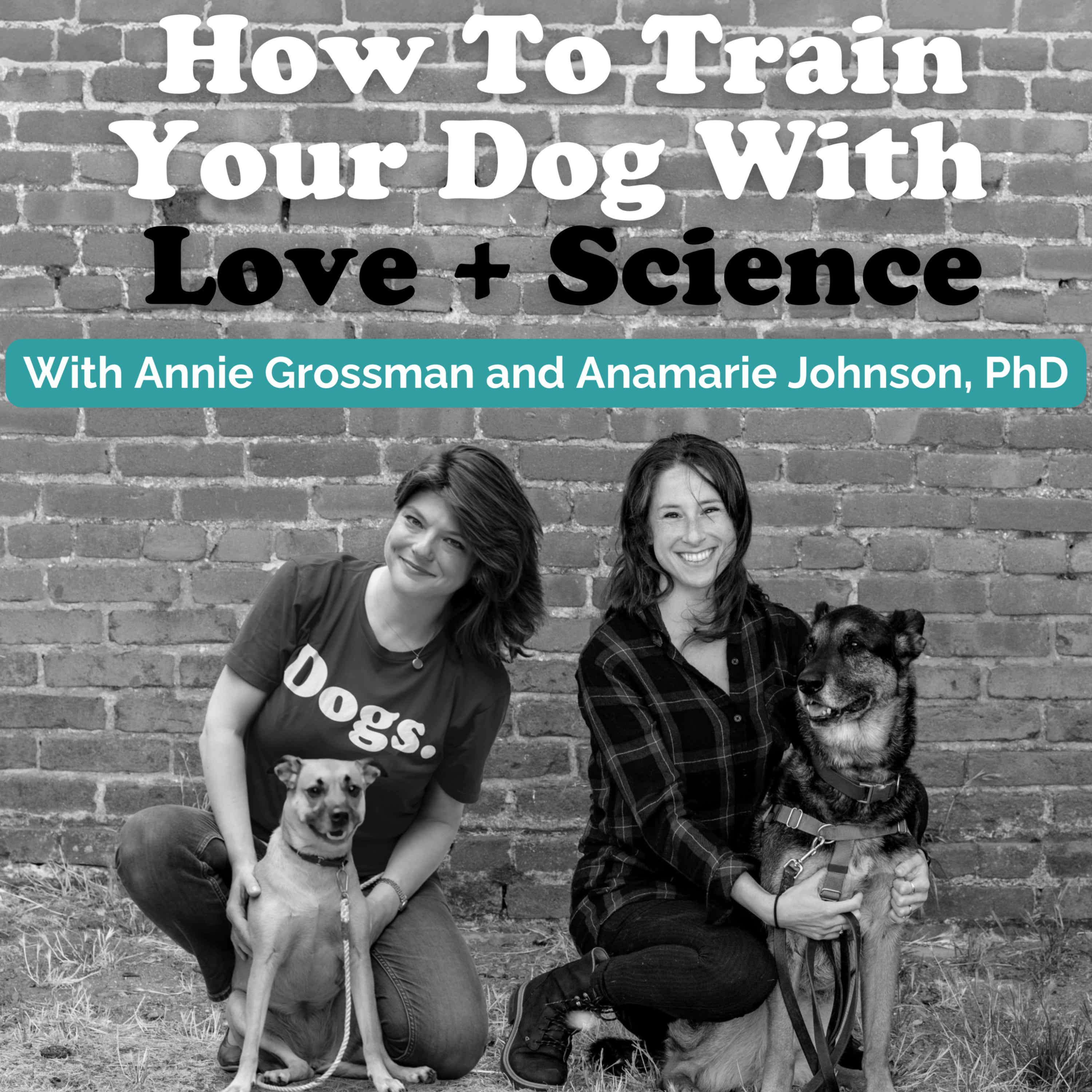
Dog training history includes eggs filled with ipecac, BB guns, and throwing a book at a car-chasing dog.
1. How To Train Your Dog With Love and Science frames Dog Daddy, Part 1 as a critique of punishment-based dog training and its current online visibility. 2. Annie Grossman hosts the show, mentions her upcoming Source Books title, and says the episode connects the podcast to her book project. 3. The episode asks why Dog Daddy’s methods attract attention now and what his rise says about dog-training culture. 4. Annie quotes John Stuart Mill on “the domestic life of domestic tyrants” and uses that passage to compare abuse of dogs with abuse of children. 5. She argues that many people who punish dogs are not thinking in terms of morality alone but lack information about behavior. 6. She says dog training for pet owners is a field of study that is “really not even a century old.” 7. She cites Will Judy’s ipecac-filled eggs, Henry East’s severe scolding after a chicken kill, and William Kohler’s BB gun as examples of older punishment methods. 8. She recalls Barbara Woodhouse suggesting that car-chasing dogs be hit with a thrown book and that a leash pulley be rigged from a car seat. 9. She points to Brandon McMillan’s “Shake and Break” and the claim that one shake makes barking stop and jumping become “a thing of the past.” 10. She describes Cesar Millan’s emphasis on timing and sound intensity, then argues that these methods can persist because they sometimes appear to work. 11. She compares the reinforcement of the trainer’s behavior to a slot machine and says sporadic success can keep punishment practices going for years. 12. Annie says Dog Daddy stands out less for novelty than for how widely his clips circulate across YouTube, TikTok, and Instagram. 13. She describes Dog Daddy’s clothing in detail, including loud outfits, Gucci and Louis Vuitton branding, bucket hats, sunglasses, chains, tattoos, and magenta hair. 14. She says she found little information about his training education or certifications, but did find comments about his charisma and a clip from the David the Dog Trainer podcast. 15. She recounts his earlier career breeding German shepherds in Cape Cod, operating without a kennel license, and facing fraud lawsuits in more than one state. 16. She says Grammarly flagged his positive-reinforcement paragraph as plagiarized, and she found matching wording on PupLife.com from 2009. 17. Annie explains that his current fame traces back to a 2015 Hyannis video of five off-leash German shepherds that went viral and led people to seek his advice. 18. She contrasts positive-reinforcement trainers with “balanced training” advocates, references LEMA and Susan Friedman’s humane hierarchy, and says the field favors least-invasive approaches first. 19. Listeners interested in positive reinforcement, dog-training ethics, and the Dog Daddy debate will find this useful. 20. Listeners wanting a light celebrity profile or a neutral pet-care chat may skip it.

As heard by us

A clear defense of positive reinforcement that keeps the dog's welfare at the center.

Annie Grossman uses Dog Daddy to make a clear case for positive reinforcement and against confusing punishment with usefulness. The episode works best when it slows down and keeps the question centered on the dog's life, not the rhetoric around it.

Read the full review in PlayNext →

Why you'd press play

If you want a sharp, pro-positive-reinforcement take on Dog Daddy-style training, start here.

Read the full recommendation in PlayNext →
Listen to the show on