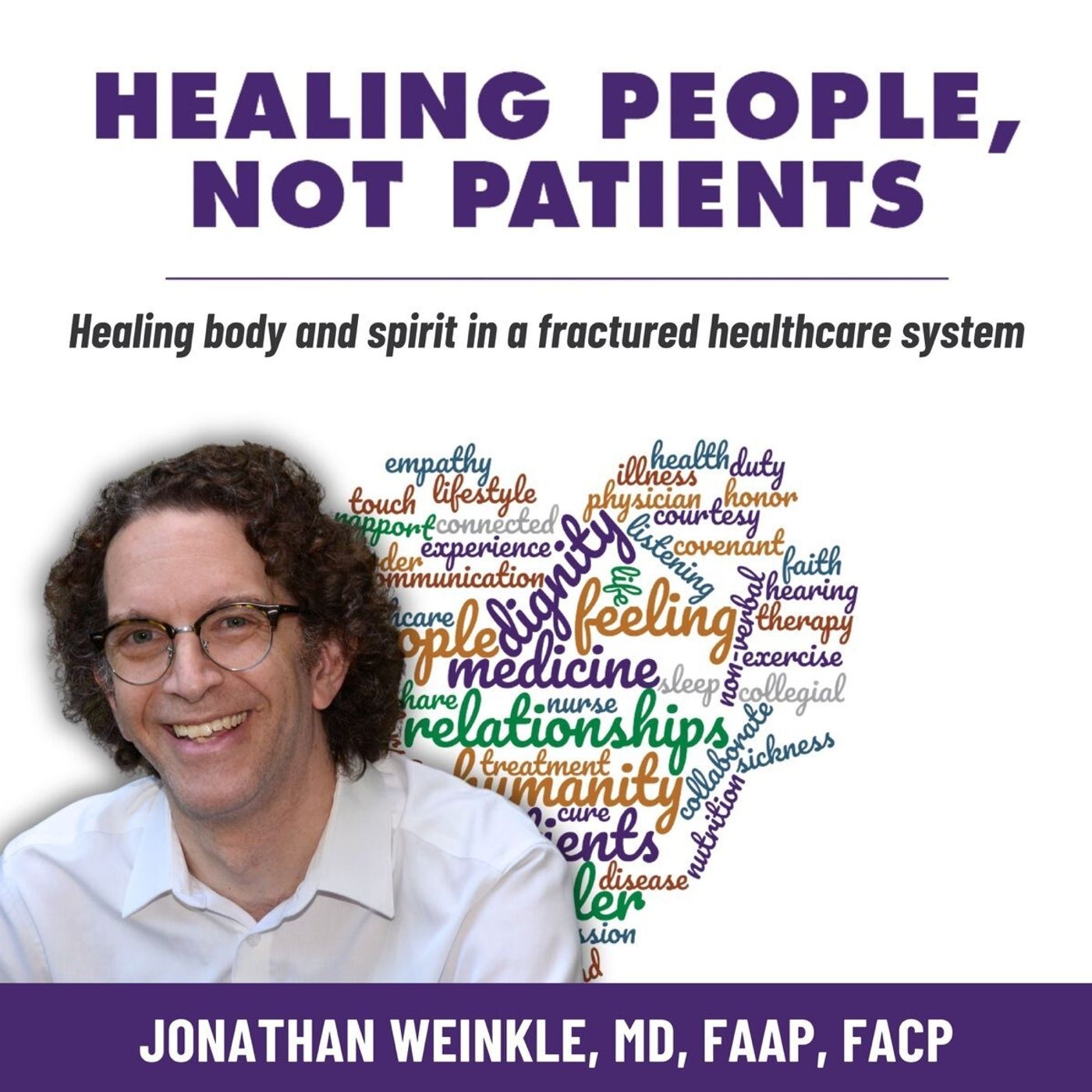
Healing People, Not Patients · Dr. Jonathan Weinkle, Doctor Podcast Network

Making a Living is Killing Us | Ep9

·53 min·5 clips
Only 5% of injured workers are trying to cheat the system—so why do we treat them all with suspicion?
This episode of Healing People, Not Patients features host Dr. Jonathan Winkle and guest Jonathan Clemens, a physician assistant specializing in occupational medicine. They explore how work-related injuries impact people's lives and the challenges of providing care within complex systems. Clemens focuses on long-term injured workers in Washington State's industrial insurance program, where claims can remain open for decades. Clemens describes his patient population as individuals often unable to return to their original jobs due to severe injuries. He cites a study showing professional football players have a life expectancy up to 17 years shorter than the average American male. He shares specific cases, like a patient whose hip labral tear was missed for years and an appliance delivery man who tore both rotator cuffs by age 40. The conversation highlights physical dangers in nursing, construction, and logging, where a single injury can end a career. Clemens estimates about 5% of patients may attempt to defraud the system, while another 20% experience "disability fixation," losing hope after their injury. He explains injured workers often lose income, social connections from work, and a sense of purpose tied to their trade. The episode recounts a patient who was assaulted at work, halting her years-long effort to save money and bring her family from Africa to the United States. Another patient, an aspiring pilot, suffered a concussion that temporarily impaired his ability to study for flight exams. A memorable insight is Clemens' approach of treating every patient with respect, operating on the principle that his role is to provide care, not to act as an investigator. He allocates an hour for new patient intakes to hear their story unbiased by prior chart notes. The discussion notes that some patients rediscover or find faith during their recovery, viewing their injury as a time for spiritual reassessment. The system's design to deter fraud through onerous paperwork is acknowledged as a barrier for legitimately injured workers. The tone is conversational and reflective, blending personal anecdotes with professional observations from clinical practice. The style is educational, weaving in biblical references, like the Exodus story, with modern occupational health realities. Listeners interested in the human stories behind workplace injuries, medical ethics, and the intersection of faith and healing would appreciate this episode. Those seeking a fast-paced debate or purely clinical discussion of treatment protocols might find it less engaging.

As heard by us

A clear-eyed look at work that can damage bodies, and at how hard it can be to find a safer way forward.

The episode keeps work, injury, and dignity in view as it moves from the obvious risks of elite sports to the slower wear that ordinary jobs can leave on a body. It is at its best when it treats those losses as more than career setbacks.

Read the full review in PlayNext →

Why you'd press play

You want a sober look at how work can injure the body and leave a person unable to return to the same job.

Read the full recommendation in PlayNext →
Listen to the show on