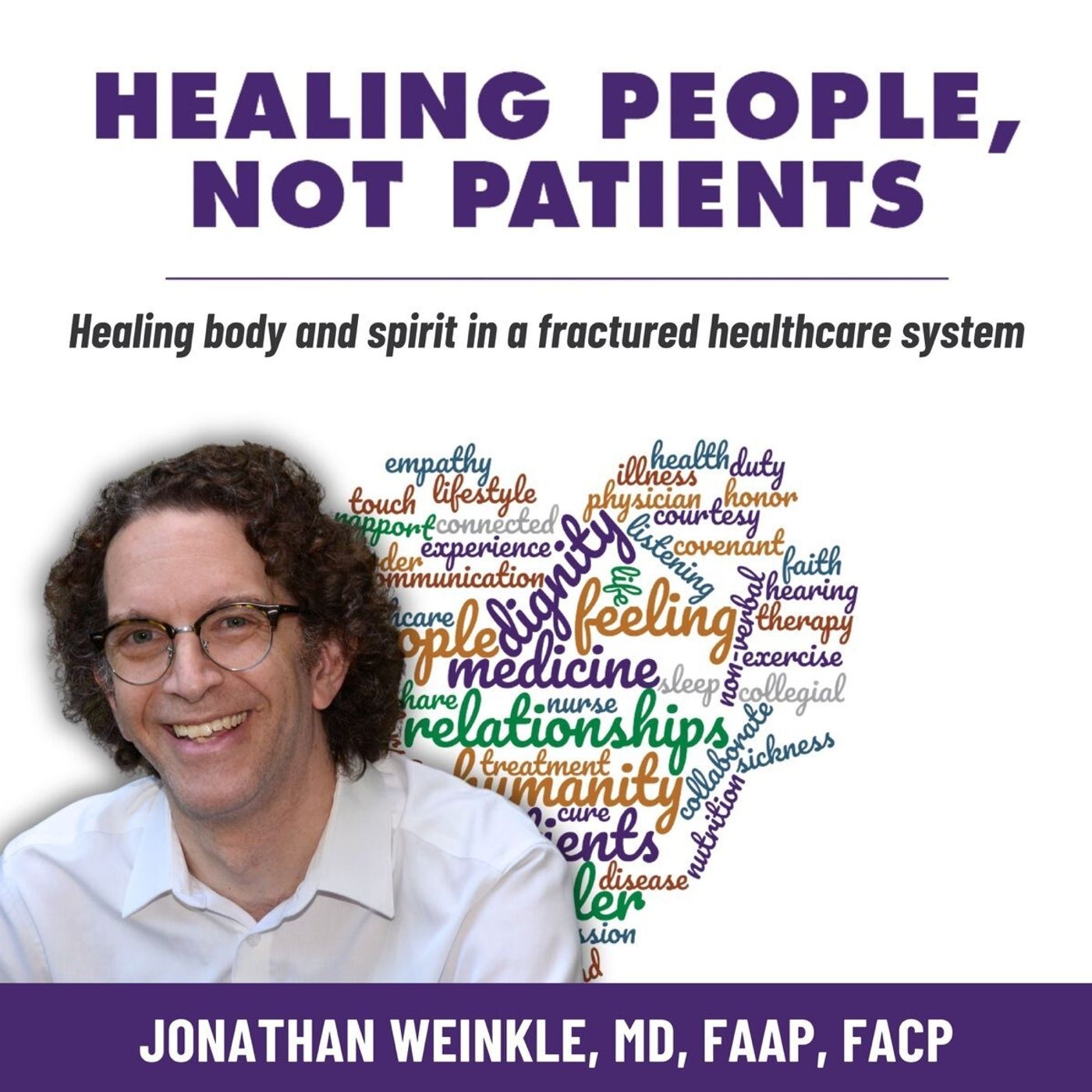
Healing People, Not Patients · Dr. Jonathan Weinkle, Doctor Podcast Network

Healing and Humanity: Ideas for the Next Generation of Medicine | Ep7

·1 hr 7 min·5 clips
Sophia's mother was turned away from an ultrasound because no interpreter was available, despite a welcoming sign.
Dr. Jonathan Winkle, host of the "Healing People, Not Patients" podcast, shares a special episode featuring his top students from a University of Pittsburgh course. The episode presents student projects designed to make healthcare more humane by addressing specific systemic failures. Winkle opens by reflecting on the gap between noble ideals in medicine and their practical execution, illustrated by a hospital with a multilingual welcome sign that nonetheless turned away a patient needing an interpreter. He explains his course helps students operationalize big ideas, like the principle that humans are created in the divine image, into concrete actions. Students Sophia Smallwood and Tai-Hee Lam present a project inspired by Smallwood's mother's experience with iron deficiency anemia. Their mother was dismissed by a hematologist who strictly followed numerical thresholds despite her debilitating symptoms like fatigue and shortness of breath. The students propose a secure, AI-driven platform modeled after "MyAva" for PCOS patients to connect individuals with similar conditions. This platform would allow patients to share lived experiences and genetic data, helping them and their physicians identify patterns and advocate for better care. The next guests, Ryan Ross and Trevor Staub, present a project on "narrative pain consults" for patients under 21, inspired by a friend's experience with chronic back pain after a sports injury. Their friend's pain was dismissed by physicians as "out of proportion to exam," drastically affecting his identity as an athlete and his mental health. Their research indicates approximately one in five young people experiences chronic pain, a group often overlooked by clinicians. They propose dedicated, uninterrupted time—even just five minutes—for these patients to tell their stories to foster a team-based approach to care. A key insight is that operationalizing compassion in medicine often involves "daily, undramatic, yet essential service," as quoted from Rabbi Jonathan Sachs. The AI platform project reimagines technology not as a replacement for physicians but as a tool to crowdsource patient experiences and enhance clinician collaboration. The narrative consult project highlights how a brief, compassionate interaction can shift a patient's perception from feeling adversarial with their doctor to feeling like part of a team. Winkle notes that letting a patient speak uninterrupted typically takes only about two minutes, yet yields significant information. The students emphasize that positive healthcare experiences in youth can shape a person's trust in medicine for a lifetime. The tone is educational and conversational, blending personal reflection, student presentations, and practical discussion. Winkle engages with the students' ideas thoughtfully, exploring potential implementation and clinician pushback. This episode will appeal to healthcare professionals, medical students, and anyone interested in practical medical humanities and systemic reform. Listeners seeking highly technical clinical discussions or debate-focused content might find it less aligned with their interests.

As heard by us

A quiet reminder that care is proved in the small moments where dignity is either recognized or missed.

The episode treats medicine as a moral duty before it becomes a technical one. It moves from a first-year medical student’s Torah-rooted belief that people are made in the divine image to the ordinary acts that make care matter: explaining instructions clearly, taking pain…

Read the full review in PlayNext →

Why you'd press play

When medicine needs less slogan and more listening, this episode gives you both.

Read the full recommendation in PlayNext →
Listen to the show on