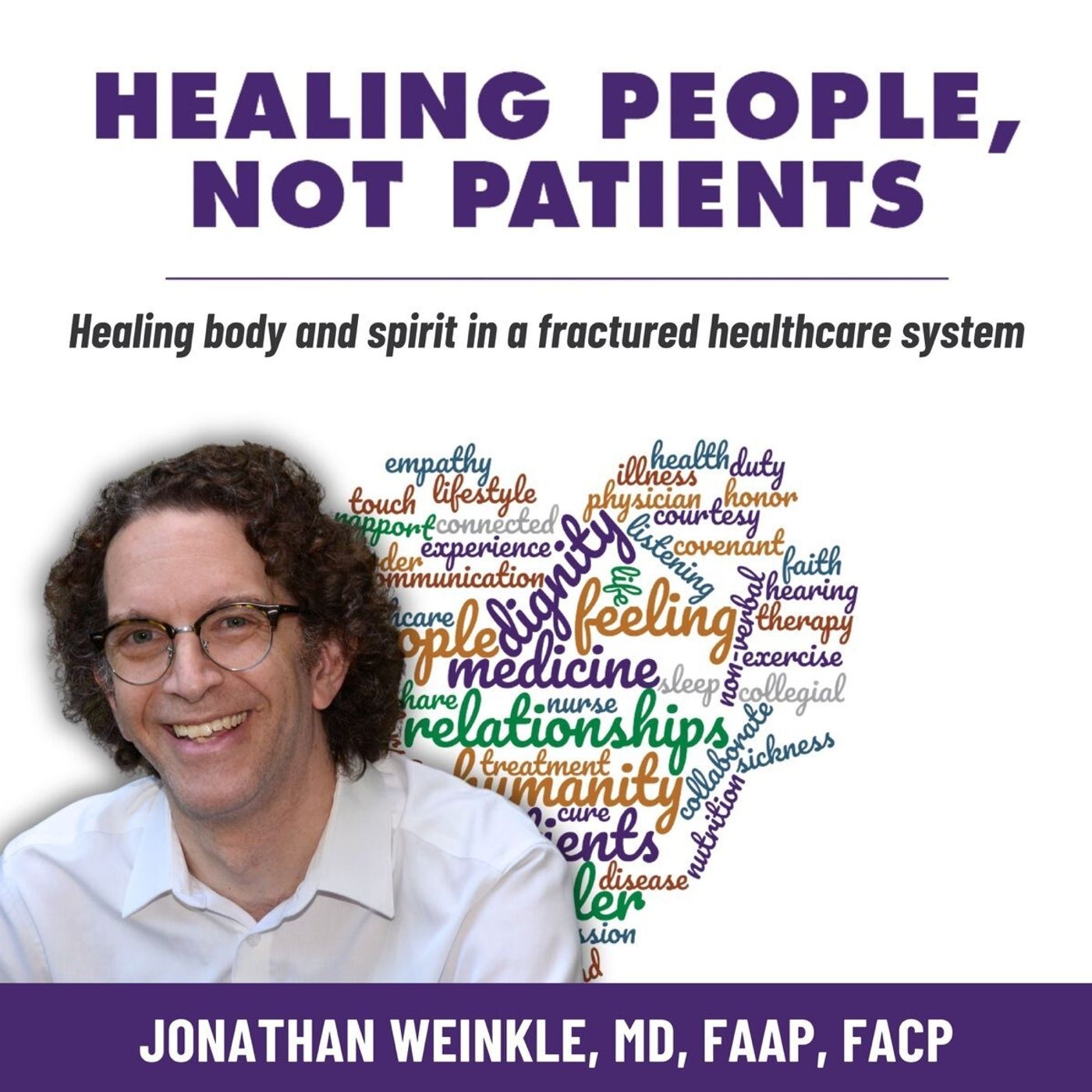
Healing People, Not Patients · Dr. Jonathan Weinkle, Doctor Podcast Network

From Illness to Exodus - Stories from our Journeys | Ep8

·40 min·3 clips
At age eight, Karen was dying from Gaucher disease until a surgeon took an unexpected phone call to save her.
Dr. Jonathan Winkle hosts this episode, joined by Aviva Rosenberg, CEO of the Gaucher Community Alliance, and Karen, an occupational therapist living with Gaucher disease. They explore the parallels between chronic illness and the Passover story of Exodus, focusing on the power of patient storytelling. Aviva explains Gaucher disease is a rare genetic disorder caused by mutations in the GBA1 gene, leading to symptoms like enlarged organs, bone pain, fatigue, and neurological issues in some types. Current treatments include lifelong enzyme replacement therapy infusions or oral substrate reduction therapy, but neither addresses neurological symptoms or Parkinson's risk. Karen shares her four-line illness narrative, moving from childhood pain and being a trial participant at age eight to adult loneliness in managing chronic disease. She describes her bone pain as a dull, gray sensation that is hard to localize, especially when doctors asked her to point to it as a child. Aviva notes that pain and fatigue are the most unmet needs in the type 1 Gaucher community, often dismissed when lab tests appear normal. She shares a compelling story of a 12-year-old girl nearly receiving a hip replacement for avascular necrosis, only diagnosed with Gaucher from pre-surgery blood work. Advocacy through storytelling is central, with Aviva's organization using role-play to help even young patients articulate their experiences. Karen recounts her near-fatal sepsis at age eight and how a surgeon in Dallas heeded a phone call to avoid removing her spleen, enabling her to join a pioneering NIH drug trial. The episode highlights the diagnostic odyssey, where the average time to diagnose type 1 Gaucher is seven years, and 18 months for the severe type 3. Aviva argues for newborn screening, citing cases where early treatment in states like Illinois allowed children to meet developmental milestones. The conversation touches on the unexpected connection some non-Jewish patients feel to Jewish heritage upon a Gaucher diagnosis, though the disease affects all ethnicities. Dr. Winkle relates these stories to broader medical practice, referencing Dr. Victor Montori's patient advocacy and the "Why We Revolt" movement. The tone is reflective and educational, weaving personal narrative with medical advocacy and spiritual metaphor. Listeners interested in narrative medicine, rare disease advocacy, or the patient-physician relationship will find this episode deeply moving. Those seeking purely clinical discussions of disease pathology might find the storytelling focus less aligned with their interests.

As heard by us

A humane reminder that a diagnosis is not the whole story.

The piece stays centered on a familiar medical risk: a patient getting reduced to a quick summary before the fuller story is heard. Using Gaucher disease, Passover, and the Exodus, it shows how brevity can turn into premature closure, then brings that concern back to pain,…

Read the full review in PlayNext →

Why you'd press play

You want one rare-disease story that shows how brief clinical shorthand can become a diagnosis trap.

Read the full recommendation in PlayNext →
Listen to the show on