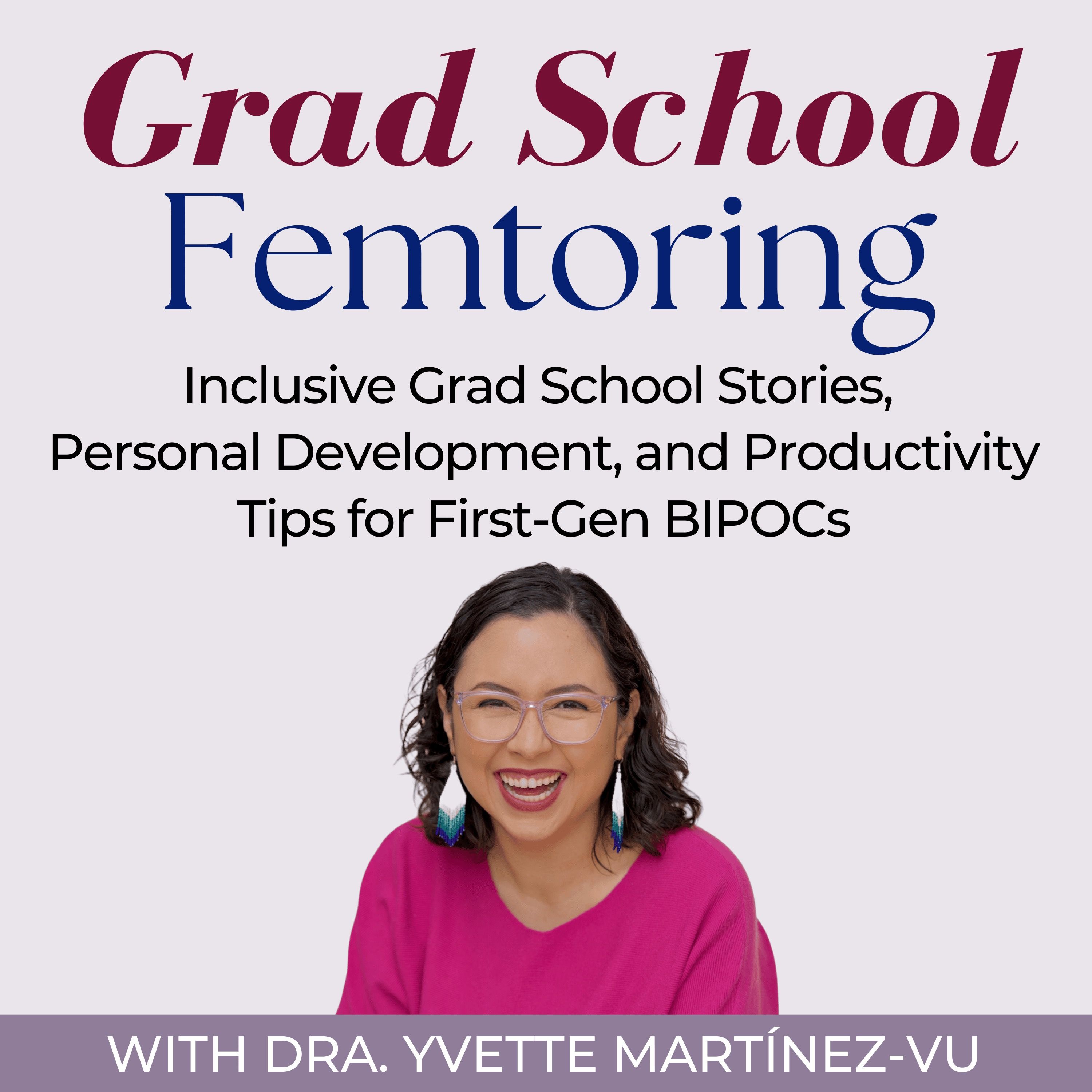
Grad School Femtoring: Inclusive Grad School Stories, Personal Development, and Productivity Tips for First-Gen BIPOCs · A podcast on thriving in graduate school for first-generation BIPOC students, offering insights on academic success, career development, mental health, and navigating diversity and inclusion in higher education.

347: How to Organize Your Own Gentle Writing Retreat at Home for First-Gen Students and Professionals

·27 min·1 clip
Writing and sharing it can feel like being “part of a nudist colony,” because it exposes perfectionism and fear of judgment.
1. Grad School Femme Touring Episode 347 explains how to organize a gentle writing retreat at home for first-gen students and professionals. 2. Dr. Yvette Martinez-Boo, a certified coach, consultant, and author, hosts the show and frames herself as the “Femme Tour” offering insider knowledge. 3. The episode asks how to build a structured container for long-term writing without pushing past personal limits. 4. Martinez-Boo says writing feels “emotionally loaded” and compares sharing writing to being “part of a nudist colony.” 5. She names perfectionism, imposter phenomenon, fear of judgment, overwork, and internalized pressure to “prove yourself” as part of that experience. 6. She also points to systemic barriers like limited resources, family responsibilities, health issues, and lack of uninterrupted space. 7. Her own grad school example includes multiple jobs, TA work, a part-time grad mentor role, new motherhood, and postpartum depression. 8. She says she felt like a failure when she could not write every day the way others expected. 9. She says progress on her dissertation began when she embraced longer, more intensive chunks of time. 10. University Writing Center retreats, a co-founded writing group, and later self-organized retreats at home or in hotel rooms became part of her routine. 11. She says she once set up one retreat for herself each month and credits that practice with helping her finish her dissertation. 12. She defines a gentle writing retreat as something that is not a boot camp and says the approach fits “slow and steady” writers. 13. She contrasts her own slower pace with her partner’s short, intense bursts of work and long breaks. 14. The retreat model centers compassion by matching goals to capacity and circumstances instead of forcing rigid word counts. 15. She recommends minimum and maximum goals so listeners can avoid all-or-nothing thinking and still count progress. 16. She suggests predictable routines, timed intervals, scheduled breaks, beginning and ending rituals, and supports like snacks, hydration, headphones, grounding objects, and fidgets. 17. She also recommends body doubling and group accountability, including virtual sessions with cameras on, for people who work better alongside others. 18. The episode sounds like a practical coaching session with direct advice, personal disclosure, and reflective prompts. 19. Grad students, first-gen professionals, and writers juggling care work. 20. Listeners looking for rigid productivity hacks or fast writing fixes.
Listen to the show on