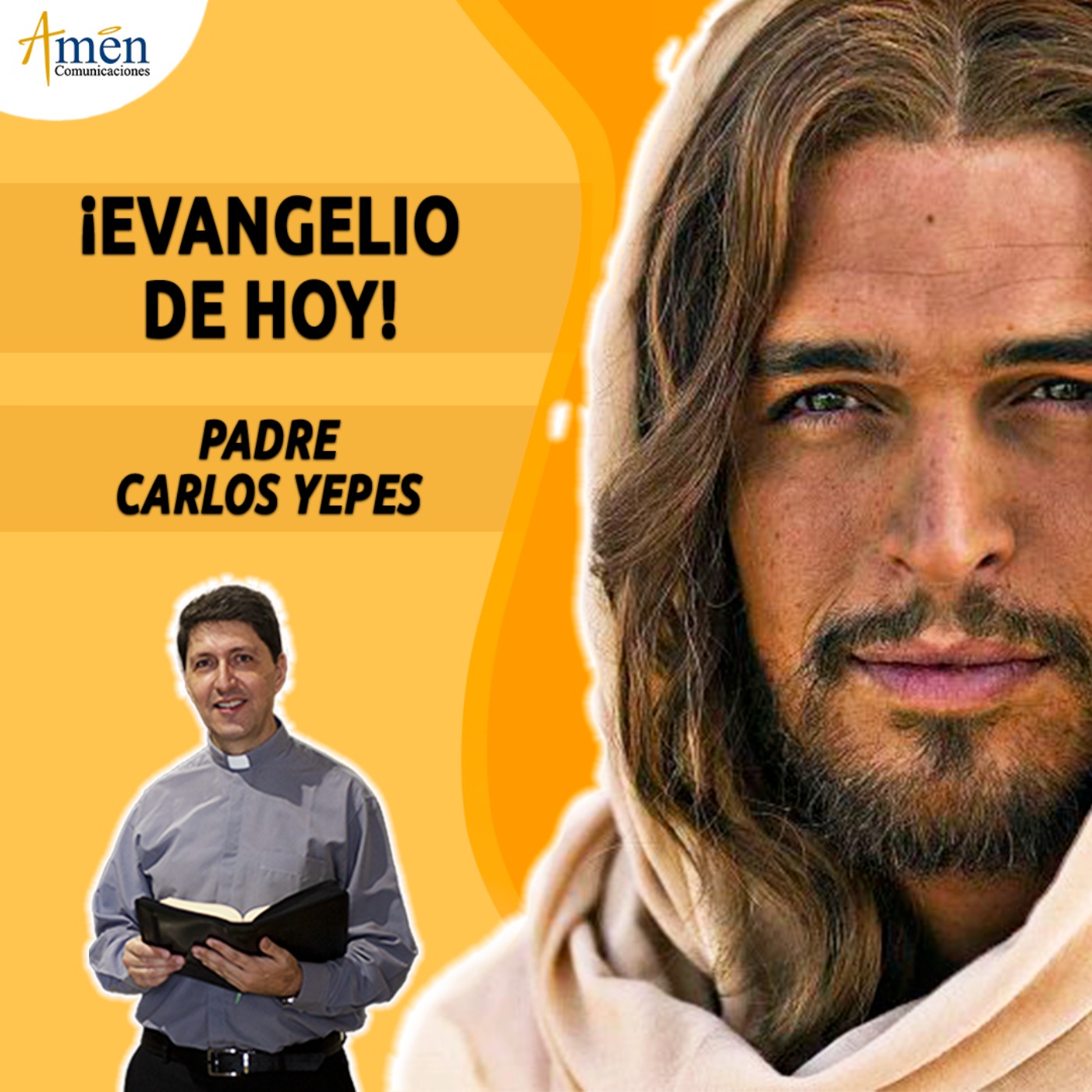
Evangelio de hoy - Padre Carlos Yepes · Padre Carlos Yepes

Evangelio De Hoy - 03 Abril 2026 - Padre Carlos Yepes - Amen Comunicaciones

·32 min·2 clips
On Good Friday, Father Carlos Yepes reads Isaiah's prophecy about a suffering servant who will be exalted.
1. This episode is Padre Carlos Yepes's Good Friday homily for 3 April 2026, produced by Amen Comunicaciones, reflecting on the theological meaning of the cross. 2. Padre Carlos Yepes serves as the sole speaker; no guests appear; he is identified as a Catholic priest whose daily gospel reflections form the basis of the podcast. 3. The episode's core thesis is that the cross of Christ is not an obstacle to be avoided but the central school of human growth and the necessary path to heaven. 4. The liturgical readings include Isaiah 52:13–53:12, where the Suffering Servant is described as 'traspasado por nuestras rebeliones, triturado por nuestros crímenes,' whose wounds bring healing. 5. Psalm 31 is recited with the refrain 'Padre, en tus manos encomiendo mi espíritu,' which Yepes later uses as Christ's final triumphant surrender on the cross. 6. The second reading, Hebrews 4:14–5:9, presents Jesus as the high priest who 'ofreció oraciones y súplicas con fuertes voces y lágrimas' and learned obedience through suffering. 7. The Passion narrative from John 18–19 is read in full, covering the arrest in the Garden of Gethsemane, Peter's denial, the trial before Pilate, the crucifixion, and the burial by Joseph of Arimathea and Nicodemus. 8. Yepes's first teaching states that no one escapes the cross—'ni el rico en su riqueza, ni el pobre en su precariedad'—and uses the example of divorce: leaving a marriage's cross means embracing the crosses of solitude and economic loss. 9. The second teaching identifies the cross as 'la mayor escuela de crecimiento humano,' arguing that pain purifies the heart, making a person more humble, grateful, patient, and trusting in God. 10. The third teaching observes that many people only return to God through crucifixion—through bankruptcy, long illness, or the death of a child—because human success 'enseña poco' while failure 'encuentra gran sabiduría.' 11. The fourth teaching clarifies that Christ does not remove the cross but helps carry it, citing Matthew's 'Vengan a mí, todos los que están cansados y agobiados, y yo los aliviaré' and noting that Jesus healed the sick without eliminating illness from human life. 12. The fifth teaching introduces the paradox 'mientras más crucificados, más amados por Dios,' grounding it in Christ's own experience of crying out 'Dios mío, Dios mío, ¿por qué me has abandonado?' before surrendering in trust. 13. The sixth teaching quotes Santa Teresa de Jesús: 'Son pocos los que te siguen, Señor, porque a los que tú amas, los crucificas, y a los que te crucifican, tú los amas.' 14. Yepes invokes Paul's argument in 1 Corinthians that what Jews call scandal and Greeks call foolishness—the cross—is for believers 'fuerza de Dios, sabiduría de Dios, salvación de Dios.' 15. The seventh and final teaching delivers the lapidary phrase 'No hay cielo sin cruz,' paired with: no Promised Land without the desert, no Transfiguration on Mount Tabor without crucifixion on Mount Golgotha. 16. Yepes closes by reframing the cross as 'la consumación total del amor, la vida que se entrega por ternura, por servicio, por dar la salvación a todos los hombres.' 17. The homily is delivered as a solo monologue in a reflective, devotional register—no interview or dialogue—with a measured pace suited to liturgical meditation. 18. The tone is pastoral and warm rather than academic: Yepes addresses listeners directly with 'tú' and personalizes each teaching with concrete life scenarios. 19. Practicing Catholics observing Good Friday and listeners seeking spiritual frameworks for suffering will find this episode most resonant. 20. Those seeking academic theology, non-Catholic perspectives, or content in languages other than Spanish will likely find this episode outside their interest.
Listen to the show on