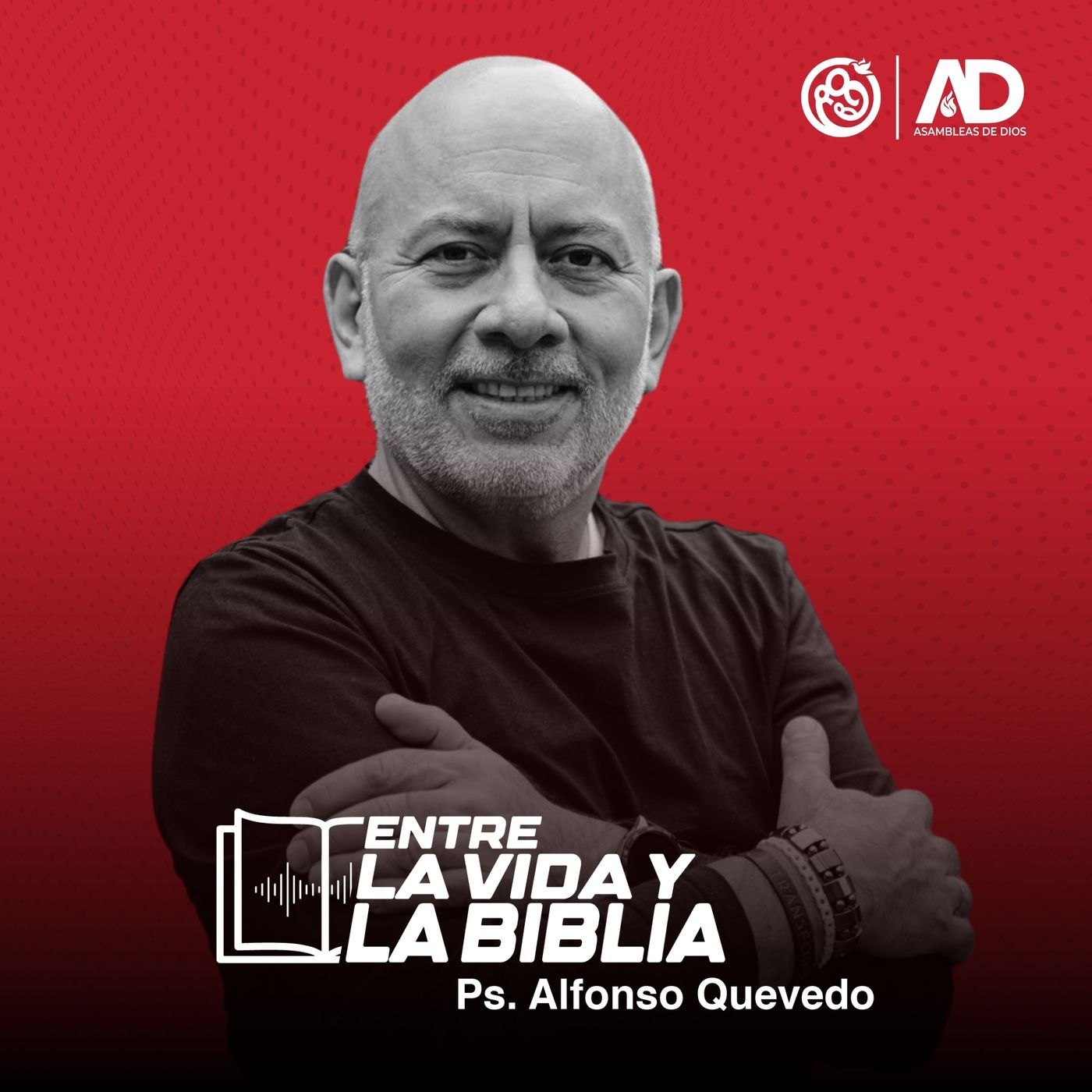
Entre La Vida y la Biblia · Alfonso Quevedo

¡Adopción! - Feat Doris Gallejo - Entre la vida y la Biblia Podcast | EP 47

·27 min·2 clips
Doris shares how her biological mother attempted to drown her as an infant, saved only by her grandparents.
1. Entre la Vida y la Biblia, hosted by Pastor Alfonso Quevedo, explores adoption through the personal story of Doris Gallego Hernández, a pastor's wife serving in Bogotá's Santa Librada neighborhood. 2. Doris Gallego Hernández is a guest who co-pastors Iglesia Cristiana Puerta del Cielo in Santa Librada with her husband Alex Miguel Gómez Coronado, to whom she has been married 27 years. 3. The episode's thesis is that biological rejection and abandonment do not determine a person's identity, framed through Doris's adoption story and supported by Psalm 27:10 and John 1:12. 4. Doris was born in a rural area (vereda) near Tauramena, Casanare, to a widowed mother who had five children and preferred sons, resulting in a decision to give away the baby girl. 5. Her biological mother went further than abandonment: she repeatedly put infant Doris in a sack and threw her into a river, and her grandparents pulled her out each time. 6. To protect Doris, her grandparents hid her in the wooden storage racks (zarzos) used for drying maize, concealing her until someone willing to adopt her could be found. 7. A missionary pastor visiting the village learned of Doris being 'given away,' and knew a woman in Tauramena named María del Carmen Vargas who had been praying for an infant daughter with light eyes. 8. Carmelita, as Doris calls her, had been praying specifically for a daughter fitting Doris's description despite already having four children and no husband. 9. Doris arrived at Carmelita's home as a toddler of roughly two to three years old: severely malnourished, full of parasites, and asking only for guarapo (fermented sugarcane drink) instead of milk. 10. Carmelita raised Doris in a Christian household, instilling values of forgiveness, never speaking ill of others, and always bringing difficulties to God—values Doris says she still lives by. 11. Carmelita never hid Doris's origins from her: Doris always knew she was adopted, and Carmelita eventually helped her locate her biological mother's address when Doris was about 26 or 27 years old. 12. When Doris arrived at her biological mother's door for the first meeting, her mother's first question was whether Doris had come because 'something is left from your dad'—assuming she was there to claim an inheritance. 13. Doris replied that they 'think differently' and that she had only come to meet her, then left—departing in pain, supported by Carmelita's hug and prayer. 14. Her pastor at the time counseled her not to seek comfort but to pray for the salvation of her biological family, advice Doris credits with her eventual decision to forgive. 15. Over time, a half-blood brother contacted Doris, and a blood sister sought ongoing communication, telling Doris 'you are my only sister and I love you.' 16. Doris eventually returned to Tauramena and crossed paths with her biological mother again on the street; the mother's response was a brief acknowledgment and no further engagement. 17. The episode is conducted in a warm interview format, with Quevedo asking direct personal questions and occasionally offering theological commentary to frame Doris's experience. 18. Doris's composure is notable throughout: she describes violent childhood rejection and adult dismissal without bitterness, attributing her peace to Christian faith and Carmelita's modeled forgiveness. 19. This episode suits Spanish-speaking evangelical listeners interested in adoption, forgiveness, and personal testimony from a Pentecostal-adjacent faith perspective. 20. Listeners who prefer secular discussions of adoption, trauma, or family reconciliation without religious framing will find the episode's conclusion consistently scripture-based.
Listen to the show on