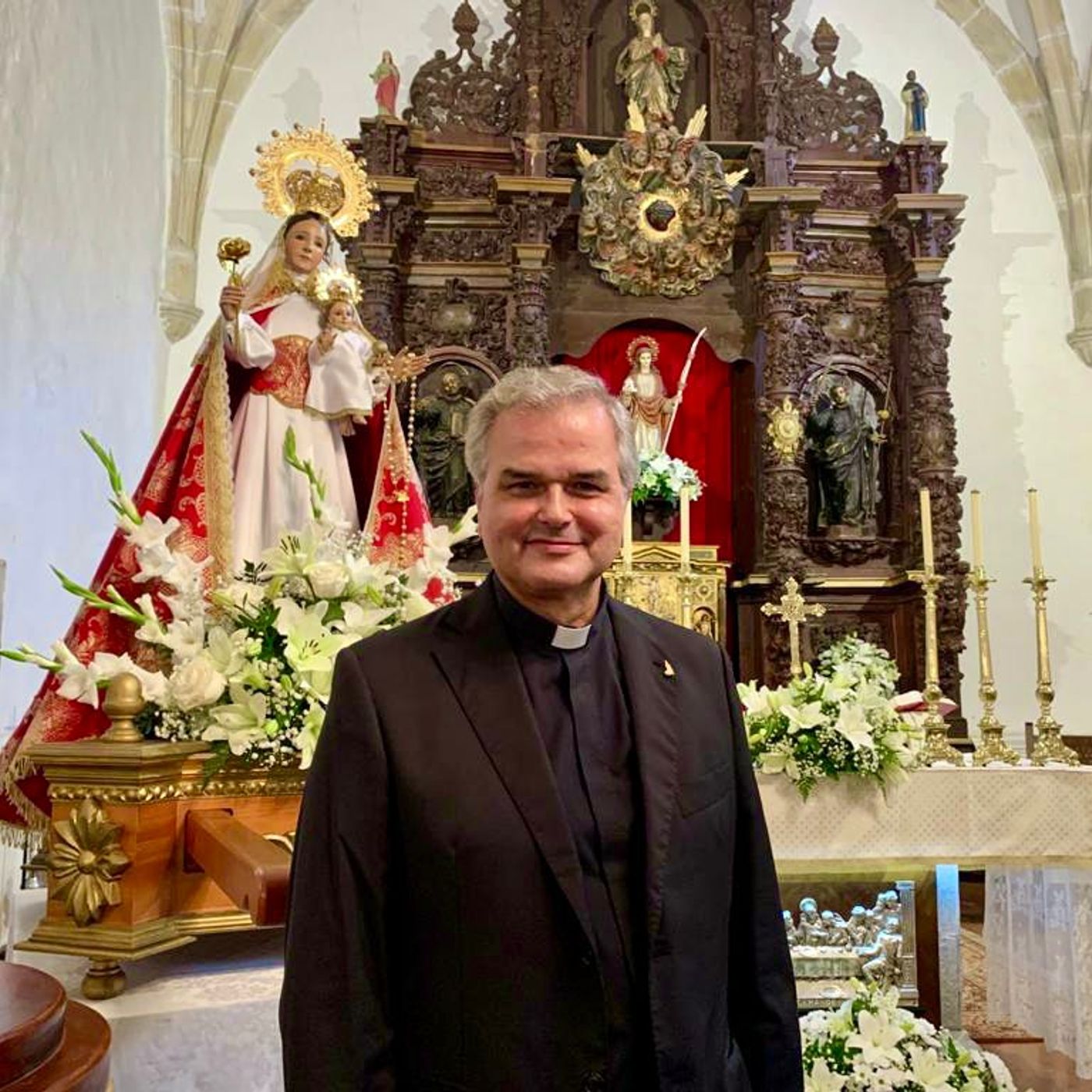
The episode begins with Father José Juan Hernández Déniz greeting listeners on April 11 during Easter week. He notes that the week concludes with Divine Mercy Sunday and highlights the joy of Christ's resurrection. The host dedicates the Saturday to the Virgin Mary, describing her as a mother who guides believers to the Lord. He reads from Mark 16:9-15, focusing on the apostles' initial disbelief in Jesus' resurrection despite reports from Mary Magdalene and others. Father José Juan explains that Jesus later appears and commands them to preach the Gospel worldwide. He connects this to modern Christians, acknowledging that faith difficulties can arise for anyone. The host stresses that evangelization is crucial but challenging, as some reject the message and prophets face persecution. He argues that the greatest obstacle is internal lack of faith, comparing a Christian without conviction to a dry river that cannot flow. After the Eucharist, believers should go forth with missionary determination, even if others doubt them. The episode then shifts to Saint Stanislao of Cracovia, whose feast is celebrated on April 11. Stanislao studied in Niezno and was sent to Paris and Liège before returning to Poland. He was ordained a priest by Bishop Lambert Sula and later became bishop of Cracovia in 1072. Stanislao criticized King Bolesław II's harsh punishments and had conflicts over property. According to legend, he resurrected a man named Peter to testify in a land dispute, forcing the king to relent. Tensions escalated until Bolesław ordered Stanislao's execution; the king allegedly killed him during Mass on April 11, 1076. Stanislao's body was dismembered but miraculously reintegrated. The murder caused political instability, leading Bolesław to flee to Hungary. Father José Juan concludes by thanking God for Stanislao's witness and blessing the listeners.