Ekantik Vartalap · Bhajan Marg

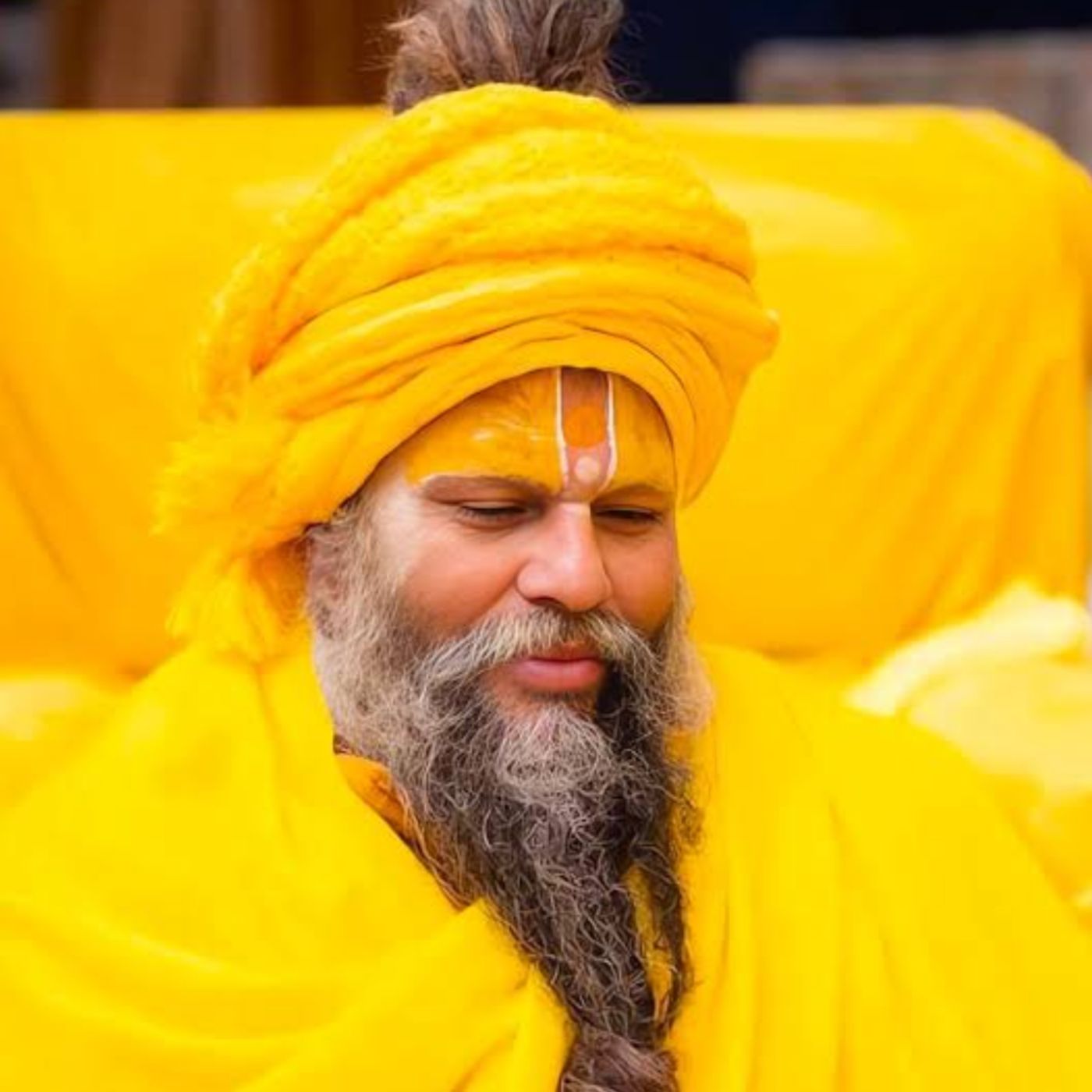
इसके बाद डर के जीना छोड़ दोगे ! डर के आगे जीत है ! Shri Hit Premanand Govind Sharan Ji Maharaj ¦

·56 min·5 clips
The first symptom of surrender is fearlessness, but where does a devotee's fear come from?
1. Ekantik Vartalap presents Shri Hit Premanand Govind Sharan Ji Maharaj in a satsang focused on abhay (fearlessness) as the diagnostic sign of genuine surrender, and on the antahkaran (inner instrument) as the primary obstacle to spiritual progress. 2. Maharaj Ji is the sole speaker delivering a Hindi-language discourse drawing on the Bhagavad Gita, Srimad Bhagavatam, and Mahabharata. 3. The episode's thesis is that genuine surrender to the Lord produces natural fearlessness, while the absence of fearlessness reveals incomplete surrender or ongoing wrong conduct. 4. Maharaj Ji opens with a personal anecdote: walking on the Ganga banks at night, his mind generated fear from imaginary sounds; when he saw a distant light, fear dissolved — illustrating that fear is a mental creation and the Lord's proximity is always available but forgotten. 5. He distinguishes two types of fear: natural startle responses (e.g., sudden sounds) that even great devotees experience, and dispositional fearfulness — the latter being the sign of incomplete surrender. 6. Drawing on the Bhagavatam verse about God's fear-inducing power over the cosmos ('Jin ke bhai se vaayu chalati hai, Jin ke bhai se prathivi jal mein nahi doopti'), Maharaj Ji argues that the One from whom even the elements operate out of fear is personally protecting the surrendered devotee. 7. He uses the Parikshit Ji story to establish that no external protection — including mantras, mantra-knowers, and magical barriers erected by Janmejaya — can override what is ordained; a small worm entered a fruit and fulfilled the prophecy on the seventh day. 8. Maharaj Ji identifies self-induced addiction (beedi, cigarette, alcohol, bhang, tobacco) as a form of self-generated fear: the practitioner creates dependency, then becomes afraid of withdrawal — contrasting this with the true fearlessness available through bhajan. 9. He articulates a productive form of fear that is spiritually useful: the fear that one's worship might contain errors, that one might disrespect guru or saints, or that one's conduct might violate shastra — calling this the fear that makes a person fearless. 10. Using the Mahabharata Kurukshetra opening, Maharaj Ji argues that eleven Akshauhini Kaurava armies were afraid when the Pandava conches blew, while the outnumbered Pandavas felt no fear — because dharma, not numbers, is the source of fearlessness. 11. The second major section of the episode focuses on the antahkaran (inner instrument composed of man, buddhi, chit, and aham) as the source of all bondage through misidentification. 12. Maharaj Ji uses the analogy of a blacksmith's tools (hathoda, basuli) — instruments that are separate from the blacksmith — to explain that the antahkaran is a karan (instrument) of the atma, not the atma itself. 13. He argues that identifying 'I am my mind' leads to treating the mind's pain as one's own pain, its desires as one's own desires — the 'I am angry' instead of 'the mind is angry' confusion. 14. He introduces the cinema-projection metaphor: the three gunas (sattogun, rajogun, tamogun) project a colored display onto the screen of consciousness; when one becomes guna-tit (beyond the three gunas), only one reality is visible — pure Krishna-consciousness. 15. Maharaj Ji states that purifying the antahkaran does not require separate rituals of penance (praschit) for past sins; sustained bhajan with detachment from the antahkaran itself acts as a purifying fire that burns accumulated vasanas. 16. He addresses householders directly, rejecting the bifurcation of 'spiritual practice' and 'worldly work' — arguing that business, service, or farming conducted with the three conditions (for God's pleasure, according to shastra, with continuous God-remembrance) is equivalent in spiritual merit to formal worship. 17. He cites the example of Sri Raidas Ji Maharaj — a cobbler who stitched leather while maintaining continuous divine remembrance — as evidence that occupation does not determine spiritual attainment. 18. The episode includes the extended story of a tapas-powerful brahmin Kashyap who burned a crane with his angry glance, then was humbled by a pativrata housewife who knew his entire past-life history through her husband-serving discipline. 19. The tone is instructional and systematic, with each philosophical point grounded in a scriptural verse citation followed by a practical application and usually an illustrative story. 20. The episode is suitable for spiritually inclined Hindi-speaking householders and practitioners seeking a systematic understanding of inner purification; those seeking brief inspirational content may find the philosophical depth requires sustained attention.
Listen to the show on